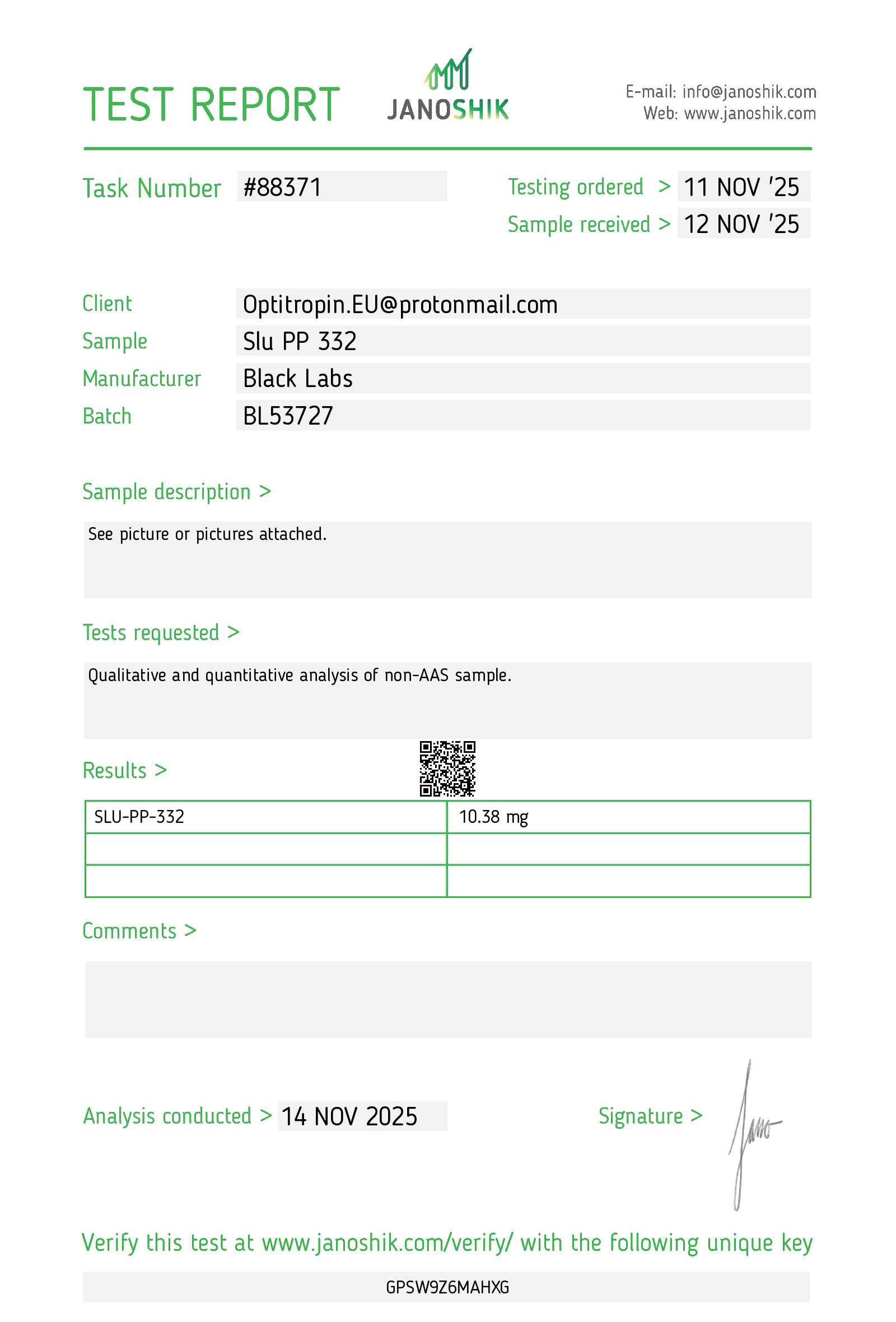
SLU-PP-332 10 mg Tablet (SLU-PP-332 10 mg)
€ 40,00
Out of StockBuy premium SLU-PP-332 10 mg Tablet | Blacklabs online. High purity, lab-tested, and fast shipping. Ideal for your cycle needs. Order SLU-PP-332 10 mg Tablet securely today!
Acne
Unknown
Half-Life
Unknown
Dosage
Unknown
Detection Time
Unknown
Aromatization
Unknown
Water Retention
Unknown
Hepatotoxicity
Unknown
HBR
Unknown
Product Information
About SLU-PP-332 10 mg Tablet (SLU-PP-332 10 mg)
1. Description: Clinical summary
SLU‑PP‑332 (10 mg per tablet) is an investigational small‑molecule pharmaceutical compound supplied as a 10 mg oral dosage form. Publicly available clinical information is limited; the compound is under development and/or evaluation in clinical trials for specified indications. Because data are incomplete or proprietary, the material below combines known principles for small‑molecule targeted therapies with cautionary recommendations appropriate for an investigational agent. This guide is educational only and is not a replacement for trial protocols, product labelling, or individualized medical advice.
Key clinical points
- Formulation: oral tablet, 10 mg strength (single‑entity).
- Indication: subject to clinical trial protocol or prescriber direction. Do not use outside approved/authorized settings.
- Regulatory status: investigational (use only under approved clinical trial or by prescription where authorized).
2. How does SLU‑PP‑332 10mg work? Mechanism of action
Detailed, validated mechanistic data for SLU‑PP‑332 are not available in the public domain. Based on its classification as a small‑molecule investigational agent, the anticipated pharmacologic effects are described in general terms:
- Targeted action: SLU‑PP‑332 is intended to modulate a specific molecular target or intracellular signaling pathway that contributes to disease pathology (for example, an enzyme, receptor, or kinase). Modulation of the target alters downstream signaling and cellular responses (for example, reducing pathological cell proliferation, inflammatory mediator production, or other disease‑specific processes).
- Onset and duration: onset of pharmacodynamic effect and duration depend on absorption, distribution, metabolism and elimination characteristics (pharmacokinetics), which should be characterized in clinical pharmacology data or the trial protocol.
- Off‑target effects: as with many small molecules, off‑target binding may occur and can contribute to adverse events; monitoring as described below is recommended.
Because the mechanism may be complex and context‑dependent, clinicians should consult available investigator brochures, product monographs, or trial documents for precise mechanistic and pharmacokinetic details.
3. Dosage: Medical and varying usage guidelines
General dosing principles (adapt to protocol/prescribing information)
- Typical starting dose: one 10 mg tablet once daily is a reasonable default when 10 mg is the available strength and no other guidance is provided. However, actual starting dose must follow the clinical trial protocol or prescriber instructions.
- Titration: dose escalation or reduction should follow predefined schedules in clinical trials or the product label. Titration is commonly used to improve efficacy or to manage adverse effects (e.g., increase to 20 mg daily in controlled increments if tolerated).
- Route: oral (swallow whole with water). If bioavailability is affected by food, follow protocol/label (take consistently with respect to meals).
- Missed dose: take the missed dose as soon as remembered the same day; do not double up to make up for a missed dose. Follow the trial protocol for missed‑dose windows.
- Duration: determined by indication and response; in trials often continued until disease progression, intolerable toxicity, or completion of the study period.
- Monitoring‑guided adjustments:
- Hepatic impairment: many small molecules require dose reduction or avoidance in moderate‑to‑severe hepatic impairment. Obtain baseline liver function tests (LFTs) and monitor regularly; hold or reduce dose for clinically significant ALT/AST or bilirubin elevations per protocol.
- Renal impairment: if renal elimination is significant, dose adjustment may be necessary for reduced creatinine clearance. Without specific data, use caution and monitor renal function.
- Hematologic toxicity: reduce or interrupt dosing for clinically significant cytopenias (neutropenia, thrombocytopenia, anemia) according to predefined thresholds.
- Special populations:
- Pregnancy and breastfeeding: avoid use unless potential benefits justify potential risks; effective contraception recommended for patients of reproductive potential during treatment and for a defined period after last dose per the product/trial guidance.
- Pediatrics: safety and dosing must be established by pediatric studies; do not extrapolate adult dosing without data.
- Elderly: consider starting at standard dose but monitor closely for toxicity and drug interactions; age‑related organ function decline may require adjustment.
Overdose management
- No specific antidote is known. Management is supportive and symptomatic.
- If ingestion is recent, activated charcoal may be considered per institutional protocols.
- Monitor vital signs, ECG, electrolytes, LFTs, renal function and CBC; provide supportive care and consult a poison control center.
Always follow the investigator brochure, product label, or authorized prescribing information where available.
4. Side effects: Common and rare adverse effects
Because SLU‑PP‑332 is investigational, specific incidence rates may not be available. The adverse event profile below lists commonly observed categories for targeted small‑molecule therapies and potential serious events clinicians should monitor.
Common (may occur in ≥5–20% in comparable agents)
- Gastrointestinal: nausea, vomiting, diarrhea, abdominal pain, dyspepsia.
- Central nervous system: headache, dizziness, fatigue, sleep disturbance.
- Musculoskeletal: myalgia, arthralgia.
- Constitutional: malaise, decreased appetite, weight change.
- Laboratory abnormalities: mild-to-moderate elevations in liver transaminases (ALT/AST), mild creatinine or electrolyte changes.
Less common but clinically important
- Hematologic: neutropenia, thrombocytopenia, anemia — may require dose interruption or reduction.
- Hepatotoxicity: clinically significant ALT/AST elevations or cholestatic injury; rare progression to severe liver injury.
- Cardiac: QT prolongation or other ECG changes (monitor baseline and periodic ECGs if indicated).
- Hypersensitivity: rash, pruritus, urticaria; rare progression to severe cutaneous adverse reactions (e.g., Stevens–Johnson syndrome, DRESS).
- Pulmonary: new or worsening dyspnea, cough, or interstitial lung disease/pneumonitis in some targeted therapies.
- Neurotoxicity: neuropathy, seizures (rare).
- Others: elevated creatine kinase or rhabdomyolysis (rare); renal injury (rare).
Serious/rare adverse events
- Severe hepatotoxicity, aplastic anemia or severe marrow suppression, life‑threatening hypersensitivity, severe infections secondary to immunosuppression, and severe cardiac arrhythmias. Any severe or unexpected adverse event should prompt treatment interruption and urgent evaluation.
Recommended monitoring
- Baseline: CBC with differential, comprehensive metabolic panel including LFTs and creatinine, ECG if cardiac risk or QT liability suspected, pregnancy test if applicable.
- During treatment: periodic CBC, LFTs, creatinine, and ECG per protocol or clinical judgement (frequency often every 1–4 weeks early in therapy, then spacing if stable).
- Clinical monitoring: signs/symptoms of infection, bleeding, jaundice, shortness of breath, new rash, or severe gastrointestinal symptoms.
Drug interactions and cautions
- Metabolic pathways: if SLU‑PP‑332 is metabolized by CYP enzymes (common for small molecules), potent CYP3A4 inhibitors (e.g., ketoconazole, clarithromycin) may increase exposure; CYP3A4 inducers (e.g., rifampin, carbamazepine) may reduce exposure. Adjust dosing or avoid combinations when possible.
- P‑glycoprotein and transporter interactions may alter absorption or elimination of concomitant drugs.
- Concomitant use with medications that prolong QT interval or cause myelosuppression or hepatotoxicity may increase risk; avoid or monitor closely.
- Anticoagulants and antiplatelet agents: monitor for increased bleeding risk if hematologic effects occur.
Contraindications
- Known hypersensitivity to SLU‑PP‑332 or any tablet excipient.
- Use in pregnancy or lactation only if benefits outweigh risks and under strict clinical guidance.
Report adverse events to the treating investigator, local pharmacovigilance contact, or regulatory authority as required.
5. Storage: HOW to store it
- Temperature: store at controlled room temperature, typically 20–25 °C (68–77 °F). Short excursions allowed (for example 15–30 °C) unless product labelling specifies otherwise.
- Environment: keep in original container to protect from moisture and light. Do not store in a bathroom or other high‑humidity locations.
- Security: keep out of reach of children and pets. Because it is an investigational/controlled medication, maintain inventory control per institutional requirements.
- Stability: check expiry date on packaging; do not use expired product.
- Disposal: dispose of unused or expired tablets according to institutional policies, local regulations, or authorized drug take‑back programs. Do not flush tablets down the toilet unless instructed by local guidance.
- Transport: during short transport, keep at ambient controlled temperatures and protect from extreme heat or cold.
Patient counseling points (brief)
- Take exactly as prescribed; do not change dose or stop without consulting your prescriber.
- Take consistently with respect to food if instructed; avoid grapefruit and grapefruit juice unless confirmed safe.
- Report immediately: fever, signs of infection, unexplained bruising/bleeding, yellowing of skin/eyes, new or severe shortness of breath, chest pain, or severe rash.
- Use effective contraception during treatment and for the recommended washout period after the last dose if of reproductive potential.
- Keep all scheduled monitoring appointments (blood tests, ECGs).
Important disclaimer
This guide provides general, educational information based on principles of pharmacology for investigational small‑molecule therapies. For definitive dosing, mechanism, safety data, monitoring schedules and storage specifics, consult the official investigator brochure, product label, institutional protocol, or regulatory documents supplied with SLU‑PP‑332. Clinicians should rely on those sources and local regulations for clinical decision‑making.
Dosage
Recommended
Unknown
Half-Life
Unknown
Benefits
- Laboratory tested for purity
- Pharmaceutical quality guaranteed
- Discrete and secure shipping
- Excellent customer service
- Fast delivery throughout Europe
Free Shipping
Free shipping on orders over €200.
Delivery Guarantee
Free reshipment if your order does not arrive.
Fast Delivery
Shipped within 24h. Delivery 48-72h in NL & BE.
Bitcoin Payment
Pay securely and stay completely anonymous with Bitcoin.
Secure Checkout
Secured SSL connection for all transactions.
Authentic
Authenticity verification for all our products.