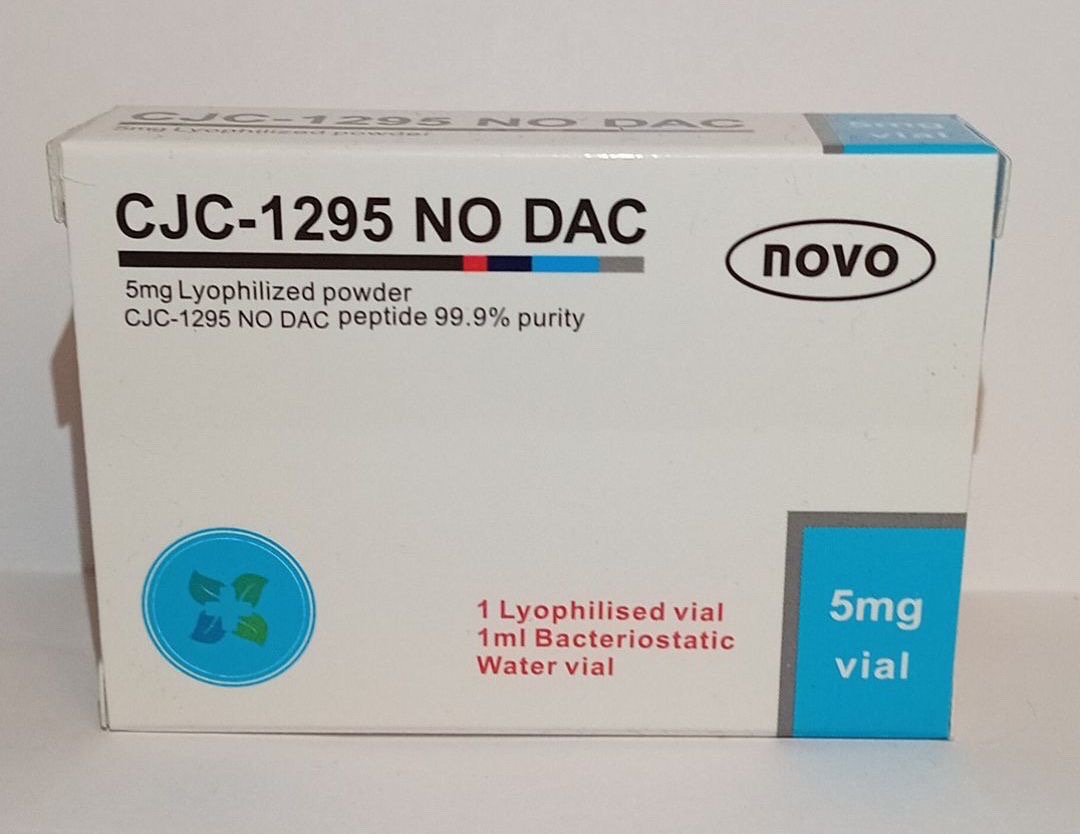
CJC-1295 No DAC (Mod GRF 1-29) | Novo Peptides
€ 45,00
In StockBuy premium CJC-1295 No DAC | Novo Peptides | Novo Peptides online. High purity, lab-tested, and fast shipping. Ideal for your cycle needs. Order CJC-1295 No DAC | Novo Peptides securely today!
Acne
N/A
Half-Life
N/A
Dosage
N/A
Detection Time
N/A
Aromatization
N/A
Water Retention
N/A
Hepatotoxicity
N/A
HBR
N/A
Product Information
About CJC-1295 No DAC (Mod GRF 1-29) | Novo Peptides
Natural Growth Hormone Stimulation
CJC-1295 No DAC (also known as Mod GRF 1-29) is a synthetic peptide that mimics the body’s own Growth Hormone Releasing Hormone (GHRH). Unlike HGH injections which shut down your natural production, CJC-1295 stimulates your pituitary gland to release healthy, pulsatile bursts of Growth Hormone.
This results in enhanced fat loss, improved muscle definition, better sleep, and faster recovery—all without the side effects often associated with synthetic HGH (like water retention or insulin resistance).
Key Benefits:
- Boosts HGH Levels: Stimulates natural, pulsatile release.
- Fat Loss: Increases metabolism and lipolysis.
- Muscle Growth: Enhances protein synthesis.
- Anti-Aging: Improves skin quality and sleep.
- No "Bleed": Mimics natural rhythms (No DAC version).
Dosage:
- Typical Dose: 100mcg per injection.
- Frequency: 2-3 times per day (e.g., morning, post-workout, before bed).
- Stacking: Highly effective when stacked with GHRP-2 or GHRP-6.
Chemical Profile
Active compound: CJC-1295 (No DAC)
- Chemical class: Synthetic peptide analog of human growth hormone–releasing hormone (GHRH).
- Primary structural description: A 29–amino-acid peptide corresponding to the N‑terminal 1–29 residues of human GHRH (GRF(1‑29)) that has been chemically modified to improve resistance to proteolysis (commonly reported modification: D‑Ala substitution at position 2). The molecule retains the GHRH pharmacophore necessary for high‑affinity interaction with the GHRH receptor (GHRHR) on pituitary somatotrophs.
- Empirical properties: small peptide (molecular mass on the order of 3–3.5 kDa), water‑soluble when appropriately formulated as a lyophilized powder or in buffered aqueous solution. The No‑DAC variant lacks the albumin‑binding Drug Affinity Complex (DAC) moiety present in the CJC‑1295 (with DAC) formulation; consequently it does not exhibit prolonged circulation by serum albumin binding.
- Half‑life: The circulating plasma half‑life of the No‑DAC form is short relative to the DAC‑conjugated form. Reported plasma half‑life estimates for the unmodified/No‑DAC 1–29 GHRH analog are on the order of tens of minutes (commonly cited range ~20–60 minutes), with biological effects (pulsatile GH release) appearing within 30–60 minutes of exposure and lasting for several hours depending on dosing and physiological context. (Note: half‑life values are preparation‑ and assay‑dependent.)
Clinical Pharmacology
- Mechanism of action: CJC‑1295 No DAC is a growth hormone–releasing hormone receptor (GHRHR) agonist. It binds to the GHRHR (a Gs protein–coupled receptor) on anterior pituitary somatotrophs, activating adenylate cyclase and increasing intracellular cyclic AMP. Downstream signalling (PKA activation and subsequent intracellular calcium mobilization) promotes exocytosis of stored growth hormone (GH) and upregulates GH synthesis. The pharmacodynamic profile is characterized by induction of pulsatile GH secretion rather than continuous release.
- Downstream endocrine effects: Acute increases in systemic GH concentration stimulate hepatic and peripheral production of insulin‑like growth factor‑1 (IGF‑1). Repeated or sustained increases in circulating GH/IGF‑1 may modulate protein, carbohydrate and lipid metabolism and influence tissue anabolic/catabolic balance; these downstream effects depend on dose, frequency of exposure, baseline endocrine status, and somatostatin-mediated inhibitory tone.
- Pharmacokinetic/pharmacodynamic considerations: Because the No‑DAC variant is rapidly cleared relative to albumin‑bound analogs, its systemic exposure is transient, producing discrete GH pulses that mimic endogenous secretory physiology more closely than long‑acting conjugates. The magnitude of GH release is dependent on somatotroph responsiveness and is modulated by endogenous somatostatin; coexisting pituitary or hypothalamic pathology alters response. Metabolism occurs primarily via systemic and tissue peptidases; renal clearance and proteolytic degradation are major elimination pathways.
- Receptor specificity and off‑target activity: The primary target is the GHRH receptor. There is limited evidence for significant direct agonism at other hypothalamic/pituitary receptors, although indirect effects on other hypothalamic peptides can occur as a consequence of altered GH/IGF‑1 signaling.
Storage & Stability
- Physical form: Typically supplied as a sterile lyophilized peptide powder for research/ investigational use; formulations and excipients vary by manufacturer/laboratory preparation.
- Recommended storage conditions (general biochemical/peptide guidance): Lyophilized material is generally stored refrigerated (2–8 °C) or frozen (≤ −20 °C) and protected from moisture and light to maximize shelf life. Lyophilized peptides are more stable than aqueous solutions and can retain activity for extended periods when stored desiccated at low temperatures.
- Reconstituted stability: Aqueous solutions of peptide are less stable than lyophilized solids; stability of reconstituted No‑DAC preparations is limited and is influenced by pH, buffer composition, temperature, and presence of preservatives. Short‑term refrigerated storage (2–8 °C) is typically used for limited periods; extended storage of aqueous solutions increases risk of hydrolysis and microbial contamination. Multiple freeze–thaw cycles should be avoided to limit aggregation and degradation.
- Degradation pathways: Proteolytic cleavage, deamidation, oxidation of susceptible residues, and aggregation are principal degradation mechanisms. Formulation pH and oxidative conditions modulate the rate of these reactions.
- Handling precautions: As a biologically active peptide, handling should follow appropriate laboratory biosafety and chemical handling protocols. Avoid prolonged exposure to room temperature and direct light. Verify identity and purity by appropriate analytical methods (e.g., HPLC, mass spectrometry) prior to experimental use.
General Information
- Therapeutic and research context: CJC‑1295 No DAC is an investigational GHRH receptor agonist used in basic and translational research to study regulation of the somatotropic axis, pituitary physiology, GH secretory dynamics, and related metabolic effects. It has been evaluated experimentally in contexts such as GH‑deficiency models, studies of aging‑related endocrine changes, and investigations into anabolic/catabolic regulation.
- Regulatory status: The No‑DAC form is not an approved therapeutic agent in most regulatory jurisdictions; clinical use should be limited to regulated research or clinical trials with appropriate oversight. The compound’s safety, efficacy, and long‑term consequences have not been established for general clinical therapy outside controlled investigational settings.
- Clinical considerations and cautions: Pharmacologic modulation of the GH axis can have wide‑ranging endocrine and metabolic consequences. Potential biologic risks associated with increased GH/IGF‑1 include glucose intolerance/insulin resistance, fluid retention, changes in lipid metabolism, and theoretical risks related to proliferative signaling in susceptible tissues. Use in subjects with active malignancy, proliferative disorders, or unrecognized pituitary pathology requires careful evaluation. Interpretations of GH and IGF‑1 responses should account for biological variability and assay limitations.
- Research utility: The compound is used as a tool to elicit controlled GH pulses to study downstream metabolic effects, receptor pharmacology, and interactions with somatostatinergic control mechanisms. Comparative studies between No‑DAC and DAC‑conjugated analogs inform understanding of pharmacokinetic modification strategies (e.g., serum albumin binding) for peptide therapeutics.
(Note: This monograph is intended for scientific and clinical reference. It does not provide dosing, administration, or procurement guidance. For regulatory, safety, and protocol development, consult primary literature and institutional oversight.)
Dosage
Recommended
N/A
Half-Life
N/A
Benefits
- Laboratory tested for purity
- Pharmaceutical quality guaranteed
- Discrete and secure shipping
- Excellent customer service
- Fast delivery throughout Europe
Free Shipping
Free shipping on orders over €200.
Delivery Guarantee
Free reshipment if your order does not arrive.
Fast Delivery
Shipped within 24h. Delivery 48-72h in NL & BE.
Bitcoin Payment
Pay securely and stay completely anonymous with Bitcoin.
Secure Checkout
Secured SSL connection for all transactions.
Authentic
Authenticity verification for all our products.