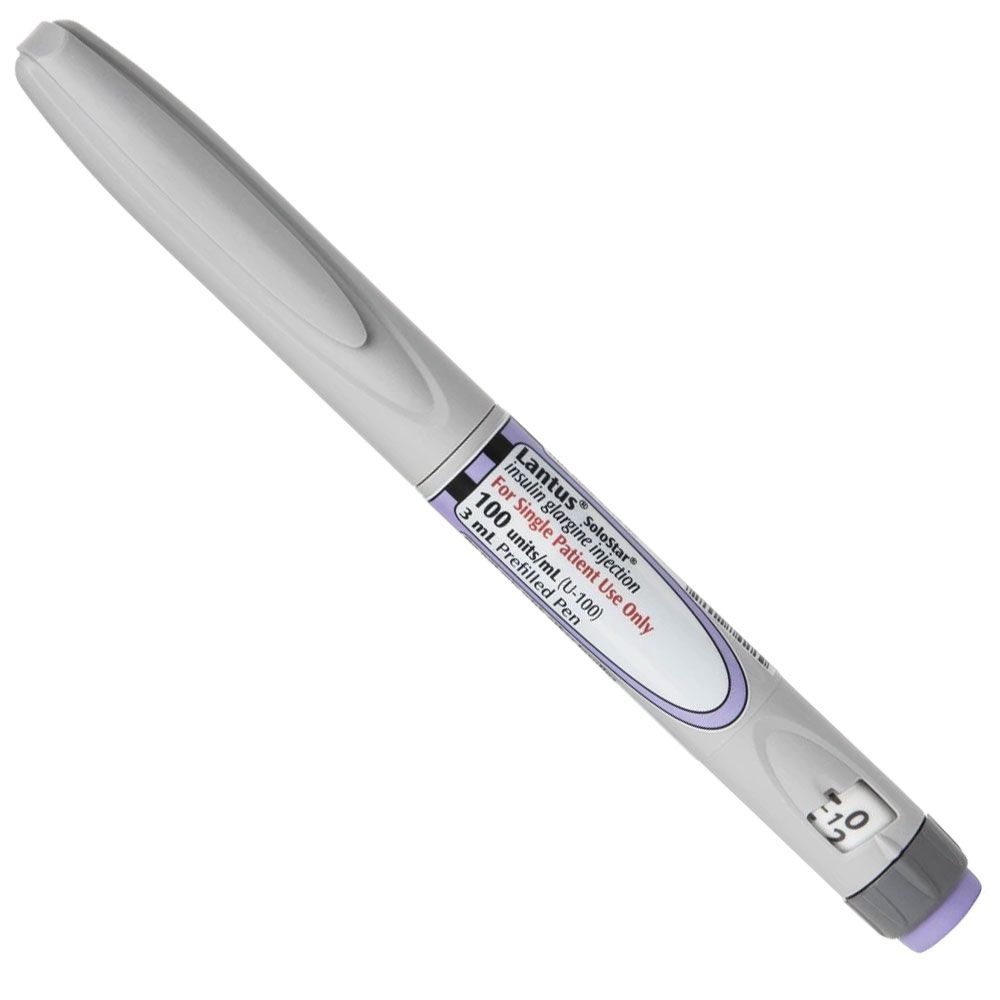
Lantus 300 IU (Insulin Glargine) | Sanofi
€ 30,00
In StockBuy premium Lantus 300 IU | Sanofi online. High purity, lab-tested, and fast shipping. Ideal for your cycle needs. Order Lantus 300 IU | Sanofi securely today!
Acne
No
Half-Life
12 Hours
Dosage
Individualized; commonly 10-80 IU Daily
Detection Time
24-36 Hours
Aromatization
No
Water Retention
Yes
Hepatotoxicity
No
HBR
No
Product Information
About Lantus 300 IU (Insulin Glargine) | Sanofi
1. Description — Clinical summary
"Lantus" is the brand name for insulin glargine, a long‑acting (basal) human insulin analog used to improve glycaemic control in people with diabetes mellitus. The usual marketed Lantus formulation is insulin glargine 100 units/mL (U‑100). The term "300 IU" most commonly describes insulin glargine U‑300 (300 units/mL), which is a more concentrated formulation of insulin glargine (marketed in many countries as Toujeo). If you have a product labeled "Lantus 300 IU," confirm the exact product name and concentration with your pharmacy or prescriber because labeling and brand names differ by country.
Insulin glargine provides a relatively constant, prolonged basal insulin level with no pronounced peak, intended to control fasting and between‑meal glucose for approximately 24 hours (U‑100) and up to 36 hours with the more concentrated U‑300 formulation. It is used in type 1 diabetes as part of a basal‑bolus regimen and in type 2 diabetes when basal insulin is indicated (alone or combined with other agents).
2. How does Lantus 300iu work? — Mechanism of action
- Active compound: insulin glargine (a recombinant human insulin analog).
- Pharmacodynamics: insulin glargine binds to the insulin receptor, activating intracellular signaling that increases glucose uptake (especially in skeletal muscle and adipose tissue), inhibits hepatic gluconeogenesis, and promotes glycogen, protein and lipid synthesis. The net effect is lowering of blood glucose.
- Prolonged action mechanism: insulin glargine is formulated to be soluble at acidic pH and to precipitate after subcutaneous injection (physiologic pH). The precipitate slowly redissolves, providing a steady, long‑lasting release. In the U‑300 (300 units/mL) formulation, a smaller depot surface and higher concentration produce even slower and more constant release, extending duration and flattening the time‑action profile.
- Onset, peak, duration: onset within a few hours; minimal peak and prolonged duration. U‑100 typically covers about 24 hours; U‑300 can provide a longer and more stable effect up to ~36 hours in many patients.
3. Dosage — Medical and varying usage guidelines
General principles
- Dosing must be individualized based on type of diabetes, body weight, prior insulin therapy, renal/hepatic function, concurrent medications and glucose monitoring.
- Basal insulin (insulin glargine) is generally given once daily at the same time each day.
- Do not mix insulin glargine with other insulins in the same syringe or vial (it may be compatible with some pens designed for co‑administration, but verify product instructions).
Typical starting doses (general clinical practice):
- Type 2 diabetes (insulin‑naïve): commonly start 10 units once daily or 0.1–0.2 units/kg once daily, given at the same time each day (often evening or bedtime, but timing can be individualized).
- Type 1 diabetes: total daily insulin requirement often 0.4–1.0 units/kg/day; basal component often ~40–50% of total daily dose. Basal dose must be individualized and balanced with prandial insulin.
- Hospitalized or acutely ill patients: dosing must be individualized under close medical supervision.
Converting from other basal insulins
- When switching from another basal insulin (including Lantus U‑100), many prescribers start with a unit‑to‑unit conversion (same total daily units), then adjust based on fasting glucose readings. However, some patients switching to insulin glargine U‑300 may require dose increases to achieve the same glycaemic control. Follow product labeling and monitor glucose closely after conversion.
- Always reassess blood glucose frequently in the initial 3–7 days after switching; adjust dose in small increments (e.g., 2–4 units or 10–15% every 3 days) based on fasting plasma glucose targets.
Titration guidance (example approach for outpatients)
- Measure fasting plasma glucose (FPG) daily.
- Adjust dose every 3–7 days:
- If FPG above target, increase basal insulin by 2–4 units (or 10–15%) every 3 days until target achieved.
- If fasting hypoglycaemia occurs, reduce dose by 10–20% or 2–4 units and reassess.
- Individual FPG targets depend on patient factors (typical target ~80–130 mg/dL 4.4–7.2 mmol/L for many nonpregnant adults; individualize).
Important administration points
- Inject subcutaneously (abdomen, thigh, buttock, or upper arm). Rotate injection sites within the same region to reduce variability and risk of lipohypertrophy.
- Use a new needle for each injection (follow device instructions).
- Do not shake the insulin. Do not mix glargine with other insulins in the same syringe.
Special populations
- Renal or hepatic impairment: insulin clearance may be altered; dose reductions often required and closer monitoring recommended.
- Elderly: start conservatively and titrate slowly because of hypoglycaemia risk.
- Pregnancy and lactation: insulin is preferred for glycaemic control in pregnancy; use under specialist guidance and frequent monitoring.
Always follow the specific product's prescribing information and your clinician's instructions.
4. Side effects — Common and rare adverse effects
Major risk: hypoglycaemia
- Hypoglycaemia is the most frequent and potentially severe adverse effect of insulin therapy. Symptoms: shaking, sweating, palpitations, anxiety, hunger, confusion, blurred vision, dizziness, loss of consciousness. Severe hypoglycaemia can cause seizure, coma or death.
- Risk factors: missed meals, excessive dose, increased physical activity, alcohol, concomitant hypoglycaemic agents (sulfonylureas, meglitinides), renal/hepatic impairment, elderly, changes in injection site or regimen.
Common adverse effects
- Injection site reactions: pain, erythema, itching.
- Weight gain (common with insulin therapy).
- Lipohypertrophy or lipoatrophy at injection sites (improper rotation increases risk).
- Peripheral edema (fluid retention).
- Localized allergic reactions.
Less common / rare but serious effects
- Severe systemic allergic reactions including anaphylaxis (rare).
- Hypokalemia — insulin drives potassium into cells; monitor in high‑risk settings (e.g., concomitant IV insulin, in critically ill patients).
- Immune‑mediated reactions: antibody formation can alter insulin requirements in rare cases.
- Skin hypertrophy or atrophy leading to erratic absorption.
- Potential cardiovascular fluid retention in combination with thiazolidinediones — monitor for heart failure signs when used with these agents.
Drug interactions that alter effect or risk
- Increased hypoglycaemia risk: sulfonylureas, meglitinides, ACE inhibitors, angiotensin II receptor blockers, fibrates, fluoroquinolones, monoamine oxidase inhibitors, NSAIDs (some), pentoxifylline, propranolol/other nonselective β‑blockers (also mask symptoms).
- Decreased hypoglycaemic effect (require higher insulin dose): corticosteroids, oral contraceptives, thyroid hormones, sympathomimetics (e.g., epinephrine), growth hormone, danazol.
- Many interactions depend on clinical context; review concomitant medications.
Emergency hypoglycaemia management
- Conscious with mild–moderate symptoms: 15–20 g fast‑acting carbohydrate (glucose tablets, juice), recheck glucose after 15 minutes, repeat if still low; follow with a snack or meal.
- Unconscious or unable to swallow: administer intramuscular glucagon (if available) or IV 50% dextrose (hospital setting); seek emergency care.
- After recovery, review cause and adjust regimen to prevent recurrence.
5. Storage — HOW to store it
Always follow the specific manufacturer’s label for the product you have. The instructions below are general guidelines for insulin glargine products; some details differ between formulations (U‑100 Lantus vs U‑300 formulations).
Unopened (in carton)
- Store in a refrigerator (2–8 °C / 36–46 °F).
- Do not freeze. If insulin has been frozen, discard it.
- Protect from light; keep in original carton until first use.
In‑use pens or cartridges (general)
- Many insulin pens/cartridges may be kept at room temperature (up to 25–30 °C / 77–86 °F) after first use — do not refrigerate after opening unless the product label allows it.
- Do not expose to direct heat or sunlight.
- Do not store pens with attached needle.
- Discard pen/cartridge after the manufacturer’s recommended in‑use period (varies by product):
- Lantus (insulin glargine U‑100): commonly discard 28 days after first use (check local labeling).
- Insulin glargine U‑300 (e.g., Toujeo): in‑use pens may be stable for a longer period (e.g., up to 6–8 weeks) depending on the product — check the specific product label.
- Always confirm the exact “in‑use” time on your product leaflet; if beyond recommended period, discard even if insulin remains in the pen.
Safe handling and disposal
- Do not share needles, syringes or pens between patients (risk of blood‑borne pathogen transmission).
- Dispose of needles and sharps in an approved sharps container per local regulations.
Final important notes
- Verify the exact formulation and concentration (U‑100 vs U‑300) on the product you have; dosing, device instructions and in‑use storage periods differ by formulation.
- Always follow your prescriber’s dosing and titration plan and the patient information leaflet that comes with the product.
- For any unexpected reactions, persistent hypoglycaemia or hyperglycaemia, or questions about switching formulations, contact your healthcare provider promptly.
Dosage
Recommended
Individualized; commonly 10-80 IU Daily
Half-Life
12 Hours
Benefits
- Laboratory tested for purity
- Pharmaceutical quality guaranteed
- Discrete and secure shipping
- Excellent customer service
- Fast delivery throughout Europe
Free Shipping
Free shipping on orders over €200.
Delivery Guarantee
Free reshipment if your order does not arrive.
Fast Delivery
Shipped within 24h. Delivery 48-72h in NL & BE.
Bitcoin Payment
Pay securely and stay completely anonymous with Bitcoin.
Secure Checkout
Secured SSL connection for all transactions.
Authentic
Authenticity verification for all our products.