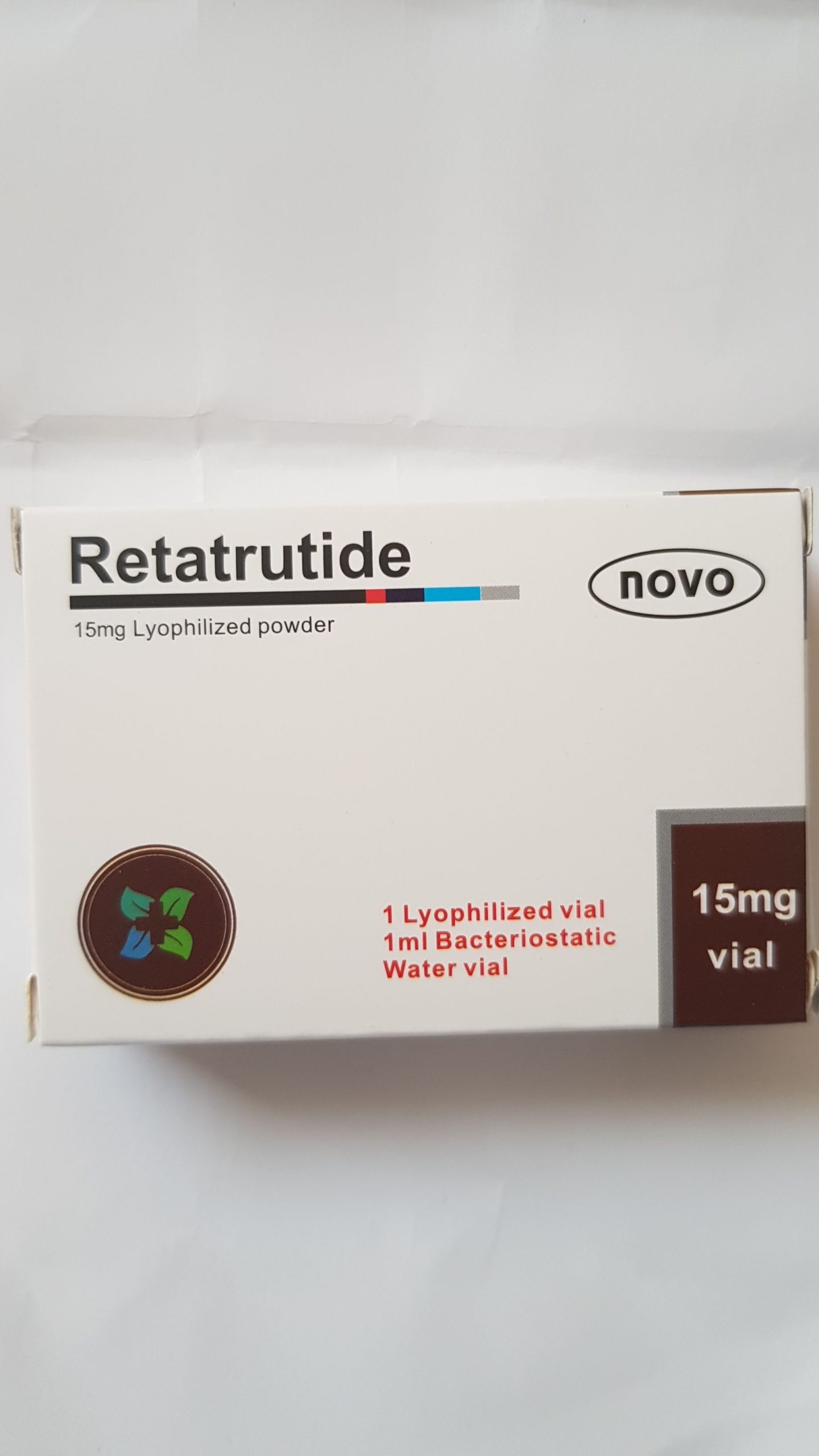
Retatrutide 15 mg | Novo
€ 125,00
Out of StockBuy premium Retatrutide 15 mg | Novo online. High purity, lab-tested, and fast shipping. Ideal for your cycle needs. Order Retatrutide 15 mg securely today!
Acne
No
Half-Life
5-7 Days
Dosage
15 mg Subcutaneous Weekly
Detection Time
4-5 Weeks
Aromatization
No
Water Retention
No
Hepatotoxicity
No
HBR
No
Product Information
About Retatrutide 15 mg | Novo
1. Description — Clinical summary
Retatrutide is an investigational peptide therapeutic designed as a triple-receptor agonist (GLP‑1, GIP and glucagon receptors) being developed for treatment of obesity and related metabolic disorders (for example, overweight with comorbidities and type 2 diabetes). The formulation referred to here as “Retatrutide 15 mg” denotes a preparation containing 15 mg of retatrutide per dose/pen/cartridge (check product labeling for exact presentation). Retatrutide is administered by subcutaneous injection and, like other long‑acting incretin‑based peptides, is intended for chronic, usually once‑weekly dosing regimens under clinical supervision.
Note: As of the date of this document, retatrutide is an investigational agent in clinical trials in many jurisdictions. Local regulatory approval, labeling, and product‑specific instructions must be consulted before clinical use.
2. How does Retatrutide 15 mg work? — Mechanism of action
Retatrutide is a peptide triple‑agonist that activates three receptors involved in energy and glucose homeostasis:
-
GLP‑1 (glucagon‑like peptide‑1) receptor agonism:
- Enhances glucose‑dependent insulin secretion from pancreatic beta cells.
- Suppresses inappropriate glucagon secretion.
- Slows gastric emptying and reduces appetite through central nervous system effects.
-
GIP (glucose‑dependent insulinotropic polypeptide) receptor agonism:
- Augments insulin secretion in a glucose‑dependent manner.
- May synergize with GLP‑1 effects on glucose control and weight regulation.
-
Glucagon receptor agonism:
- Increases hepatic glucose production acutely but, in the context of co‑agonism, may increase energy expenditure and promote lipolysis, contributing to weight loss.
The combined activation is intended to produce greater weight loss and metabolic improvements than single‑receptor agonists by reducing caloric intake, altering energy expenditure, and improving glycemic control. Retatrutide is a peptide modified for prolonged action so that dosing can be at extended intervals (for example, weekly); its pharmacokinetics and receptor selectivity profile are product‑dependent.
3. Dosage — Medical and usage guidelines
Important general principles:
- Use only under specialist supervision (primary care physicians managing obesity, endocrinologists).
- Follow the specific manufacturer’s prescribing information or clinical trial protocol for exact dosing, titration schedule, contraindications and monitoring.
- The goal of dose titration is to reach an effective maintenance dose while minimizing gastrointestinal adverse effects.
Typical clinical practice principles for long‑acting peptide agonists (illustrative, not prescriptive):
- Initiate at a low starting dose and up‑titrate gradually (often every 2–4 weeks) until the target maintenance dose is reached (here, the referenced formulation’s target may be 15 mg weekly). Slow titration reduces nausea, vomiting and other GI intolerance.
- Dosing frequency for retatrutide formulations in development has been weekly (subcutaneous). Confirm product labeling for the exact frequency.
- If severe gastrointestinal adverse effects occur during titration, pause escalation or reduce dose until symptoms resolve; resume slower titration as tolerated.
- In people with type 2 diabetes already on insulin or insulin secretagogues (e.g., sulfonylureas), reduce insulin or secretagogue dose at initiation or monitor closely to avoid hypoglycemia—adjust therapy based on glucose monitoring.
- Concomitant weight‑loss pharmacotherapy should be managed carefully; avoid overlapping contraindicated agents.
- Duration: chronic therapy is likely required to maintain weight loss. Discontinuation may lead to weight regain.
Specific patient groups:
- Renal impairment: dosing adjustments may be required for severe renal impairment or end‑stage renal disease; monitor renal function, and follow label guidance.
- Hepatic impairment: limited data—use caution and follow labeling.
- Older adults: evaluate comorbidities and polypharmacy, start low and titrate cautiously.
- Pregnancy and lactation: use is generally avoided due to unknown fetal/infant risk and because weight‑loss agents are typically contraindicated in pregnancy.
Always consult the official prescribing information for the exact dose, titration schedule and adjustment rules for concomitant medications.
4. Side effects — common and rare
Adverse events listed below reflect the general safety profile of incretin‑based and multi‑agonist peptide therapies. The actual frequency and severity for retatrutide 15 mg must be taken from clinical trial or product labeling.
Common (more frequent)
- Nausea (most common)
- Vomiting
- Diarrhea
- Constipation
- Abdominal pain, dyspepsia, bloating
- Decreased appetite
- Injection‑site reactions (pain, erythema)
- Headache
- Fatigue
Less common / clinically important
- Transient increases in heart rate
- Elevated pancreatic enzymes (amylase, lipase)
- Gallbladder disorders (cholelithiasis, cholecystitis) associated with rapid weight loss
- Dehydration from persistent vomiting or diarrhea, which can worsen renal function
Rare but serious
- Pancreatitis — presentation with severe abdominal pain, vomiting; discontinue and evaluate urgently.
- Acute kidney injury — typically secondary to volume depletion; monitor renal function.
- Severe hypoglycemia — especially when used with insulin or insulin secretagogues; dose adjustments and glucose monitoring required.
- Hypersensitivity reactions including anaphylaxis — rare but possible.
- Thyroid C‑cell tumors — rodent studies of GLP‑1 receptor agonists have shown C‑cell tumors; human relevance is uncertain, but caution is recommended. Contraindicated in patients with a personal or family history of medullary thyroid carcinoma (MTC) or in patients with Multiple Endocrine Neoplasia syndrome type 2 (MEN2) unless product labeling states otherwise.
- Biliary disease and pancreatobiliary complications.
Drug interactions and clinical cautions
- Drugs dependent on gastrointestinal absorption may have altered bioavailability because of delayed gastric emptying; monitor therapeutic drug levels and clinical effect when initiating or stopping retatrutide.
- Concomitant use with insulin and sulfonylureas increases hypoglycemia risk—adjust doses and intensify glucose monitoring.
- Use with other weight‑loss agents should be guided by specialist advice.
If patients develop severe or persistent adverse effects, evaluate and consider dose reduction or discontinuation according to clinical judgment and the product label.
5. Storage — how to store it
Follow the product’s label for exact storage instructions. General peptide storage recommendations:
- Refrigeration: Store refrigerated at 2–8 °C (36–46 °F). Do not freeze. If the product freezes, discard it per manufacturer instructions.
- Protection: Keep in original carton to protect from light.
- In‑use / room temperature guidance: Some peptide pen/cartridge formulations may be kept at controlled room temperature for a limited time once in use (for example, several weeks). Check the specific product label for permitted out‑of‑refrigerator duration, temperature range and whether the product should be discarded after a specified number of days.
- Disposal: Dispose of used needles and syringes in an approved sharps container. Discard expired or compromised product according to local regulations.
Patient counseling points on storage and handling
- Do not expose the product to heat or direct sunlight.
- Do not use if the solution is discolored, cloudy (unless the label states otherwise), or contains particles.
- Carry a cooled container or insulated pouch for travel when refrigeration is required.
- Read and follow the manufacturer’s patient instructions for pen/auto‑injector use, needle attachment, priming, and injection technique.
General monitoring and follow‑up recommendations
- Monitor weight, blood pressure, heart rate, and glycemic control as clinically indicated.
- Check renal function if substantial gastrointestinal adverse effects or dehydration occur.
- Monitor for symptoms of pancreatitis (persistent severe abdominal pain) and biliary disease (e.g., right upper quadrant pain, fever, jaundice).
- Review concomitant medications for hypoglycemia risk and absorption interactions.
Final note: This guide provides an educational overview only. Use of retatrutide 15 mg should follow local approvals, prescribing information, and the supervising clinician’s judgment.
Dosage
Recommended
15 mg Subcutaneous Weekly
Half-Life
5-7 Days
Benefits
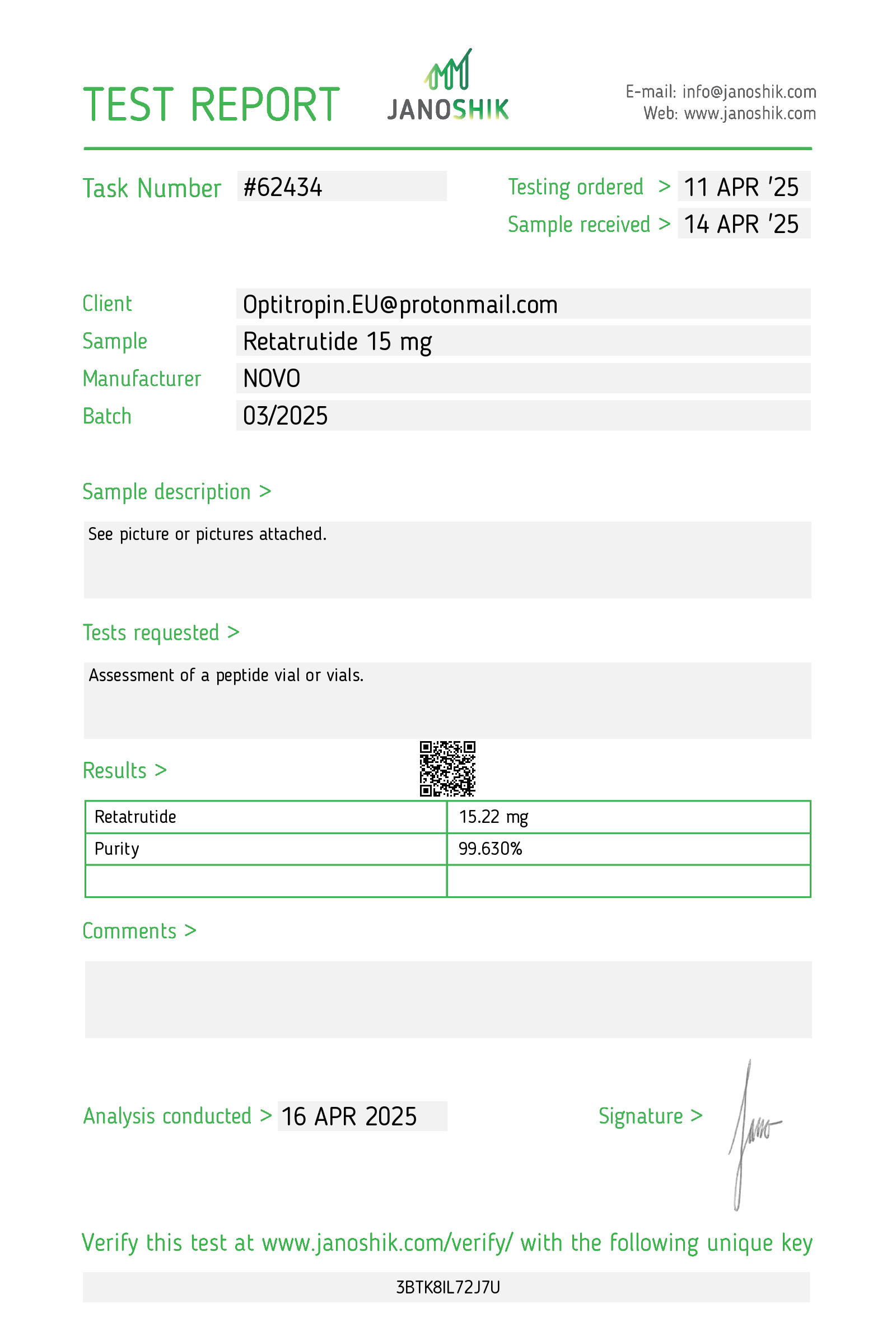
- Laboratory tested for purity
- Pharmaceutical quality guaranteed
- Discrete and secure shipping
- Excellent customer service
- Fast delivery throughout Europe
Free Shipping
Free shipping on orders over €200.
Delivery Guarantee
Free reshipment if your order does not arrive.
Fast Delivery
Shipped within 24h. Delivery 48-72h in NL & BE.
Bitcoin Payment
Pay securely and stay completely anonymous with Bitcoin.
Secure Checkout
Secured SSL connection for all transactions.
Authentic
Authenticity verification for all our products.