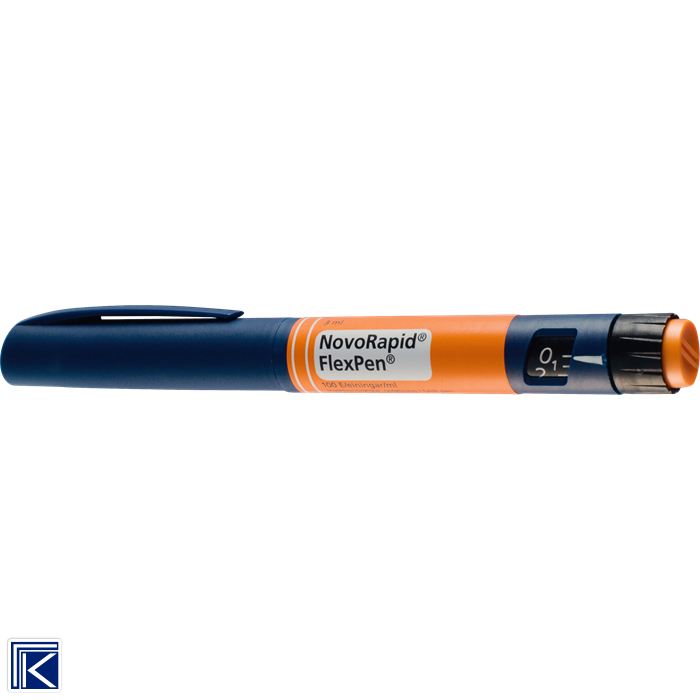
Novorapid 300 IU (Insulin aspart)
€ 30,00
In StockBuy premium Novorapid 300 IU | Novo Nordisk online. High purity, lab-tested, and fast shipping. Ideal for your cycle needs. Order Novorapid 300 IU securely today!
Acne
No
Half-Life
3-5 Hours
Dosage
Individualized; mealtime bolus as prescribed (typically part of total daily dose ~0.5–1.0 IU/kg/day)
Detection Time
Up to 24 Hours
Aromatization
No
Water Retention
No
Hepatotoxicity
No
HBR
No
Product Information
About Novorapid 300 IU (Insulin aspart)
1. Description — Clinical summary
NovoRapid (insulin aspart) is a rapid‑acting recombinant human insulin analogue used to control hyperglycaemia in patients with diabetes mellitus. The preparation commonly described as “NovoRapid 300 IU” refers to a 3 mL cartridge or similar presentation containing insulin aspart at 100 IU/mL (total 300 IU). It is intended for subcutaneous use as bolus (mealtime) insulin in basal–bolus regimens, multiple daily injection therapy, or by continuous subcutaneous insulin infusion (CSII) in insulin pumps when specified by the manufacturer and treating team. It may be used in both type 1 and type 2 diabetes; insulin remains the preferred glucose‑lowering agent in many situations (e.g., pregnancy, severe hyperglycaemia).
Key clinical points
- Rapid onset suitable for prandial (mealtime) blood glucose control.
- Used as part of individualized treatment plans (basal + bolus or pump).
- Requires blood‑glucose monitoring and dose titration by a healthcare professional.
2. How does Novorapid 300iu work? — Mechanism of action
- Active ingredient: insulin aspart — a recombinant insulin analogue in which the amino acid proline at position B28 of human insulin is replaced by aspartic acid.
- This amino‑acid substitution reduces self‑association into hexamers, allowing faster dissociation to monomers after subcutaneous injection and more rapid absorption into the circulation than regular human insulin.
- Pharmacodynamics:
- Onset of action: about 10–20 minutes after subcutaneous injection (may vary).
- Time to peak effect: typically ~1–3 hours.
- Duration of action: generally ~3–5 hours.
- Physiologic effects: binds to insulin receptors in liver, muscle and adipose tissue promoting glucose uptake, inhibiting hepatic glucose output, and modulating lipid and protein metabolism.
- Clinical implication: rapid onset and shorter duration make it appropriate for controlling postprandial glucose excursions when dosed at meal times.
3. Dosage — Medical and varying usage guidelines
Important general principles (not a substitute for individualized medical advice)
- Dose is individualized. Adjustments are based on current glucose levels, carbohydrate intake, insulin sensitivity, body weight, activity, concurrent illnesses, and other medications.
- Always follow the prescribing clinician’s instructions and the product labelling. Units are expressed as international units (IU); use only insulin delivery devices calibrated in IU.
Common approaches
- Basal–bolus regimen (typical for type 1 diabetes):
- Total daily insulin: commonly 0.4–1.0 U/kg/day initially (varies widely).
- About 50% of total daily dose as basal insulin; remaining 50% divided as bolus insulin before meals (i.e., ~1/3 at each main meal as a starting framework).
- Mealtime (prandial) dosing often starts at roughly 0.1–0.2 U/kg per meal; then adjusted by glucose monitoring and carbohydrate counting.
- Carbohydrate counting:
- Prandial insulin dose based on carbohydrate‑to‑insulin ratio (e.g., 1 U per 10–15 g carbohydrate is a common starting approximation) and correction factors for pre‑meal hyperglycaemia. Exact ratios and correction factors must be individualized.
- Correction (supplemental) dosing:
- Correction factor (“sensitivity factor”) estimates mg/dL or mmol/L drop per unit of insulin (e.g., rule of 1800 or 1500 used clinically for rapid insulin analogues to estimate 1 U effect; these are advanced tools and must be individualized).
- Type 2 diabetes:
- When used in insulin‑treated type 2 diabetes, initiation and titration are conservative and individualized; prandial insulin may be added stepwise to basal insulin if postprandial hyperglycaemia persists.
- Insulin pumps (CSII):
- Insulin aspart is frequently used for continuous infusion; basal rates and bolus calculators on pumps are individualized. Reservoirs and infusion sets should be changed per manufacturer guidance (commonly every 48–72 hours).
- Special populations:
- Children: dosing individualized by weight and age; pediatric endocrinologist guidance recommended.
- Pregnancy: insulin requirements change during pregnancy; insulin is preferred for glycaemic control in pregnancy but dosing/titration must be supervised closely.
- Renal/hepatic impairment: insulin requirements may decrease with impaired renal function; dose adjustments and close monitoring are required.
- Administration timing:
- Inject at the start of a meal (immediately before) or within ~5–10 minutes after starting a meal if needed, depending on advice from prescriber and individual response.
- Missed dose:
- If a mealtime dose is missed and the meal is skipped, do not inject the dose to avoid hypoglycaemia. If uncertain, check blood glucose and seek clinician advice.
- Important safety note:
- Never change dose or regimen without medical guidance. Small dose changes can cause severe hypo‑ or hyperglycaemia.
4. Side effects — common and rare adverse effects
Common
- Hypoglycaemia (most frequent and potentially serious): symptoms include sweating, tremor, palpitations, anxiety, hunger, confusion, blurred vision, dizziness, and in severe cases loss of consciousness or seizures.
- Injection site reactions: pain, redness, itching, irritation.
- Weight gain may occur with improved glycaemic control.
Less common / rare but important
- Allergic reactions: local allergy is common; systemic allergic reactions (generalized skin reactions, angioedema, bronchospasm, anaphylaxis) are rare but potentially life‑threatening.
- Lipodystrophy at injection sites:
- Lipohypertrophy (fat accumulation) or lipoatrophy (fat loss); rotate injection sites to reduce risk.
- Hypokalaemia: insulin shifts potassium intracellularly; severe insulin therapy (especially IV) can cause clinically significant hypokalaemia.
- Edema: fluid retention and exacerbation of congestive heart failure have been reported.
- Visual changes: rapid improvement in glycaemic control can transiently change refractive state — monitor if symptoms occur.
- Interaction‑related changes: concomitant medications can increase/decrease insulin requirements, increasing risk of hypo/hyperglycaemia.
Drug interaction categories (examples)
- May increase hypoglycaemia risk with: sulfonylureas, meglitinides, ACE inhibitors, ARBs, certain antidepressants (MAO inhibitors), fibrates, quinolones, pentamidine, and alcohol.
- May reduce hypoglycaemia risk/be associated with hyperglycaemia: corticosteroids, thiazide diuretics, sympathomimetics, atypical antipsychotics, oral contraceptives, growth hormone, and thyroid hormones.
- Beta‑blockers can mask hypoglycaemia symptoms and delay recovery (reduce warning signs); use with caution.
Contraindications and precautions
- Contraindicated in patients with hypersensitivity to insulin aspart or any excipients.
- Use with caution in patients with renal or hepatic impairment, elderly patients, and those with hypoglycaemia unawareness.
Always advise patients to carry fast‑acting carbohydrate and to have regular glucose monitoring. Educate about recognising and treating hypoglycaemia and when to seek emergency care.
5. Storage — how to store it
Unopened containers (fridge storage)
- Store unopened cartridges, pens, or vials refrigerated at 2–8 °C (36–46 °F). Do not freeze.
- Do not store near the freezer compartment or where they can be exposed to freezing. If insulin has been frozen, do not use.
In‑use containers (room temperature guidance)
- Once a cartridge/pen/vial is in use, the typical manufacturer guidance for insulin aspart is to keep at room temperature up to a designated time (commonly up to 28 days / 4 weeks) — check the exact product label for the specific allowable in‑use time and maximum temperature (often ≤30 °C).
- Do not expose to high temperatures (e.g., direct sunlight, >30–35 °C) and avoid freezing.
Pump reservoirs and infusion sets
- Follow the pump and insulin manufacturer instructions for storage after filling reservoirs. Change infusion sets and reservoirs per product recommendations (commonly every 48–72 hours) to reduce infection risk and variability in absorption.
Handling and disposal
- Protect from light and do not shake vigorously (may denature insulin).
- Use only insulin delivery devices calibrated for U‑100 insulin.
- Dispose of needles and syringes in approved sharps containers per local regulations.
- Check vial/pen/cartridge for particulate matter or discoloration; insulin aspart is normally clear and colourless—do not use if discoloured or containing particles.
Final clinical reminders
- Always follow the prescriber's dosing instructions and local product labelling.
- Regular self‑monitoring of blood glucose (and HbA1c checks) is essential to safe and effective insulin therapy.
- Provide clear education to patients about injection technique, site rotation, hypoglycaemia recognition/treatment, sick‑day rules, and when to contact healthcare providers.
If you want, I can add: a brief comparison between rapid‑acting insulins, pictorial injection site rotation guidance, or typical carbohydrate‑to‑insulin ratio examples — or provide manufacturer‑specific storage times for a particular NovoRapid product presentation.
Dosage
Recommended
Individualized; mealtime bolus as prescribed (typically part of total daily dose ~0.5–1.0 IU/kg/day)
Half-Life
3-5 Hours
Benefits
- Laboratory tested for purity
- Pharmaceutical quality guaranteed
- Discrete and secure shipping
- Excellent customer service
- Fast delivery throughout Europe
Free Shipping
Free shipping on orders over €200.
Delivery Guarantee
Free reshipment if your order does not arrive.
Fast Delivery
Shipped within 24h. Delivery 48-72h in NL & BE.
Bitcoin Payment
Pay securely and stay completely anonymous with Bitcoin.
Secure Checkout
Secured SSL connection for all transactions.
Authentic
Authenticity verification for all our products.