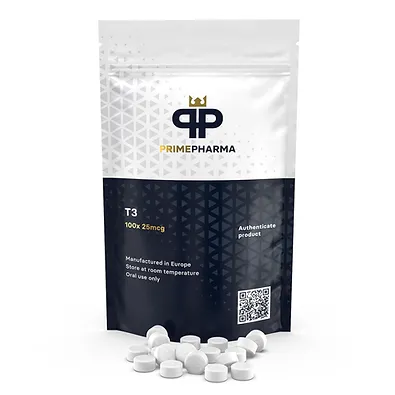
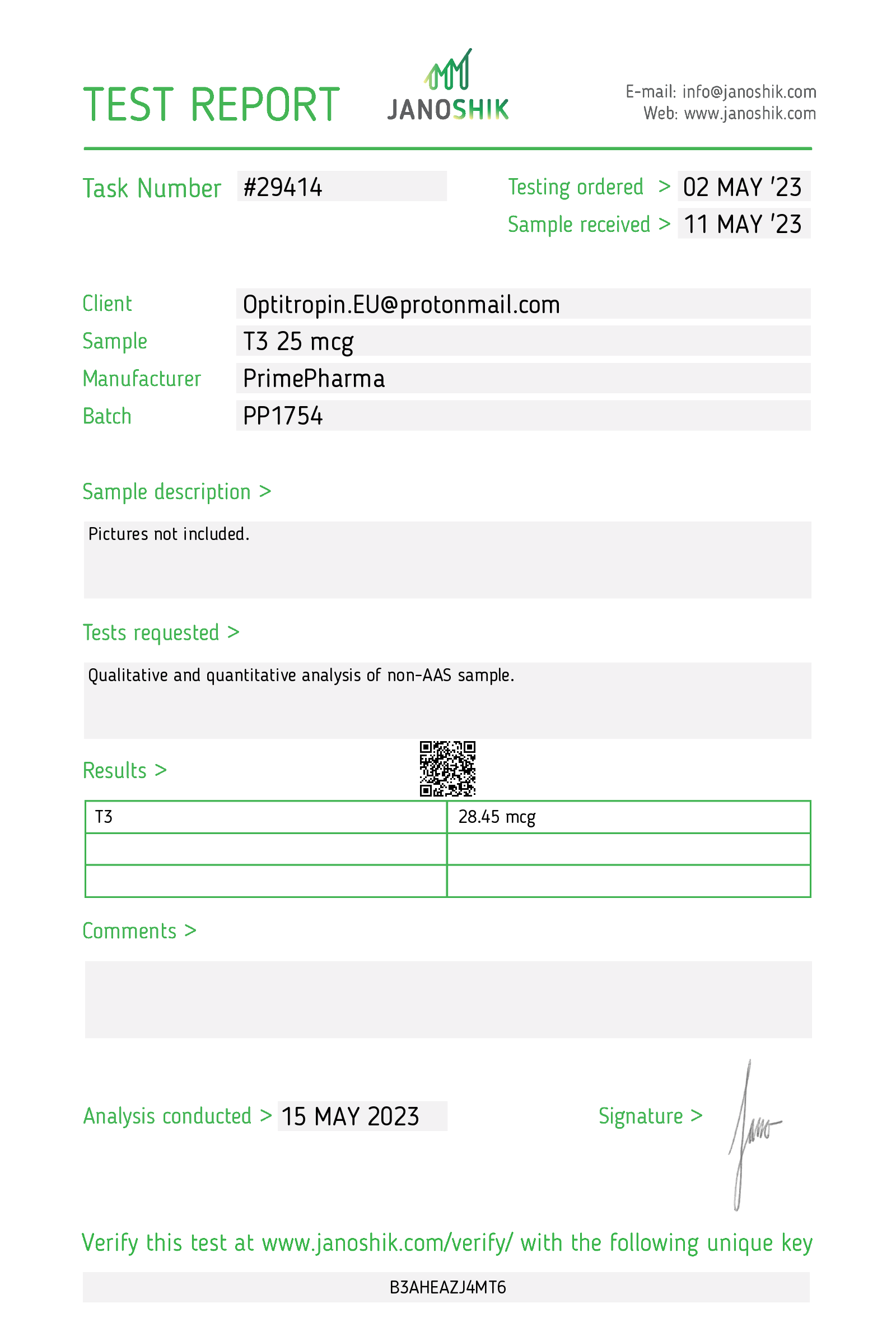
Liothyronine 25 mcg (Prolonged-Release)
€ 42,50
In StockBuy premium Liothyronine 25 mcg | Prime Pharma online. High purity, lab-tested, and fast shipping. Ideal for your cycle needs. Order Liothyronine 25 mcg securely today!
Acne
No
Half-Life
24 Hours
Dosage
25 mcg Daily (typical 25–75 mcg/day)
Detection Time
5 Days
Aromatization
No
Water Retention
No
Hepatotoxicity
No
HBR
No
Product Information
About Liothyronine 25 mcg (Prolonged-Release)
1. Description
T3 Thyroid 25 mcg (PR) is a formulation of liothyronine sodium (synthetic triiodothyronine, T3) containing 25 micrograms of active T3 per dose. Liothyronine is a thyroid hormone preparation used to replace or supplement endogenous T3 in patients with inadequate thyroid hormone production or in specific clinical situations requiring more rapid thyroid hormone action. It is prescription-only and most commonly used as adjunctive therapy or in short-term, specific clinical settings rather than as first-line long-term therapy for typical hypothyroidism (where levothyroxine/T4 is preferred).
Clinical indications commonly include:
- Selective T3 replacement when T4-to-T3 conversion is impaired or when patients remain symptomatic on levothyroxine alone (under specialist supervision).
- Short-term use in certain diagnostic tests of thyroid function (rare).
- Management of severe hypothyroid states (e.g., myxedema coma) as part of a hospital-managed regimen (usually intravenous liothyronine).
- Situations where rapid onset of thyroid hormone action is required.
2. How does T3 Thyroid 25mcg (PR) work?
Mechanism of action:
- Liothyronine is synthetic triiodothyronine (T3), the metabolically active thyroid hormone. It enters target cells and binds to nuclear thyroid hormone receptors (TRα and TRβ).
- The T3–receptor complex regulates transcription of thyroid-responsive genes, increasing basal metabolic rate and affecting protein, carbohydrate and lipid metabolism, cardiovascular function (increased heart rate and contractility), thermoregulation, and central nervous system function.
- Compared with levothyroxine (T4), liothyronine has more rapid absorption and onset of action and a shorter half-life because it is the active hormone rather than a prohormone that requires peripheral conversion.
Pharmacokinetics (key points):
- Rapid oral absorption; peak serum concentrations typically occur within 2–4 hours.
- Shorter duration of action than T4; dosing is often once daily but some regimens divide doses because of fluctuation in serum T3.
- Metabolized in liver and other tissues; effects and clearance are affected by concomitant illnesses and interacting drugs.
3. Dosage
General principles:
- Levothyroxine (T4) is the standard long-term replacement for hypothyroidism because of its stable pharmacokinetics. Liothyronine is used selectively, often in combination with levothyroxine or for special indications.
- Dosing must be individualized, started low in at-risk populations (elderly, those with coronary disease), and titrated based on clinical response and thyroid function tests. Monitor TSH and free T4/T3 after any dose change.
- Always confirm adrenal insufficiency has been addressed before initiating or increasing thyroid hormone, as unrecognized adrenal insufficiency can precipitate adrenal crisis.
Typical dosing scenarios (examples — treat each patient individually):
A. Chronic hypothyroidism (when liothyronine is used)
- Starting dose: often 5–15 mcg daily, especially in older adults or those with cardiac disease.
- Titration: increase in small increments (e.g., 5–10 mcg) every 2–4 weeks, guided by symptoms and labs.
- Maintenance: many adults on T3 monotherapy require 25–75 mcg/day, often divided (e.g., 2 doses/day) because of peak/trough effects. Some clinicians use combination T4/T3 regimens (e.g., small supplemental doses of T3 added to levothyroxine), but this must be individualized.
B. Myxedema coma/severe hypothyroid emergency (hospital setting; IV preferred)
- Use under critical-care supervision. Typical inpatient regimens reported in guidelines and literature:
- Initial IV bolus 5–20 mcg liothyronine, followed by 2.5–10 mcg IV every 8 hours, adjusting to clinical response.
- T4 (levothyroxine) is frequently given concurrently (e.g., loading dose followed by daily IV), and hydrocortisone is administered until adrenal insufficiency is excluded.
- Protocols vary; follow institutional protocols and endocrinology/critical care guidance.
C. Pediatrics
- Liothyronine is rarely used as routine therapy for congenital hypothyroidism (levothyroxine is preferred). If used, dosing must be specialist-directed, generally weight-based and conservative in neonates and infants because of central nervous system sensitivity.
Special populations and considerations:
- Elderly or coronary artery disease: start with very low doses (e.g., 5 mcg/day), titrate slowly; monitor for ischemic symptoms and arrhythmias.
- Pregnancy: levothyroxine is preferred for hypothyroidism in pregnancy because of stable levels; if liothyronine is used, it should be under specialist supervision with frequent monitoring (TSH) because maternal and fetal thyroid needs change.
- Do not use liothyronine for weight loss or athletic performance enhancement — it is unsafe and contraindicated for these purposes.
Monitoring:
- Check TSH and free T4/free T3 4–6 weeks after starting or changing dose; once stable, monitor every 6–12 months or as clinically indicated.
- Monitor heart rate, blood pressure, ECG (if cardiac disease), and signs of thyrotoxicosis.
- Long-term supraphysiologic exposure increases risk of atrial fibrillation and osteoporosis — consider periodic bone density assessment in at-risk patients.
Drug interactions that affect dosing:
- Drugs that reduce absorption: cholestyramine, bile acid sequestrants, sucralfate, calcium, iron supplements — separate dosing times.
- Drugs that increase metabolism or clearance: rifampin, carbamazepine, phenytoin — may increase thyroid hormone requirements.
- Anticoagulants (warfarin): thyroid hormone can increase sensitivity to warfarin (risk of bleeding) — monitor INR and adjust anticoagulant dose as needed.
- Sympathomimetics and insulin/antidiabetic drugs: thyroid hormone may potentiate their effects; monitor accordingly.
Do not self-adjust doses without medical supervision.
4. Side effects
Common and dose-related (related to excessive thyroid hormone activity)
- Palpitations, tachycardia, increased blood pressure
- Nervousness, anxiety, tremor, insomnia
- Heat intolerance, sweating
- Weight loss, increased appetite
- Gastrointestinal: diarrhea
- Menstrual irregularities
Serious and less common
- Cardiac ischemia, angina exacerbation, arrhythmias (including atrial fibrillation), especially in older patients or those with coronary disease
- Osteoporosis and increased fracture risk with long-term overtreatment (accelerated bone turnover)
- Thyrotoxic crisis (thyroid storm) is rare but life-threatening — more likely with large overdoses or in stressed states
- Allergic reactions are uncommon but possible
If symptoms of excessive thyroid hormone (rapid heartbeat, chest pain, shortness of breath, sudden weight loss, severe tremors, high fever, confusion) occur, seek medical attention promptly.
Contraindications and precautions
- Untreated adrenal insufficiency (must treat adrenal insufficiency before thyroid replacement)
- Acute myocardial infarction or unstable ischemic heart disease — give only under specialist supervision, often starting very low or withholding until stabilized
- Known hypersensitivity to liothyronine or excipients
5. Storage
- Store at controlled room temperature (typically 20–25°C / 68–77°F), unless the product label specifies otherwise. Brief excursions permitted (consult product labeling).
- Protect from moisture and light. Keep in the original container with desiccant if provided.
- Do not store in bathroom or near sinks where humidity is high.
- Keep out of reach and sight of children and pets.
- Dispose of unused medication according to local regulations or pharmacy take-back programs; do not flush unless instructed.
Final notes
- Liothyronine is a potent prescription thyroid hormone with rapid action and narrower therapeutic window than levothyroxine. It must be used under medical supervision with appropriate monitoring to avoid under- or over-replacement and to manage potential cardiac risks.
- If you have specific clinical questions about switching regimens, dosing in special situations (pregnancy, pediatrics, cardiac disease), or interpretation of thyroid tests while on liothyronine, consult an endocrinologist or the prescribing clinician.
Dosage
Recommended
25 mcg Daily (typical 25–75 mcg/day)
Half-Life
24 Hours
Benefits
- Laboratory tested for purity
- Pharmaceutical quality guaranteed
- Discrete and secure shipping
- Excellent customer service
- Fast delivery throughout Europe
Free Shipping
Free shipping on orders over €200.
Delivery Guarantee
Free reshipment if your order does not arrive.
Fast Delivery
Shipped within 24h. Delivery 48-72h in NL & BE.
Bitcoin Payment
Pay securely and stay completely anonymous with Bitcoin.
Secure Checkout
Secured SSL connection for all transactions.
Authentic
Authenticity verification for all our products.