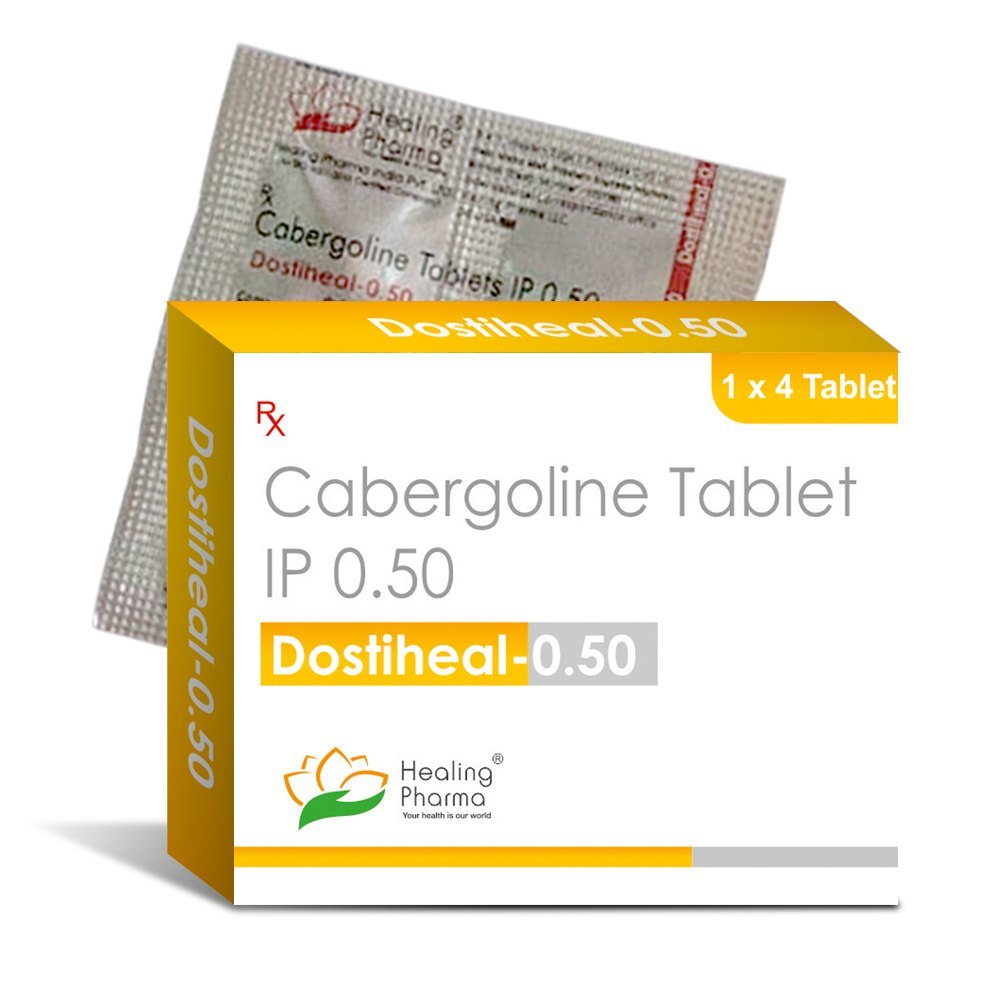
Cabergoline | Dostiheal
€ 50,00
In StockBuy premium Cabergoline | Dostiheal online. High purity, lab-tested, and fast shipping. Ideal for your cycle needs. Order Cabergoline securely today!
Acne
N/A
Half-Life
N/A
Dosage
N/A
Detection Time
N/A
Aromatization
N/A
Water Retention
N/A
Hepatotoxicity
N/A
HBR
N/A
Product Information
About Cabergoline | Dostiheal
Premium Prolactin Control
Cabergoline by Dostiheal is a high-grade dopamine agonist designed for effective management of prolactin levels. High prolactin is a common and troublesome side effect when using compounds like Trenbolone and Nandrolone, leading to sexual dysfunction and potential gynecomastia.
This pharmaceutical-grade preparation ensures precise dosing and maximum reliability for maintaining your hormonal balance and sexual health on cycle.
Key Benefits:
- Prevent "Deca Dick": Ensures strong libido and function by normalizing prolactin.
- Blocks Lactation: Prevents prolactin-related breast tissue development.
- Enhances Well-being: Improves dopamine levels for better mood and drive.
- Pharmaceutical Grade: Manufactured to strict quality standards by Dostiheal.
Dosage:
- Standard Dose: 0.25mg to 0.5mg twice per week.
- Management: Titrate carefully; it is a potent compound.
Chemical Profile
- International nonproprietary name (INN): Cabergoline
- Active compound: cabergoline (ergoline derivative)
- Chemical class: Ergot alkaloid derivative (ergoline scaffold)
- Molecular formula: C26H37N5O2
- Molecular weight: approximately 451.6 g·mol−1
Molecular structure description:
- Cabergoline is based on the tetracyclic ergoline (indole-based) core. The molecule contains the characteristic ergoline fused ring system (indole nucleus fused to a cyclopentane and a piperidine-like ring).
- Key substituents include an allyl group at the 6-position of the ergoline nucleus and a carbamoyl-linked side chain at C-8. The C-8 substituent is a urea/carbamide-type moiety bearing a 3-(dimethylamino)propyl functionality, which confers basicity and increases lipophilicity relative to the parent ergoline.
- The molecule is amphiphilic with both a polar tertiary amine (dimethylamino) and an amide/urea linkage, and a hydrophobic ergoline core.
Half-life:
- Cabergoline exhibits a long terminal elimination half-life. Reported terminal half-life values in humans are typically in the range of approximately 63 to 115 hours (commonly cited mean/median ~65 hours), reflecting slow elimination and supporting prolonged pharmacodynamic effects after single doses.
Clinical Pharmacology
Mechanism of action:
- Cabergoline is a potent agonist at dopamine D2-like receptors (principally D2, with activity at D3 and lesser activity at other dopamine receptor subtypes). Activation of D2 receptors (Gi/o-coupled) on anterior pituitary lactotrophs inhibits adenylate cyclase, reduces intracellular cAMP, modulates K+ and Ca2+ channel conductance (hyperpolarization and reduced Ca2+ influx), and thereby suppresses prolactin synthesis and secretion. Chronic D2 receptor stimulation also reduces lactotroph cell size and can induce tumor shrinkage in prolactin-secreting adenomas (prolactinomas).
- In the central nervous system, D2/D3 receptor agonism in the nigrostriatal and mesolimbic pathways mediates antiparkinsonian and neuropsychiatric effects, respectively. Mesolimbic D3/D2 stimulation can contribute to behavioral effects such as impulse control disorders observed with dopamine agonists.
- Receptor selectivity/profile relevant to safety: cabergoline, as an ergot derivative, has notable agonist activity at certain serotonergic receptors, in particular 5-HT2B. Agonism at 5-HT2B receptors on cardiac valvular interstitial cells can activate mitogenic signaling pathways (Gq/PLC/IP3/Ca2+ cascade and downstream fibroblast proliferation), which has been mechanistically linked to valvular fibroproliferative changes observed with some ergoline-derived dopamine agonists. This receptor activity underlies the pharmacologic basis for valvular risk associated with prolonged or high cumulative exposure.
- Pharmacodynamic onset and duration: due to high receptor affinity and a prolonged terminal elimination half-life, cabergoline produces sustained D2 receptor stimulation following oral administration; clinical effects on prolactin secretion are evident relatively rapidly and may persist beyond plasma exposure because of slow dissociation and prolonged systemic presence.
Additional pharmacokinetic/pharmacodynamic notes (biochemical relevance):
- Cabergoline is absorbed after oral administration, undergoes extensive hepatic metabolism (including hydrolytic and oxidative pathways), and is eliminated as metabolites in feces and urine. Its long half-life and moderate plasma protein binding contribute to prolonged pharmacologic activity and accumulation with repeated dosing. Metabolic and excretory pathways modulate exposure and potential drug–drug interactions, particularly with agents that affect hepatic metabolism or P-glycoprotein–mediated transport.
Storage & Stability
- Dosage forms (tablets): store in a cool, dry place protected from light. Recommended storage is controlled room temperature (commonly specified as 20–25 °C or with permissible excursions approximately 15–30 °C), in a tightly closed container to protect from moisture.
- Active pharmaceutical ingredient (bulk): store in a well-closed container under dry, cool, and dark conditions; protection from moisture, heat, and oxidizing agents is advised. An inert atmosphere (e.g., nitrogen) can be used for long-term storage of the API to minimize oxidative degradation.
- Stability considerations: cabergoline contains amide/urea linkages and a tertiary amine that can be susceptible to hydrolytic and oxidative pathways; degradation is accelerated by high temperature, extremes of pH, light exposure, and humidity. Aqueous solutions are less stable than solid dosage forms and may undergo hydrolysis; freezing and thawing of liquid formulations should be avoided. Stability data (shelf life) are product- and container-specific; follow product labeling and pharmacopeial standards for expiry dating and storage instructions.
- Handling: avoid exposure to strong oxidants and extreme pH; use appropriate secondary containment and moisture control for API handling and formulation.
General Information (Common medical uses)
- Hyperprolactinemia: Cabergoline is primarily used to treat hyperprolactinemia caused by prolactin-secreting pituitary adenomas (prolactinomas) or other causes of elevated prolactin. Through potent D2 receptor agonism on pituitary lactotrophs, cabergoline reduces circulating prolactin concentrations and can induce reduction in tumor size in prolactinomas.
- Parkinsonian syndromes: Cabergoline has been used as a dopamine agonist in the treatment of Parkinson’s disease in some jurisdictions, where D2/D3 receptor stimulation in the nigrostriatal pathway provides motor symptom benefit. Use in Parkinson’s disease is influenced by safety considerations related to ergot-derived agents.
- Adjunctive endocrine indications: Cabergoline is employed as adjunctive therapy in selected endocrine disorders characterized by hyperprolactinemia or by mixed-secreting pituitary adenomas (e.g., some acromegaly cases with co-secretion of prolactin), where reduction of prolactin or tumor shrinkage is desired.
- Other clinical applications (off-label and situational): in some clinical contexts cabergoline has been used off-label for suppression of lactation postpartum, treatment of certain menstrual or fertility disturbances caused by hyperprolactinemia, or as part of combined therapy in complex pituitary disorders. These uses depend on regional regulatory approvals and clinical judgement.
Clinical considerations (biochemical basis):
- Therapeutic efficacy is directly related to D2 receptor-mediated suppression of prolactin. The long pharmacokinetic half-life contributes to sustained effect and dosing regimens that exploit prolonged activity.
- Safety concerns tied to receptor pharmacology include valvular heart disease (linked to 5-HT2B agonism), orthostatic hypotension (vascular dopaminergic/adrenergic effects), neuropsychiatric effects (impulse control disorders related to mesolimbic dopamine receptor stimulation), and other dopaminergic adverse effects (nausea, dizziness). Monitoring and risk–benefit assessment should consider these mechanistic risks when initiating or continuing therapy.
Dosage
Recommended
N/A
Half-Life
N/A
Benefits
- Laboratory tested for purity
- Pharmaceutical quality guaranteed
- Discrete and secure shipping
- Excellent customer service
- Fast delivery throughout Europe
Free Shipping
Free shipping on orders over €200.
Delivery Guarantee
Free reshipment if your order does not arrive.
Fast Delivery
Shipped within 24h. Delivery 48-72h in NL & BE.
Bitcoin Payment
Pay securely and stay completely anonymous with Bitcoin.
Secure Checkout
Secured SSL connection for all transactions.
Authentic
Authenticity verification for all our products.