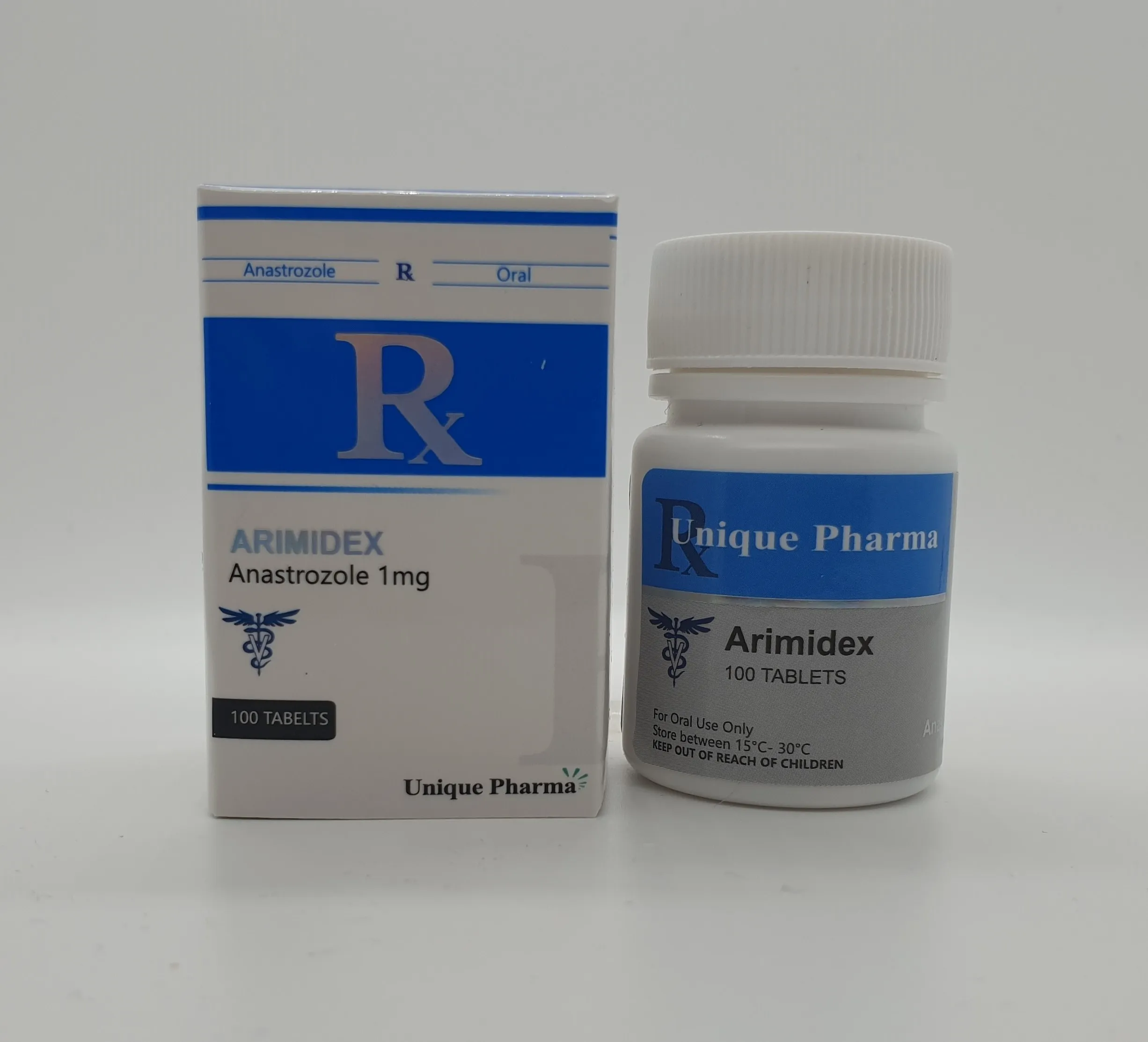
Ultimate Estrogen Control
Arimidex (Anastrozole) is the most widely used Aromatase Inhibitor (AI) for bodybuilders on cycle. Its primary function is to block the conversion of testosterone into estrogen, preventing the most dreaded side effects of anabolic steroid use.
High estrogen levels can lead to water retention, "bloated" face, and gynecomastia (development of female breast tissue). Arimidex effectively keeps estrogen in the sweet spot—low enough to prevent side effects, but high enough to maintain libido and joint health.
Key Benefits:
- Prevents Gynecomastia: Stops "gyno" before it starts by blocking aromatization.
- Reduces Water Retention: Keeps you looking dry, hard, and vascular.
- Improves Muscle Definition: Less water underneath the skin means more visible muscle.
- Optimizes Testosterone Levels: Preventing estrogen conversion preserves more free testosterone.
Dosage:
- On Cycle: 0.5mg every other day (EOD) is a standard starting point. Adjust based on blood work and sensitivity.
- PCT: Can be used, but SERMs like Nolvadex or Clomid are typically preferred for PCT unless estrogen rebound is a concern.
Arimidex (anastrozole) — Technical Pharmaceutical Monograph
Chemical Profile
- Generic name: anastrozole (commonly marketed as Arimidex)
- Chemical class: nonsteroidal triazole aromatase inhibitor
- Molecular formula: C17H19N5
- Molecular weight: approximately 293.4 g·mol−1
- Structural description: a low-molecular-weight triazole derivative containing a 1,2,4-triazole heterocycle linked via a methylene/benzyl-type spacer to an aryl-dinitrile-bearing core. The 1,2,4-triazole moiety is a key pharmacophore that interacts with the aromatase enzyme active site; the overall molecule is planar-aromatic with lipophilic aryl substituents and polar heteroatoms that influence binding and pharmacokinetics.
- Physicochemical properties: sparingly soluble in water; higher solubility in organic solvents. Moderate lipophilicity permits oral bioavailability and tissue distribution.
- Terminal elimination half-life: approximately 40–50 hours (reported mean values commonly in the range of ~46 hours), supporting once-daily dosing. Steady-state plasma concentrations are typically achieved within approximately 7 days of daily administration.
Clinical Pharmacology (Mechanism of action)
- Primary action: selective, reversible, nonsteroidal inhibition of the aromatase enzyme (CYP19), which catalyzes the aromatization of C19 androgens (androstenedione and testosterone) into C18 estrogens (estrone and estradiol) in peripheral tissues.
- Molecular mechanism: the triazole nitrogen(s) coordinate within the aromatase active site and the compound occupies the substrate-binding region, producing competitive inhibition of androgen-to-estrogen conversion. Inhibition reduces circulating and local estrogen concentrations in estrogen-dependent tissues.
- Pharmacodynamic effects: daily anastrozole produces a rapid and sustained reduction in plasma estradiol and estrone concentrations in postmenopausal women (commonly >80% suppression from baseline), with corresponding decreases in estrogen-mediated signaling in estrogen receptor–positive tissues.
- Selectivity: anastrozole is selective for aromatase with minimal direct inhibitory activity on other steroidogenic enzymes at therapeutic concentrations; it does not have intrinsic estrogenic or progestogenic activity.
- Clinical pharmacokinetics (summary):
- Absorption: well absorbed after oral administration; time to peak plasma concentration (Tmax) typically within a few hours.
- Bioavailability: high oral bioavailability enabling effective systemic exposure from oral dosing.
- Distribution: moderate plasma protein binding (approximately 40%); distributes into peripheral tissues.
- Metabolism: extensively metabolized in the liver via N-dealkylation, hydroxylation and subsequent conjugation (glucuronidation); multiple metabolites are formed, most of which are pharmacologically inactive.
- Elimination: metabolites excreted primarily in the urine; minor elimination via feces. Clearance and exposure can be affected by hepatic function; dose adjustments and monitoring considerations apply in hepatic impairment.
- Drug interactions: anastrozole is not a strong inhibitor or inducer of major cytochrome P450 enzymes at therapeutic concentrations, but concomitant administration with potent enzyme inducers or inhibitors can alter its plasma levels. Clinical assessment of interacting therapies is recommended when co-administering enzymes modulators.
Storage & Stability
- Recommended storage conditions: store at controlled room temperature (commonly 20–25 °C; refer to product-specific labeling for exact storage range). Protect from excessive heat, moisture and direct light.
- Packaging: supplied in unit dose blister packs or tight, well-closed containers to minimize exposure to humidity and light; maintain in original packaging until use.
- Stability: chemically stable under recommended storage conditions for the assigned shelf-life (refer to product labeling for exact expiry). Stability of active substance is reduced by prolonged exposure to high humidity and elevated temperatures.
- Handling: avoid physical contamination; follow local regulations for disposal of unused or expired material and packaging.
General Information (Common medical uses)
- Indications (clinical contexts where anastrozole is commonly used):
- Adjuvant treatment of hormone receptor–positive (estrogen receptor ER and/or progesterone receptor PR positive) early breast cancer in postmenopausal women, often following surgery and/or chemotherapy or radiotherapy, to reduce risk of recurrence.
- First-line therapy for hormone receptor–positive locally advanced or metastatic breast cancer in postmenopausal women.
- Extended adjuvant therapy or sequential therapy (e.g., after several years of tamoxifen) in postmenopausal women with ER-positive breast cancer as part of individualized treatment strategies.
- Chemoprevention: selected high-risk postmenopausal women may be considered for aromatase inhibitor therapy in risk-reduction protocols; use is based on risk-benefit evaluation and guideline recommendations.
- Clinical considerations:
- Efficacy depends on estrogen-dependence of the tumor; not effective in premenopausal women with functioning ovaries unless ovarian suppression or ablation is implemented because ovarian estrogen production will override peripheral aromatase inhibition.
- Common physiologic consequences of estrogen suppression include effects on bone mineral density (increased bone turnover and risk of osteoporosis), lipid metabolism, and vasomotor symptoms; these effects require monitoring and management per clinical guidelines.
- Dose selection and treatment duration should follow evidence-based oncology protocols and specialist recommendations; hepatic and renal function, concomitant medications, and patient-specific risk factors must be considered.
Note: This monograph summarizes principal biochemical and clinical-pharmacologic properties of anastrozole (Arimidex). For product-specific prescribing information, indications, contraindications, dosing adjustments, adverse effect profiles, and regulatory labeling, consult the approved product monograph and clinical practice guidelines.