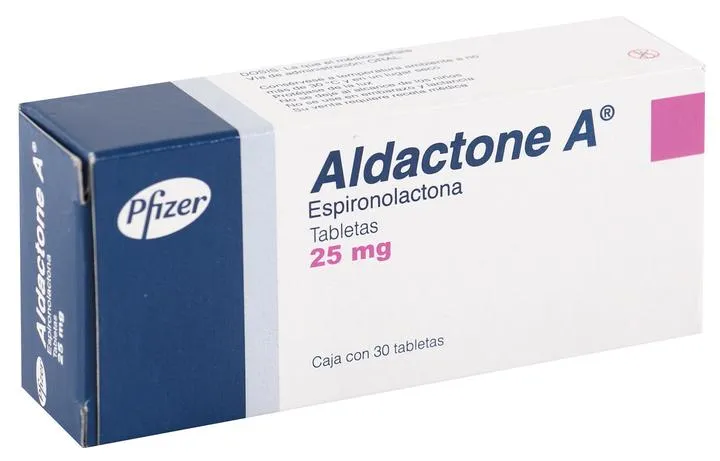
Aldactone - Spironolactone
€ 60,00
In StockBuy premium Aldactone - Spironolactone online. High purity, lab-tested, and fast shipping. Ideal for your cycle needs. Order Aldactone - Spironolactone securely today!
Acne
Yes
Half-Life
16.5 Hours
Dosage
25-100mg Daily
Detection Time
3 Weeks
Aromatization
No
Water Retention
Yes
Hepatotoxicity
Yes
HBR
No
Product Information
About Aldactone - Spironolactone
The Finishing Touch for a Dry, Hard Physique
Aldactone (Spironolactone) is a staple in the final stages of contest preparation. As a potassium-sparing diuretic, it helps bodybuilders eliminate visible water retention ("bloat") to reveal the deep muscle striations and definition hidden underneath.
Unlike harsher diuretics that can cause dangerous potassium crashes, Aldactone works by blocking aldosterone, allowing you to flush out sodium and water while retaining essential potassium. This reduces the risk of cramping and keeps muscles looking full rather than flat.
Key Benefits:
- Eliminate Water Retention: Flushes subcutaneous water for a paper-thin skin look.
- Potassium Sparing: Safer profile than loop diuretics like Lasix.
- Anti-Androgenic: Also effective for combating acne, oily skin, and androgenic side effects in sensitive users.
- Reduces Bloat: Perfect for counteracting water weight from wet compounds like Dianabol or Test Enanthate.
Usage in Bodybuilding:
For contest prep, Aldactone is typically used in the final 3-5 days leading up to a show. Dosages usually range from 25mg to 100mg per day, split into multiple doses.
Dosage:
- General Diuretic: 25-100mg daily.
- Acne Control: 25-50mg daily.
- Blood Pressure: 25-100mg daily as prescribed.
Note: Hydration is key. Do not completely cut water intake while on diuretics unless specifically following a supervised protocol.
1. Description: Clinical summary
Aldactone is a brand name for the drug spironolactone, a synthetic steroidal antimineralocorticoid and potassium‑sparing diuretic. It antagonizes the effects of aldosterone at mineralocorticoid receptors in the distal nephron, promoting natriuresis and water excretion while conserving potassium. Clinically it is used to treat conditions in which aldosterone excess or fluid retention is a problem, including heart failure with volume overload, cirrhotic ascites, edema (cardiac, hepatic, nephrotic), certain forms of hypertension, and primary hyperaldosteronism. It is also used off‑label for androgen‑mediated conditions (e.g., acne, hirsutism) because of antiandrogenic effects. Spironolactone is an oral medication; it is metabolized to active metabolites (eg, canrenone) with a delayed onset and prolonged duration relative to the parent compound.
Indications (common)
- Heart failure (as an aldosterone antagonist for morbidity/mortality benefit in selected patients)
- Edema (congestive heart failure, nephrotic syndrome)
- Ascites due to cirrhosis
- Primary hyperaldosteronism (diagnosis and medical management if surgery not feasible)
- Resistant hypertension (add‑on therapy)
- Off‑label: acne and hirsutism in women
2. How does Aldactone work? Mechanism of action
Spironolactone is a competitive antagonist of aldosterone at mineralocorticoid receptors located principally in the principal cells of the distal tubule and collecting duct in the kidney. By blocking aldosterone:
- It reduces transcription of epithelial sodium channels (ENaC) and Na+/K+‑ATPase, decreasing sodium reabsorption and water retention.
- It reduces potassium and hydrogen ion excretion, thereby conserving potassium and tending to increase serum potassium (risk of hyperkalemia) and can predispose to mild metabolic acidosis.
Additionally, spironolactone and some metabolites have antiandrogenic activity:
- They antagonize androgen receptors and inhibit steroidogenic enzymes (eg, 17α‑hydroxylase/17,20‑lyase), which reduces androgen effects and explains uses in acne/hirsutism and the antiandrogenic adverse effects (gynecomastia, decreased libido, menstrual irregularities).
Pharmacokinetics (brief)
- Orally absorbed; bioavailability increases with food.
- Rapidly metabolized to active metabolites (eg, canrenone) which mediate much of the clinical effect and prolong duration.
- Onset of diuretic effect is typically within 24–48 hours; full effect may take several days.
3. Dosage: Medical and varying usage guidelines
Doses must be individualized for the indication, renal function, serum potassium, and concomitant drugs. The ranges below are typical adult regimens used in practice; always follow local guidelines and specialist advice.
General principles
- Start at the lowest effective dose and titrate based on clinical response and laboratory monitoring.
- Monitor serum potassium and renal function before starting, within 3–7 days after initiation or dose change, and periodically thereafter.
- Avoid or use with extreme caution if baseline serum K+ ≥5.0 mEq/L or severe renal impairment (eGFR/CrCl substantially reduced). In many protocols avoid if CrCl <30 mL/min.
Typical adult dosing by indication
- Heart failure (NYHA II–IV, aldosterone antagonist benefit): commonly start 25 mg once daily. If tolerated, may increase to 50 mg once daily or 25 mg twice daily. Trials often used 25 mg/day for severe heart failure.
- Hypertension (add‑on therapy for resistant HTN): typically 25–50 mg once daily; may increase to 100 mg/day in divided doses if required.
- Edema (congestive heart failure, nephrotic syndrome): 25–100 mg daily; some patients require up to 200 mg/day in divided doses.
- Cirrhotic ascites: commonly start 100 mg once daily, titrating up to 400 mg/day in divided doses depending on response and potassium.
- Primary hyperaldosteronism (medical management): doses often in the 100–400 mg/day range (divide doses); titrate to clinical/lab response.
- Hypokalemia due to diuretics or hyperaldosteronism: 25–100 mg daily as needed to raise potassium or antagonize aldosterone.
- Acne/hirsutism (off‑label, females only): commonly 50–100 mg once daily; some regimens use 100–200 mg/day depending on response and tolerability (often combined with oral contraceptives).
Special populations
- Renal impairment: reduce dose or avoid if severe impairment (CrCl <30 mL/min). Monitor potassium closely.
- Elderly: start low and titrate carefully; higher risk of hyperkalemia, dehydration, orthostatic hypotension.
- Pregnancy and lactation: generally avoid due to antiandrogenic effects and limited safety data. Use alternatives when possible.
- Pediatrics: dosing is weight‑based and should be prescribed by a pediatric specialist. Do not attempt to extrapolate adult fixed doses without specialist guidance.
Administration tips
- Take with food to improve absorption.
- Tablets are usually swallowed whole; follow product instructions if using oral suspension.
- If combined with loop diuretic (eg, furosemide for ascites), monitor electrolytes and volume status carefully; some regimens use a specific ratio (eg, spironolactone:furosemide) but individualization is required.
When to hold or adjust
- Hold or reduce dose if serum potassium rises above ~5.0–5.5 mEq/L (exact threshold may vary by institution). If K+ >5.5 mEq/L, stop and treat hyperkalemia per local protocols.
- Reduce or stop if serum creatinine rises substantially (eg, >30% from baseline) or if clinical evidence of severe renal impairment develops.
Always consult current clinical guidelines and a clinician for dosing in specific patients.
4. Side effects: Common and rare adverse effects
Common (more frequent)
- Hyperkalemia — the most clinically important and potentially serious adverse effect. Risk increases with renal impairment and concomitant ACE inhibitors/ARBs/renin inhibitors, potassium supplements, NSAIDs, trimethoprim.
- Gynecomastia, breast tenderness — dose‑dependent, more common in men.
- Menstrual irregularities, amenorrhea, breast tenderness in women.
- Decreased libido, erectile dysfunction, impotence (in men).
- Dizziness, lightheadedness, hypotension (especially with volume depletion or concomitant antihypertensive therapy).
- Gastrointestinal: nausea, vomiting, diarrhea, abdominal cramps.
- Fatigue, headache.
Less common / rare but serious
- Severe hyperkalemia leading to arrhythmia (can be life‑threatening).
- Acute kidney injury or worsening renal function.
- Allergic skin reactions, including rash; rare severe cutaneous adverse reactions (eg, Stevens–Johnson syndrome) have been reported.
- Hepatic dysfunction, cholestatic jaundice and, rarely, hepatitis.
- Hematologic: rare cases of agranulocytosis, thrombocytopenia, or other cytopenias.
- Interstitial nephritis (rare).
- Metabolic acidosis (rare), particularly in patients with renal impairment.
Other clinical considerations
- Antiandrogen effects: Because spironolactone antagonizes androgen receptors and steroidogenesis, it can cause feminizing or sexual dysfunction effects; these are usually dose‑related and may reverse on discontinuation but can persist.
- Tumorigenesis: Spironolactone produced tumors in some long‑term rodent studies; clinical relevance in humans is unclear, and spironolactone remains widely used when indicated.
Drug interactions that increase adverse effect risk
- ACE inhibitors, ARBs, aliskiren — increased risk of hyperkalemia.
- Potassium supplements and potassium‑sparing diuretics (eg, amiloride, triamterene) — additive hyperkalemia risk.
- NSAIDs — may blunt diuretic effect and increase renal risk and hyperkalemia.
- Trimethoprim — can raise serum potassium.
- Heparin — can cause hyperkalemia by reducing aldosterone synthesis.
- Lithium — diuretics may alter lithium levels and increase toxicity risk.
Always review concomitant medications and adjust/monitor accordingly.
Monitoring recommendations
- Baseline: serum electrolytes (K+, Na+), creatinine/eGFR, blood pressure, weight.
- Early follow‑up: check K+ and creatinine within 3–7 days of initiation or dose change, again at 1 month, then periodically (eg, every 3 months or as clinically indicated).
- Monitor for signs/symptoms of hyperkalemia (palpitations, muscle weakness), gynecomastia, menstrual changes, hypotension, dehydration.
- More frequent monitoring if combined with ACE inhibitor/ARB or other hyperkalemia‑promoting drugs, or if renal function is borderline.
5. Storage: HOW to store it
- Store spironolactone (Aldactone) tablets at controlled room temperature, typically 20–25°C (68–77°F). Brief excursions (eg, 15–30°C) are usually acceptable depending on product labeling.
- Keep in the original container to protect from light and moisture unless another container is specified by the product label.
- Protect from excessive heat and humidity (do not store in bathrooms). Do not freeze.
- Keep out of reach of children and pets.
- For liquid/oral suspension formulations follow the manufacturer’s instructions (some may require refrigeration after reconstitution; check the product leaflet).
- Check the expiration date and do not use expired medication.
- Dispose of unused medication safely per local regulations or pharmacy take‑back programs; do not flush down the toilet unless the disposal instructions require it.
Precautions summary
- Check baseline labs (K+, creatinine) before initiating.
- Use caution/avoid with other agents that increase potassium.
- Avoid in pregnancy and lactation unless benefits outweigh risks and with specialist advice.
- Educate patients on signs of hyperkalemia, sexual side effects, and when to seek urgent care.
If you want, I can provide: a monitoring checklist template, sample initiation and follow‑up lab schedule, or a printable patient counseling summary for spironolactone (Aldactone).
Dosage
Recommended
25-100mg Daily
Half-Life
16.5 Hours
Benefits
- Laboratory tested for purity
- Pharmaceutical quality guaranteed
- Discrete and secure shipping
- Excellent customer service
- Fast delivery throughout Europe
Free Shipping
Free shipping on orders over €200.
Delivery Guarantee
Free reshipment if your order does not arrive.
Fast Delivery
Shipped within 24h. Delivery 48-72h in NL & BE.
Bitcoin Payment
Pay securely and stay completely anonymous with Bitcoin.
Secure Checkout
Secured SSL connection for all transactions.
Authentic
Authenticity verification for all our products.