Testosterone Cypionate
Clinical Overview
Overview
Testosterone cypionate is a synthetic testosterone ester widely used as a long-acting injectable formulation of the endogenous androgen testosterone. Developed in the mid-20th century as part of the medicinal chemistry effort to extend testosterone’s duration of action, testosterone cypionate became a common pharmaceutical preparation for testosterone replacement therapy in men. It remains one of the most commonly prescribed injectable testosterone esters in clinical practice where intramuscular depot administration is preferred.
Common uses include replacement therapy for male hypogonadism (primary or secondary), delayed puberty in adolescent males in some circumstances, and palliative therapy for certain hormonally sensitive breast cancers. Outside therapeutic contexts, testosterone cypionate is also used illicitly for performance enhancement and body composition modification because of its anabolic effects.
Drug classification
- Class: Androgenic anabolic steroid (AAS); testosterone ester
- Pharmacologic category: Sex hormone; androgen; testosterone replacement therapy (TRT)
- Formulation: Oil-based intramuscular depot injection
Chemical Properties
Molecular structure and formula
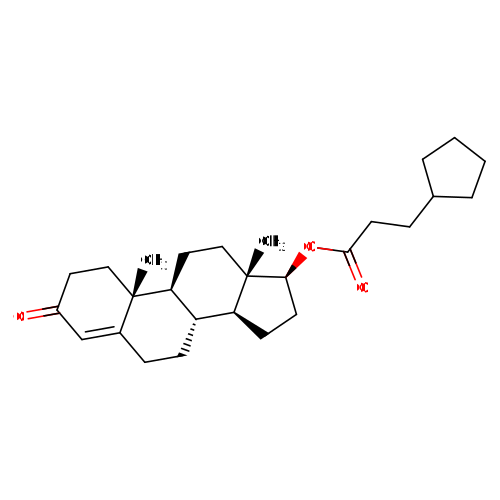
- Chemical name: Testosterone 17β-(cyclopentylpropionate) (often abbreviated testosterone cypionate)
- Common synonyms: Testosterone cyclopentylpropionate
- Molecular formula: C27H40O3
- Molecular weight: approximately 412.6 g·mol−1
- Structural description: The molecule consists of the steroid nucleus of testosterone (androst-4-en-17β-ol-3-one) esterified at the 17β-hydroxyl with a cyclopentylpropionate (cypionate) moiety. The ester increases lipophilicity and slows release from intramuscular depots.
Physical characteristics
- Appearance: Off-white to white crystalline powder (active drug substance); formulated product is typically an oil solution for injection (e.g., sesame oil, cottonseed oil, or similar vehicle).
- Solubility: Poorly soluble in water; soluble in common organic solvents and carrier oils used for depot injections.
- Typical melting point: Reported in literature in the region of ~98–101 °C for the crystalline ester.
Ester type
- Ester: Cypionate ester (cyclopentylpropionate) attached at the 17β position.
- Effect of esterification: Esterification prolongs the duration of action by increasing lipophilicity and slowing hydrolysis to free testosterone after intramuscular depot administration.
Pharmacokinetics — half-life and detection time
- Absorption/elimination half-life: Following intramuscular injection, testosterone cypionate is slowly released from the oil depot and hydrolyzed to free testosterone. Reported elimination half-life in clinical contexts is approximately 6–8 days (range varies by study and dosing regimen). This supports typical dosing intervals of every 1–3 weeks depending on clinical goals.
- Detection time: Because of depot release and metabolic clearance of testosterone and its metabolites, exogenous testosterone esters may be detectable in serum or urine for several weeks to months after administration depending on dose, frequency, assay sensitivity, and the specific metabolites assayed. In doping control contexts, metabolites and altered testosterone/epitestosterone ratios can be detectable for weeks; trace detection windows may extend longer.
Mechanism of Action
How it works in the body
- Testosterone cypionate serves as a prodrug of testosterone. After intramuscular injection, the cypionate ester is enzymatically hydrolyzed by esterases in blood and tissues to release active testosterone.
- Released testosterone circulates bound primarily to sex hormone–binding globulin (SHBG) and albumin; a small fraction is unbound (free) and biologically active.
Receptor binding and activity
- Testosterone binds to the androgen receptor (AR), a nuclear transcription factor expressed in androgen-responsive tissues (e.g., muscle, bone, prostate, skin, hair follicles).
- The ligand–receptor complex translocates to the nucleus, binds androgen response elements in DNA, and modulates transcription of androgen-responsive genes, producing both anabolic (protein-sparing, muscle-promoting) and androgenic (virilizing, sexual differentiation) effects.
- In target tissues expressing 5α-reductase (e.g., prostate, skin, scalp), testosterone can be reduced to dihydrotestosterone (DHT), a more potent AR agonist. In tissues with aromatase activity (e.g., adipose tissue, brain), testosterone can be aromatized to estradiol, mediating some estrogenic effects such as bone maintenance and effects on libido.
Anabolic/androgenic ratio
- As a testosterone ester, testosterone cypionate is chemically testosterone with an ester that modulates pharmacokinetics; its intrinsic anabolic/androgenic ratio is effectively that of testosterone (approximately 1:1 by biological definition), meaning it exerts both anabolic and androgenic effects characteristic of endogenous testosterone.
Metabolic pathway
- Hydrolysis: Esterases cleave the cypionate ester to yield free testosterone.
- Peripheral metabolism:
- 5α-reduction to DHT (by 5α-reductase)
- Aromatization to estradiol (by aromatase)
- Further hepatic metabolism involves hydroxylation, conjugation (glucuronidation and sulfation), and excretion via urine and feces.
- Excretion: Conjugated steroid metabolites are largely eliminated in urine.
Medical Information
Therapeutic applications
- Male hypogonadism: Replacement therapy to restore and maintain secondary sexual characteristics, libido, energy, bone density, muscle mass, and hematopoiesis in men with low or absent endogenous testosterone production.
- Delayed puberty: In select cases, short courses may be used to induce puberty in adolescent males under specialist supervision.
- Breast cancer: Historically used in some palliative regimens for metastatic breast cancer in postmenopausal women (less common today).
- Off-label and investigational uses: Certain catabolic states, wasting disorders, and selected syndromes may have been studied, but routine use depends on evidence and regulatory approvals.
Typical dosage ranges
- Replacement therapy regimens vary by country, formulation, and clinician preference. Common IM dosing regimens:
- 50–100 mg every week, or
- 100–200 mg every 1–2 weeks, or
- 200–400 mg every 2–4 weeks (less frequent dosing may lead to greater peak-trough variability).
- Doses used for performance enhancement in non-medical contexts are typically higher and associated with greater adverse effects; such use is not medically recommended.
Administration routes
- Intramuscular (IM) injection into the gluteal or thigh muscles is the standard route for oil-based testosterone cypionate formulations.
- Subcutaneous administration of testosterone esters has been described in clinical practice and research and may be used in some settings, but IM remains the common route.
Duration of use
- For replacement therapy, duration is often long-term or lifelong, with periodic monitoring and dose adjustments.
- For short-term indications (e.g., inducing puberty), treatment duration is tailored to the clinical goal.
Monitoring during therapy
- Baseline and periodic assessment of serum testosterone, hematocrit/hemoglobin, liver function tests, lipid profile, prostate-specific antigen (PSA) and digital rectal exam in men as indicated, and clinical assessment of symptoms and adverse effects.
Safety Profile
Common side effects
- Dermatologic: Acne, oily skin
- Hair: Male-pattern hair loss in genetically predisposed individuals
- Fluid retention: Edema and weight gain
- Hematologic: Increased hematocrit and hemoglobin; risk of polycythemia
- Psychological: Mood swings, irritability, changes in libido
- Sexual function: Improved libido in hypogonadal men; possible erectile dysfunction if dosing disrupts endogenous gonadotropin signaling in supraphysiologic dosing
- Other: Injection-site pain or irritation
Serious adverse reactions
- Cardiovascular: Potential adverse effects on lipids (reduced HDL), blood pressure, and association with increased cardiovascular events in some observational studies with supraphysiologic dosing or in older men with significant comorbidities; data are mixed and context-dependent.
- Polycythemia/thromboembolic events: Marked increases in hematocrit can increase thrombosis risk.
- Prostate effects: Enlargement of prostate and potential stimulation of occult prostate cancer; monitoring via PSA and clinical assessment is standard for men on therapy.
- Fertility: Suppression of the hypothalamic–pituitary–gonadal axis, decreased gonadotropins (LH, FSH), and resultant testicular atrophy and reduced spermatogenesis; may be reversible or prolonged depending on duration and dose.
- Hepatotoxicity: Oral 17α-alkylated androgens carry significant hepatic risk; injectable testosterone esters like cypionate are less hepatotoxic but liver function monitoring is still routine in some settings.
- Virilization in females: Hirsutism, voice deepening, menstrual irregularities, clitoromegaly.
Drug interactions
- Anticoagulants: Testosterone may potentiate or alter responses to oral anticoagulants (e.g., warfarin); close monitoring of coagulation parameters is recommended.
- Insulin and oral hypoglycemics: Testosterone can alter glycemic control; dose adjustments of anti-diabetic agents may be necessary.
- Corticosteroids: Concurrent use may accentuate fluid retention and edema.
- Drugs that affect hepatic metabolism: While testosterone esters are not major CYP substrates, concomitant drugs affecting steroid metabolism or SHBG levels may alter testosterone pharmacokinetics or effects.
Contraindications
- Known or suspected prostate cancer
- Male breast cancer
- Pregnancy (androgenic effects on a female fetus) and breastfeeding
- Hypersensitivity to testosterone cypionate or formulation components (vehicle oils)
- Uncontrolled severe cardiac, hepatic, or renal disease may preclude safe therapy in some patients
- Untreated severe sleep apnea, severe polycythemia, and certain hematologic disorders may be relative contraindications
Legal Status
Regulatory classification
- In many jurisdictions, testosterone cypionate and other testosterone preparations are regulated as controlled substances due to abuse potential and medical necessity for prescription. For example:
- United States: Schedule III controlled substance under the Controlled Substances Act; prescription required.
- Other countries vary; many require a prescription and classify androgenic anabolic steroids under national controlled drug legislation.
Prescription requirements
- Prescription-only medication in most countries; dispensing typically requires physician diagnosis and ongoing clinical monitoring.
- Misuse, diversion, or possession without prescription may be illegal and subject to regulatory or criminal penalties depending on local law.
Sports anti-doping status
- Testosterone cypionate is prohibited in-competition and out-of-competition under the World Anti-Doping Agency (WADA) Prohibited List as an anabolic agent. Its use without a Therapeutic Use Exemption (TUE) constitutes an anti-doping rule violation.
- Doping control tests screen for elevated testosterone/epitestosterone ratios, exogenous anabolic steroid metabolites, and isotope ratio mass spectrometry (IRMS) can distinguish synthetic or exogenously administered testosterone from endogenous hormone production.
Summary
Testosterone cypionate is a long-acting injectable testosterone ester used primarily for testosterone replacement in men with hypogonadism. As a prodrug of testosterone, it produces the full spectrum of testosterone’s anabolic and androgenic effects, with pharmacokinetics determined by depot release and ester hydrolysis. Clinically effective for restoring physiologic androgen levels, it requires careful patient selection, dosing, and monitoring because of potential adverse effects on hematology, cardiovascular risk markers, prostate health, fertility, and other systems. It is a controlled prescription medication in many jurisdictions and is prohibited in competitive sport without a sanctioned medical exemption.
science Chemical Properties
2D Structure
CAS Number
tag58-20-8
PubChem ID
scienceMolecular Formula
scienceC27H40O3
Molar Mass
science412.6 g/mol
Active Half-Life
science8-9 Days
Anabolic/Androgenic Ratio
science100:100
CAS Number
science58-20-8
PubChem CID
science441406
bolt Mechanism of Action
Testosterone Cypionate is very similar to Enanthate. It is a long-acting ester typically injected once a week. Popular in the US for TRT.
- Base: The foundation of almost any cycle.
- Long Half-Life: ~8 days half-life.
Bio-identical
Identical to natural test once ester is cleaved.
medication Dosing Protocol
| Experience Level | Daily Dosage | Cycle Duration |
|---|---|---|
| Beginner | 300-500 mg | 10-12 Weeks |
* Interchangeable with Enanthate.
security Safety Profile
warning Common Side Effects
-
water_drop
Estrogen
Water retention and gyno risk.
dangerous Severe/Rare Side Effects
shopping_cart Related Products

Disclaimer: This content is for informational and educational purposes only. It does not constitute medical advice.