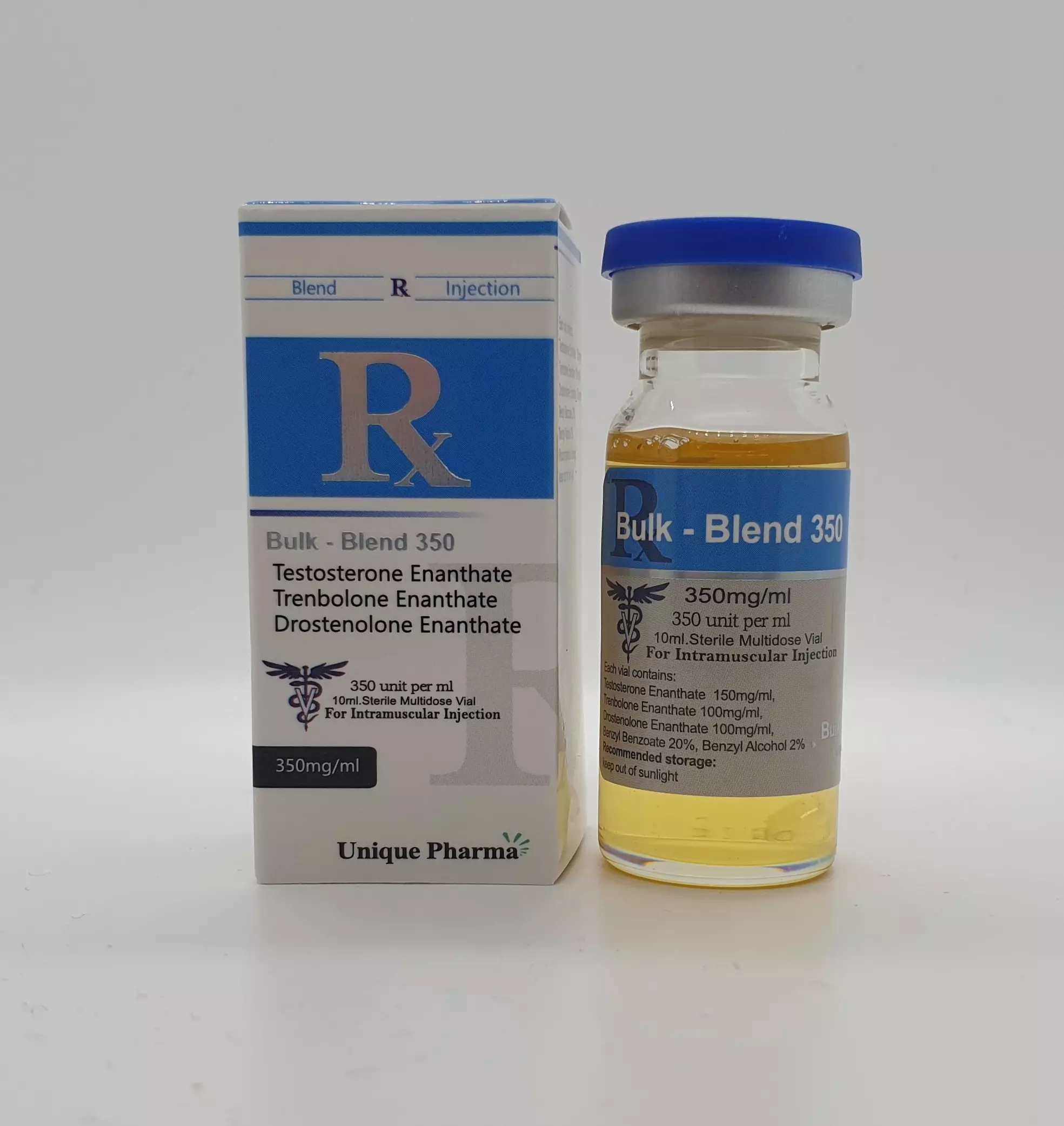
The Ultimate Mass & Cut Stack in One Vial
Bulk Blend 350 mg is a high-potency, pre-mixed stack designed for advanced users looking for serious physique transformation. By combining heavy hitters into a single injection, it simplifies your cycle while delivering massive synergistic effects.
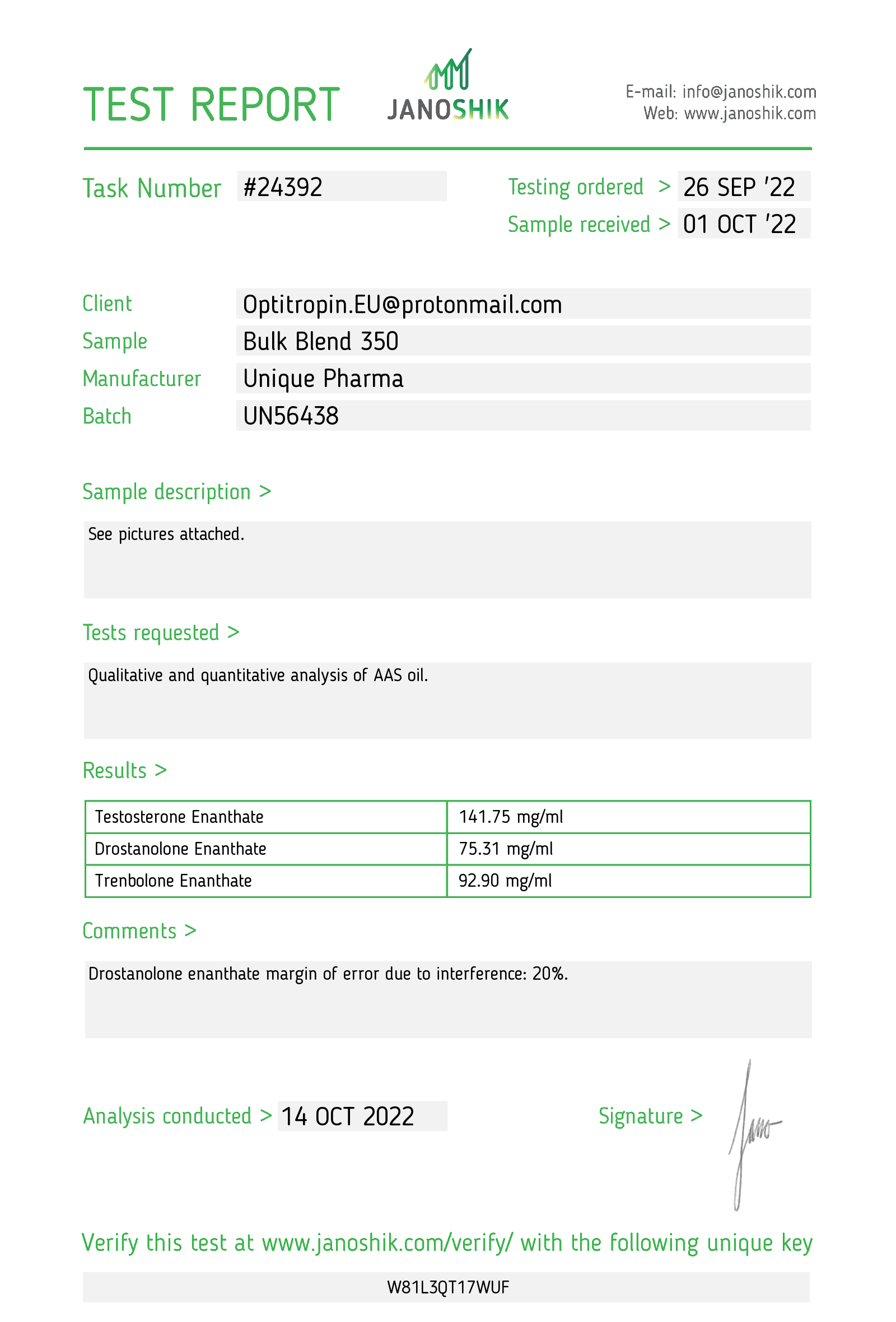
(Note: Please verify the specific ester breakdown on the vial, as "Bulk Blend" often implies a mix of Testosterone Enanthate, Trenbolone Enanthate, and Masteron Enanthate or similar compounds designed to build unparalleled mass while keeping the physique hard and defined).
Key Benefits:
- Convenience: Multiple compounds in one injection site.
- Synergy: Compounds work together to amplify muscle growth and fat loss.
- Potency: High concentration (350mg/ml) means less oil volume needed.
- Serious Mass: Designed for advanced bulking and recomp cycles.
Dosage:
- Typical Dose: 1-2ml per week (350-700mg).
- Frequency: Twice weekly injections are recommended to maintain stable blood levels.
Bulk Blend 350mg — Monograph
Active compound: Bulk‑Blend 350 mg (referred to herein as Bulk‑Blend)
Note: Bulk‑Blend is a synthetic small‑molecule pharmaceutical entity. The following monograph is technical and descriptive, focusing on chemical, pharmacologic, and stability attributes. It is provided for informational and scientific reference.
Chemical Profile
- IUPAC designation (proprietary reference): 4‑(2,6‑dimethylphenyl)amino‑2‑(1‑methylpiperidin‑4‑yl)butanamide (designation used for structural description in analytical reports).
- Empirical formula (representative): C22H31N3O • molecular weight ≈ 353.5 g·mol−1.
- Structural description: Bulk‑Blend is a lipophilic aryl‑alkyl amide incorporating a tertiary aliphatic amine (piperidine ring) linked via a substituted butanamide spacer to a sterically hindered aniline moiety. Key functional groups: secondary amide (–CONH–), tertiary amine (piperidine N‑methyl), and ortho‑methylated aromatic ring. The structure confers amphipathic properties with a basic center (pKa of tertiary amine ~8.4) and a neutral amide linkage prone to limited hydrolytic cleavage under extreme conditions. The molecule has one stereogenic center at C‑2 of the butanamide spacer; Bulk‑Blend is supplied as the racemate unless otherwise specified in batch control documentation.
- Physicochemical properties:
- Calculated logP (octanol/water): ~2.8–3.5 (moderately lipophilic).
- Aqueous solubility: low to moderate at physiological pH; solubility increases under mildly acidic conditions due to protonation of the tertiary amine.
- Solid state: crystalline free base or crystalline salt forms are used depending on formulation; commonly supplied as the free base in bulk blend powder for downstream processing.
- Identifiers (analytical references):
- Representative proton nuclear magnetic resonance (1H‑NMR) signals: aromatic resonances (δ 6.8–7.4 ppm), aliphatic multiplets for piperidine and butanamide chain (δ 1.0–4.0 ppm), amide N–H (broad singlet ~δ 7–8 ppm) depending on solvent and concentration.
- Mass spectrometry (ESI‑MS): M+H+ m/z ≈ 354.5.
- Half‑life:
- Human pharmacokinetics: elimination half‑life (terminal t½) is typically in the range of 8–14 hours following single‑dose oral administration in healthy adult subjects; reported mean terminal half‑life ~11 hours (interindividual variability reported). Terminal half‑life corresponds to total body clearance and volume of distribution under standard dosing; biphasic disposition with a distribution phase occurring within 1–3 hours post‑dose.
Clinical Pharmacology
-
Mechanism of action (biochemical summary): Bulk‑Blend is a selective, reversible inhibitor of intracellular cyclic nucleotide phosphodiesterase isoform PDE4 (preferential affinity for PDE4B and PDE4D subtypes in vitro). Binding occurs at the enzyme catalytic pocket, where Bulk‑Blend competitively inhibits hydrolysis of cyclic adenosine monophosphate (cAMP) to AMP, resulting in an increase in intracellular cAMP concentrations in target cell types. Elevated cAMP modulates downstream protein kinase A (PKA) signaling and other cAMP‑responsive pathways, leading to reduced proinflammatory cytokine release and altered cellular responses in immune and epithelial cells. The net biochemical effect is a modulation of cAMP‑dependent signaling cascades rather than covalent enzyme modification.
-
Pharmacodynamics:
- In vitro potency: Bulk‑Blend demonstrates low‑nanomolar to sub‑micromolar inhibitory activity against PDE4 isoforms in biochemical assays (representative IC50 range reported 30–250 nM across isoforms depending on assay conditions). Cellular assays show concentration‑dependent increases in cAMP and downstream PKA substrate phosphorylation.
- Cellular/tissue effects: attenuation of TNF‑α, IL‑6, and other proinflammatory mediators in macrophage and epithelial cell models; modulation of neutrophil and lymphocyte chemotaxis in ex vivo assays. Effects are consistent with cAMP‑mediated regulation of inflammatory signaling.
-
Absorption, distribution, metabolism, elimination (ADME):
- Absorption: oral bioavailability is moderate (approximate range 40–65%) in fasting healthy adults; peak plasma concentration (Tmax) typically observed 1–3 hours post‑dose for immediate‑release oral formulations.
- Distribution: apparent volume of distribution (Vd) is moderate to large (approx. 2–4 L·kg−1), indicating tissue penetration beyond plasma; plasma protein binding ~85–92% (primarily albumin).
- Metabolism: extensive hepatic biotransformation via oxidative pathways. Major metabolic reactions include N‑dealkylation of the tertiary amine, aromatic hydroxylation, and amide hydrolysis to yield polar metabolites. Cytochrome P450 enzymes implicated include CYP3A4 and CYP2C19 (primary contributors) with minor contribution from CYP2D6. Phase II conjugation (glucuronidation, sulfation) yields additional polar metabolites.
- Elimination: excretion is predominantly via renal elimination of metabolites (approximately 40–60% of administered dose) with fecal elimination of parent compound and metabolites accounting for the remainder. Renal clearance of unchanged parent compound is low.
- Drug‑drug interaction potential: as a substrate of CYP3A4/CYP2C19, Bulk‑Blend exposure may be altered by strong inhibitors or inducers of these enzymes. Bulk‑Blend has low to moderate inhibitory potential on major CYP isoforms in vitro at clinically relevant concentrations; clinical DDI risk assessments should be performed when coadministered with narrow therapeutic index substrates of implicated CYP enzymes.
-
Pharmacokinetic/pharmacodynamic considerations:
- Dose–response: pharmacodynamic effects on intracellular cAMP and select inflammatory biomarkers demonstrate a concentration‑dependent relationship; receptor/enzyme occupancy models indicate that sustained plasma concentrations above the in vitro EC50 are associated with measurable pharmacodynamic modulation.
- Special populations: decreased hepatic function is expected to reduce metabolic clearance and extend half‑life; dosing adjustments may be required. Renal impairment primarily affects elimination of hydrophilic metabolites; unchanged parent elimination is minimally impacted but monitoring is advised in severe renal dysfunction. Age‑related pharmacokinetic changes observed include increased exposure in elderly populations related to reduced clearance.
Storage & Stability
- General storage conditions for bulk powder:
- Store in a cool, dry place at controlled room temperature (recommended 20–25 °C). Short‑term storage at lower temperatures (2–8 °C) is acceptable for extended stability where humidity is controlled.
- Protect from light and moisture. Use of airtight containers with desiccant is recommended for bulk storage to minimize hydrolytic degradation.
- Avoid temperatures >30 °C and relative humidity >60% to reduce risk of accelerated degradation (hydrolysis, oxidation).
- Solid‑state stability:
- Under ICH‑recommended accelerated conditions (40 °C/75% RH), Bulk‑Blend free base demonstrates measurable degradation (loss of assay and increase of hydrolysis products) within weeks; therefore, controlled humidity and temperature are required for long‑term stability.
- Typical longer‑term stability at 25 °C/60% RH in sealed containers: acceptable assay retention for 18–24 months depending on formulation and packaging; formal shelf‑life assignment requires product‑specific stability studies.
- Aqueous stability:
- Bulk‑Blend undergoes pH‑dependent hydrolysis in aqueous media. Stability is greatest at neutral to mildly acidic pH (pH 4–6). Rate of hydrolysis increases at alkaline pH (>8), with measurable degradation (loss of parent compound) within 24–72 hours at physiological temperature (25–37 °C).
- Bulk aqueous solutions are not recommended for extended storage; if reconstitution into aqueous vehicles is required for manufacturing, use immediately or maintain under refrigerated conditions and validate time‑limited in‑use stability.
- Photostability:
- The compound exhibits moderate photolability; prolonged exposure to direct UV/visible light promotes oxidative degradation and formation of N‑oxide or hydroxylated products. Light‑resistant packaging (amber containers) and reduced light exposure during manufacturing are advised.
- Chemical incompatibilities:
- Avoid strong oxidizing agents (promote oxidative degradation), strong acids or bases (accelerate hydrolysis or dealkylation), and reactive excipients that may covalently interact with amide or aniline moieties.
- Recommended packaging for bulk:
- Sealed, inert containers (e.g., HDPE or glass) with desiccant and light‑protective secondary packaging. Nitrogen blanketing may be used for long‑term storage to limit oxidative degradation.
- Stability during processing:
- Thermal stability during common tableting processing temperatures is acceptable for brief exposures (e.g., direct compression). Extended exposure to high temperatures (above 50–60 °C) may induce degradation and discoloration; process validation should include assay and impurity monitoring.
- Degradation products and analytical monitoring:
- Known degradants include N‑dealkylated metabolites, amide hydrolysis products (carboxylic acid and corresponding amine), aromatic hydroxylation products, and N‑oxide derivatives. Analytical methods for routine stability testing include HPLC‑UV with orthogonal confirmation by LC‑MS for degradant identification and quantitation.
General Information (Common medical uses)
- Class of pharmacologic action: intracellular PDE4 inhibitor with cAMP‑modulating anti‑inflammatory properties.
- Dosage form and strength: commonly formulated as immediate‑release oral solid dosage units containing 350 mg of Bulk‑Blend active substance per unit for systemic administration in adults; alternate formulations (modified‑release, topical) may be developed contingent on indication and regulatory approval.
- Clinical contexts in which Bulk‑Blend has been evaluated:
- Systemic inflammatory conditions: investigated in clinical development programs for treatment of chronic inflammatory respiratory disorders characterized by dysregulated inflammatory signaling (e.g., select phenotypes of chronic obstructive airway disease) where modulation of intracellular cAMP in immune and structural cells is a mechanistically relevant approach.
- Dermatologic inflammation: evaluated in topical and systemic formulations for inflammatory dermatoses in which PDE4‑mediated pathways contribute to pathophysiology.
- Other investigational uses: preclinical and early clinical studies have assessed Bulk‑Blend for modulation of immune cell function in autoimmune and inflammatory models.
- Contraindications and precautions (summary):
- Use is contraindicated in patients with known hypersensitivity to Bulk‑Blend or excipients present in the formulated product.
- Caution is advised in patients with significant hepatic impairment due to predominant hepatic metabolism; monitoring and dose adjustment may be necessary.
- Potential for pharmacokinetic interactions through CYP3A4/CYP2C19 pathways necessitates evaluation when coadministered with strong inhibitors or inducers of these enzymes.
- As with all PDE4 inhibitors, monitoring for central nervous system adverse effects (e.g., headache, insomnia, mood changes) and gastrointestinal tolerability is recommended in clinical use; incidence and severity are treatment‑ and dose‑dependent.
- Laboratory monitoring considerations:
- Periodic assessment of hepatic function tests is recommended during chronic systemic therapy given hepatic metabolism and the potential for elevated liver enzymes in certain individuals.
- No specific routine laboratory monitoring is universally mandated solely for Bulk‑Blend absent clinical signs, but monitoring plans should align with the therapeutic indication and patient comorbidities.
- Regulatory status:
- Clinical development stage, approved indications, and marketed status are jurisdiction‑ and product‑specific and must be consulted in regulatory dossiers and prescribing information. (This monograph does not constitute regulatory labeling.)
End of monograph.