Turinabol
Clinical Overview
Overview
Chlorodehydromethyltestosterone (commonly known by the trade name Turinabol or CDMT) is a synthetic oral anabolic-androgenic steroid (AAS) derived from testosterone. It was first synthesized in the 1960s in East Germany and became notable for its use in state-sponsored athletic doping programs. Turinabol was developed to combine the anabolic properties of certain testosterone derivatives with reduced androgenic and estrogenic side effects, producing steady gains in lean mass and strength with comparatively modest water retention.
Common uses:
- Historically used in medicine for conditions involving catabolism and wasting, though clinical use was limited and largely discontinued.
- Widely used in performance enhancement for its anabolic effects and oral bioavailability; favored when athletes sought lean mass gains without significant estrogenic side effects.
Drug classification:
- Pharmacological class: anabolic-androgenic steroid (AAS), androgen receptor agonist.
- Chemical class: 17α-alkylated 4-chloro derivative of testosterone (chlorinated and 17α-methylated testosterone analog).
Chemical Properties
- IUPAC name: (typical nomenclature for chlorodehydromethyltestosterone variants) 4-chloro-17α-methyl-1,4-androstadien-17β-ol-3-one (structural variants reported in older literature).
- Molecular formula: C20H27ClO2
- Molecular weight: approximately 334.9 g·mol−1
Molecular structure and features:
- Turinabol is a 4-chloro-substituted and 17α-methylated derivative of testosterone. The 17α-methyl group confers oral bioavailability by hindering first-pass hepatic metabolism. The chlorine atom at the C4 position reduces the molecule’s susceptibility to aromatization to estrogenic metabolites.
Physical characteristics:
- Solid crystalline steroid (white to off-white powder in pure form).
- Sparingly soluble in water, soluble in organic solvents (e.g., ethanol, methanol, chloroform).
Ester type:
- Turinabol is not administered as an ester; it is an unmetabolized, direct oral steroid (17α-alkylated), so no esterification is present.
Half-life and detection time:
- Reported elimination half-life in plasma ranges from approximately 6 to 16 hours in pharmacokinetic summaries of 17α-alkylated oral AAS. However, terminal half-life values can vary by study methodology and individual metabolism.
- Detection: Modern anti-doping assays identify long-lived urinary metabolites of Turinabol. These metabolites can be detected weeks to months after administration, depending on dose, duration of use, sensitivity of the assay, and individual metabolic factors. Advances in mass-spectrometry have substantially extended detection windows compared with older methods.
Mechanism of Action
How it works in the body:
- Turinabol acts primarily as an agonist of the androgen receptor (AR). After oral absorption, it enters target cells and binds the AR in the cytoplasm. The ligand–receptor complex translocates to the nucleus and modulates transcription of androgen-responsive genes, increasing expression of proteins involved in muscle hypertrophy, nitrogen retention, and erythropoiesis.
Receptor binding and activity:
- Turinabol binds to the androgen receptor with affinity characteristic of synthetic anabolic steroids. Compared to testosterone, modification at C4 (chlorination) and the 17α-methyl group alter receptor interactions and downstream transcriptional activity, resulting in a favorable anabolic profile relative to androgenic effects for many users.
- Aromatization to estradiol is substantially reduced because the 4-chloro substitution blocks the typical aromatase-mediated conversion; therefore estrogenic side effects (gynecomastia, water retention) are uncommon.
Anabolic/androgenic ratio:
- Numerical ratios for anabolic versus androgenic activity are derived from animal bioassays and vary across sources. Turinabol is generally characterized as having moderate-to-strong anabolic effects with comparatively low androgenic potency relative to testosterone, producing lean mass accretion without pronounced virilization at moderate doses in men. Exact ratio estimates vary and should be considered approximate.
Metabolic pathway:
- Hepatic metabolism is the primary route of biotransformation. The 17α-methyl group reduces hepatic inactivation and prolongs oral activity, but also contributes to hepatotoxicity risk.
- Multiple phase I and phase II pathways produce a range of metabolites, including hydroxylated, dehydrogenated, and conjugated (glucuronide/sulfate) derivatives. Some specific long-lived metabolites used in anti-doping detection result from complex rearrangements and reductions in the steroid nucleus.
- Excretion occurs predominantly via the urine as conjugated metabolites.
Medical Information
Therapeutic applications:
- Turinabol was originally investigated and used in limited contexts for catabolic states and to promote weight gain in wasting conditions. However, it has not been widely adopted as a mainstream therapeutic agent, and many clinical indications have been superseded by agents with more favorable safety profiles.
- Because of safety concerns (notably hepatotoxicity and adverse lipid effects), its modern therapeutic use is uncommon.
Typical dosage ranges (clinical vs performance contexts):
- Clinical dosing historically was modest and tailored to the indication; specific approved therapeutic dosing is largely obsolete.
- In performance-enhancement contexts (non-medical), reported oral doses vary widely. Low to moderate dosing commonly reported is 5–40 mg per day; higher doses (50–100 mg/day) have been reported but increase the risk of adverse effects. These values reflect anecdotal use and not medical recommendations.
Administration routes:
- Oral administration (tablets/capsules) is the standard route. Because Turinabol is 17α-alkylated, oral bioavailability is significant compared to non-alkylated injectables.
Duration of use:
- Typical non-medical “cycles” historically ranged from 6 to 12 weeks. Prolonged use increases cumulative hepatotoxicity risk, negative lipid changes, and suppression of endogenous testosterone production. Clinical durations, when used, were cautious and limited.
Safety Profile
Common side effects:
- Hepatic effects: elevated liver enzymes (transaminases), cholestasis, and potential for clinically significant hepatotoxicity due to 17α-alkylation.
- Lipid abnormalities: decreases in HDL cholesterol and increases in LDL cholesterol, promoting an atherogenic profile.
- Hypothalamic–pituitary–gonadal (HPG) suppression: reduced endogenous testosterone synthesis leading to testicular atrophy, reduced sperm production, and potential infertility during and after use.
- Virilization (especially in females): hirsutism, deepening of the voice, acne, clitoral enlargement; virilizing changes may be irreversible if prolonged.
- Dermatologic: acne and increased sebaceous activity.
- Cardiovascular: hypertension and increased cardiovascular risk over time from adverse lipid and hemodynamic effects.
Serious adverse reactions:
- Severe hepatotoxicity including cholestatic jaundice and, in rare instances, hepatic neoplasms (adenomas, hepatocellular carcinoma) associated with certain long-term uses of 17α-alkylated AAS.
- Thrombotic events and myocardial infarction risk may be increased through adverse lipid effects and other cardiovascular impacts.
- Psychiatric effects: mood alterations, aggression, and, in susceptible individuals, exacerbation of underlying psychiatric disorders.
- Suppression of growth in adolescents via premature closure of epiphyseal growth plates.
Drug interactions:
- Concomitant use with other hepatotoxic agents (e.g., high-dose acetaminophen, certain antiepileptics, other 17α-alkylated steroids) may increase liver injury risk.
- Steroids that alter hepatic enzyme activity can affect metabolism of co-administered drugs; interactions with cytochrome P450 substrates, inducers, or inhibitors are possible.
- Anticoagulants: anabolic steroids may potentiate or inhibit anticoagulant effects (e.g., warfarin) via hepatic enzyme modulation and should be monitored closely.
- Agents affecting lipid metabolism or blood pressure may have additive adverse cardiovascular effects.
Contraindications:
- Known liver disease or hepatic impairment.
- Prostate cancer or breast cancer in men (androgen-sensitive malignancies).
- Pregnancy and breastfeeding (risk of virilization of a female fetus or infant).
- Pre-existing cardiovascular disease with uncontrolled risk factors.
- Children with open epiphyses (risk of growth plate closure and impaired growth).
Legal Status
Regulatory classification:
- Turinabol (and chlorodehydromethyltestosterone compounds) is regulated as a controlled substance or prescription-only medication in many jurisdictions due to its classification as an anabolic steroid.
- Specific scheduling and control vary by country; many nations include AAS on prohibited substance lists for distribution and possession without prescription.
Prescription requirements:
- Where allowed for therapeutic use, a prescription from a licensed medical practitioner is required for legal dispensing. In many places, legitimate therapeutic use is rare, and availability is tightly restricted.
Sports anti-doping status:
- Turinabol is prohibited in both in-competition and out-of-competition testing by major sports anti-doping organizations, including the World Anti-Doping Agency (WADA).
- Advances in detection have increased the sensitivity for long-lived metabolites, and retrospective testing has been used to identify historic and recent doping violations involving Turinabol.
This article summarizes key chemical, pharmacological, and safety aspects of chlorodehydromethyltestosterone (Turinabol). Information herein is intended for educational and informational purposes about the compound’s properties, mechanisms, clinical considerations, adverse effect profile, and regulatory context.
science Chemical Properties
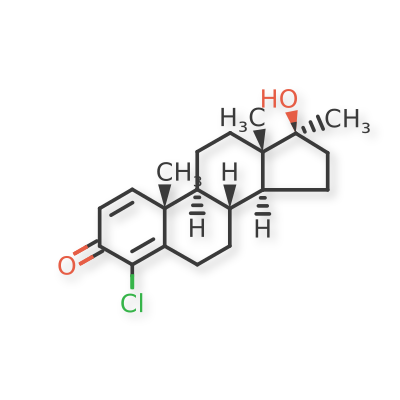
2D Structure
Molecular Formula
scienceC20H27ClO2
Molar Mass
science334.9 g/mol
Active Half-Life
science16 Hours
Anabolic/Androgenic Ratio
science54:6
bolt Mechanism of Action
Turinabol (Tbol) is a derivative of Dianabol with a 4-chloro modification that prevents aromatization. It provides lean, dry gains and strength.
- Lean Gains: Quality muscle without water weight.
- Performance: Historically used by athletes for performance enhancement.
Liver Support
NAC recommended during cycle.
medication Dosing Protocol
| Experience Level | Daily Dosage | Cycle Duration |
|---|---|---|
| Beginner | 20-40 mg | 6-8 Weeks |
| Intermediate | 40-60 mg | 6-8 Weeks |
| Advanced | 60-80 mg | 8 Weeks |
* 4-chloro alteration prevents estrogen conversion.
security Safety Profile
warning Common Side Effects
-
medical_services
Liver Toxicity
Hepatotoxic but generally touted as milder than Dbol.
-
fitness_center
Pumps
Painful back pumps are common.
dangerous Severe/Rare Side Effects
-
blood_pressure
Lipids
Can negatively impact Cholesterol.
shopping_cart Related Products
Disclaimer: This content is for informational and educational purposes only. It does not constitute medical advice.