Trenbolone Acetate
Clinical Overview
Overview
Trenbolone acetate is a synthetic androgenic–anabolic steroid (AAS) derived from 19‑norandrostenedione chemistry. It was first synthesized and characterized in the mid‑20th century and subsequently developed for veterinary use to promote lean muscle growth and improve feed efficiency in ruminants. Trenbolone acetate is one of the more potent anabolic steroids used in livestock production and has become notable in human performance‑enhancement contexts because of its potent anabolic and androgenic effects.
Key points
- Origin: 19‑nor steroid derivative developed for veterinary use (commercially available as intramuscular implants/pellets for cattle).
- Primary historical use: growth promotion in beef cattle.
- Human use: not approved for medical indications in most jurisdictions; used illicitly by bodybuilders and athletes for its pronounced anabolic effects.
- Drug classification: androgen receptor agonist; anabolic–androgenic steroid; progestogenic activity is also reported.
Chemical Properties
- Molecular formula: C20H24O3 (trenbolone acetate is the acetate ester of trenbolone)
- Molecular weight: approximately 312.4 g·mol−1
- Structural description: trenbolone is a 19‑nor‑androstane derivative characterized by the estratriene core (estra‑4,9,11‑trien‑3‑one) with a 17β‑hydroxyl that has been esterified as the acetate (C2) ester. The distinctive conjugated triene system (double bonds at positions 4, 9, and 11) alters receptor binding and metabolic stability relative to testosterone and many other AAS.
- Ester type: acetate ester (short‑chain, C2) attached to the 17β‑hydroxyl of trenbolone (hence “trenbolone acetate”). The acetate ester influences lipophilicity and release kinetics from intramuscular depots.
- Physical characteristics: typically encountered as a crystalline powder in pharmaceutical/veterinary formulations or as a solution for intramuscular injection. Solubility and melting point are dependent on formulation; the free alcohol (trenbolone) and its esters are lipophilic.
- Pharmacokinetic parameters (typical ranges reported in the literature):
- Apparent half‑life (after intramuscular injection of the acetate ester): relatively short among trenbolone esters, commonly cited in the range of ~24–72 hours (often approximated as about 48 hours) depending on formulation and individual factors.
- Detection time (metabolites in urine): metabolites can be detectable for extended periods; detection windows in anti‑doping testing have been reported in the order of weeks to months depending on assay sensitivity, dosing regimen, and individual metabolism (some long‑term metabolites may be detectable for several months).
Note: Specific values for half‑life and detection windows vary between studies and depend on dose, matrix (blood vs urine), analytical method, and individual physiology.
Mechanism of Action
- Receptor binding and primary pharmacodynamics:
- Trenbolone is a high‑affinity agonist of the androgen receptor (AR). It binds strongly to the AR and activates androgen‑dependent gene transcription, promoting protein synthesis and muscle growth.
- Compared with testosterone, trenbolone exhibits greater AR binding affinity and greater anabolic potency per unit mass; it also produces pronounced androgenic effects.
- Anabolic/androgenic ratio:
- Trenbolone is regarded as highly potent in both anabolic and androgenic actions. Quantitative anabolic/androgenic ratios often cited in the literature are substantially higher than testosterone for anabolic effects, and androgenic potency remains high. Exact numerical ratios vary among assay systems and are therefore approximations; trenbolone is generally classified as a very potent AAS with a high anabolic/androgenic profile.
- Aromatization and estrogenicity:
- Trenbolone does not aromatize to 17β‑estradiol because of structural alterations in the A‑ring and the 19‑nor backbone; therefore, classical estrogenic effects mediated by aromatization (e.g., water retention, classical gynecomastia via estradiol) are typically absent.
- However, trenbolone exhibits progestogenic activity via binding to progesterone receptors and may potentiate estrogenic effects in some contexts or contribute to gynecomastia through progestogenic mechanisms when used with other steroids.
- Additional receptor interactions and effects:
- Trenbolone can affect glucocorticoid signaling and thermal regulation in animal models and may have central nervous system effects that influence aggression, mood, and libido.
- It modifies nitrogen balance, increases nitrogen retention, elevates amino acid uptake in muscle tissue, and promotes increases in red blood cell mass—mechanisms common to anabolic steroids.
- Metabolic pathway:
- Trenbolone is metabolized primarily in the liver by phase I and phase II reactions, producing hydroxylated and conjugated metabolites that are excreted in urine and bile. The absence of aromatization changes the typical metabolite profile compared with testosterone derivatives, and distinct trenbolone metabolites are targeted in anti‑doping assays.
Medical Information
Therapeutic applications
- Trenbolone acetate has no widely accepted approved therapeutic indications for humans. Its primary legitimate marketplace use has been as a veterinary product (e.g., growth‑promoting implants for cattle such as those historically marketed under various trade names).
- There are no mainstream clinical guidelines endorsing trenbolone use in human medicine; it is not included in standard hormone replacement or approved anabolic therapy regimens.
Typical dosage ranges (performance‑enhancement context; educational description)
- Among non‑medical users, trenbolone acetate dosing regimens reported in anecdotal and community sources vary; typical patterns include intramuscular injections administered every other day to daily depending on dose and individual tolerance.
- Single‑injection dosages commonly cited in such contexts range from 50 mg to 200 mg per injection, with weekly totals of approximately 100–400 mg, though some regimens exceed this.
- These dosing ranges are not medical recommendations; they reflect reported patterns of illicit use and are associated with significant risk.
Administration routes
- Intramuscular injection is the principal route for trenbolone acetate in veterinary and illicit human use. The acetate ester is formulated in oil solutions suitable for IM depot injection.
- In veterinary applications, trenbolone is also delivered as subcutaneous implants (pellets) inserted under the skin of cattle for sustained release.
Duration of use
- In performance‑enhancement settings, cycle durations commonly reported range from 6 to 12 weeks, often combined with other AAS (“stacking”) to achieve desired anabolic outcomes. Longer use increases risk of adverse effects.
Safety Profile
Common side effects
- Androgenic effects: acne, oily skin, acceleration of male pattern baldness in genetically predisposed individuals, increased facial/body hair growth, and voice deepening in females.
- Suppression of the hypothalamic–pituitary–gonadal (HPG) axis: decreased endogenous testosterone production, testicular atrophy, reduced sperm production, and libido disturbances upon cessation.
- Cardiovascular effects: adverse changes in lipid profile (decreased HDL, increased LDL), increased blood pressure, and potential adverse cardiac remodeling associated with long‑term AAS exposure.
- Psychiatric/behavioral effects: mood alterations, irritability, increased aggression, anxiety, and sleep disturbances. Severe mood disorders and hypomanic or manic episodes have been reported with potent AAS use.
- Local reactions: injection‑site pain, inflammation, and infection if aseptic technique is not used.
Serious adverse reactions
- Hepatic effects: while 17α‑alkylated oral AAS are most strongly associated with hepatotoxicity, injectable AAS including trenbolone can still influence liver enzymes and hepatic function; cholestatic and other hepatic dysfunctions have been reported with prolonged misuse of anabolic steroids.
- Endocrine complications: prolonged hypogonadism may persist after discontinuation in some users, requiring endocrine evaluation and possible medical management (for example, with gonadotropin therapy).
- Renal effects: case reports describe renal dysfunction and rare instances of acute kidney injury associated with AAS use; mechanisms may include direct nephrotoxicity, rhabdomyolysis, or secondary effects of hypertension and altered lipid metabolism.
- Progestogenic effects: trenbolone’s progestogenic activity can exacerbate gynecomastia risk and negatively affect libido and mood.
- Rare but severe psychiatric events and cardiovascular events (myocardial infarction, stroke) have been reported in association with anabolic steroid abuse, particularly in the context of high doses and polypharmacy.
Drug interactions
- Concurrent use with other androgenic/anabolic agents can potentiate adverse endocrine and cardiovascular effects.
- Interactions with anticoagulants (e.g., warfarin) have been reported with anabolic steroids that affect hepatic metabolism; monitoring is advised if therapeutic anticoagulation is required.
- Concomitant hepatotoxic medications or substances (including excessive alcohol) may increase risk of liver injury.
- Drugs that modulate cytochrome P450 enzymes can theoretically alter trenbolone metabolism and influence plasma levels of coadministered drugs.
Contraindications
- Known or suspected pregnancy, as androgens can cause virilization of a female fetus.
- Known hypersensitivity to trenbolone or any component of the formulation.
- Prostate cancer, breast cancer in males, or other androgen‑sensitive neoplasms.
- Severe cardiovascular disease, uncontrolled hypertension, and severe hepatic or renal impairment are relative or absolute contraindications due to amplified risk.
- Use in adolescents is contraindicated except in very specific, medically supervised cases due to effects on growth and epiphyseal closure.
Legal Status
- Regulatory classification: Trenbolone and many anabolic steroids are classified as controlled substances in multiple jurisdictions. For example, in the United States, anabolic steroids are Schedule III controlled substances under the Controlled Substances Act; many other countries regulate AAS under comparable drug control frameworks.
- Prescription requirements: Trenbolone acetate is not approved for human therapeutic use in most countries and therefore lacks a legitimate human‑use prescription route; it remains available as a veterinary product in certain markets and is subject to regulations governing veterinary pharmaceuticals. Human possession, distribution, or use without authorization can be subject to criminal or administrative penalties depending on local law.
- Sports anti‑doping status: Trenbolone and its metabolites are prohibited substances under the World Anti‑Doping Agency (WADA) Prohibited List. Trenbolone is banned for in‑competition and out‑of‑competition use by athletes governed by WADA and by many professional and collegiate sporting organizations. Detection of trenbolone metabolites in biological samples is grounds for sanction in competitive sports.
Analytical and Monitoring Considerations
- Detection methods: Trenbolone and its metabolites are routinely detected by gas chromatography–mass spectrometry (GC‑MS), liquid chromatography–tandem mass spectrometry (LC‑MS/MS), and other advanced analytical techniques in biological matrices (urine, blood).
- Monitoring: In clinical or forensic contexts, liver enzymes, lipid panels, renal function, blood pressure, hematocrit/hemoglobin, and endocrine parameters (total/free testosterone, LH, FSH) are commonly monitored to assess for AAS‑induced changes or complications.
Summary
Trenbolone acetate is a potent anabolic–androgenic steroid developed for veterinary growth promotion and notable for its strong androgen receptor activity, lack of aromatization, and pronounced anabolic effects. It is not approved for therapeutic human use in most jurisdictions and is prohibited in competitive sport. Use is associated with a broad spectrum of adverse effects—endocrine, cardiovascular, hepatic, renal, and psychiatric—especially with supra‑physiologic or prolonged dosing. Analytical detection of trenbolone metabolites is well established and forms part of anti‑doping and forensic testing protocols.
science Chemical Properties
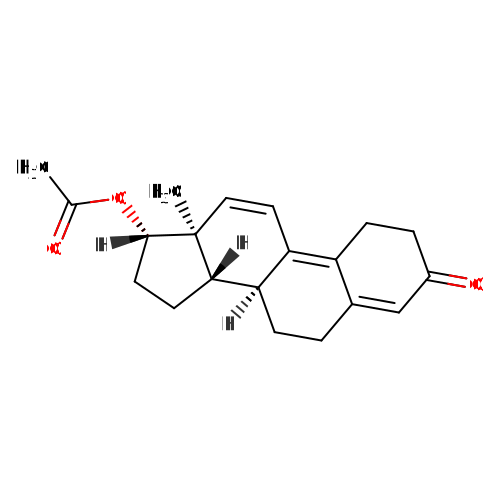
2D Structure
CAS Number
tag10161-34-9
Molecular Formula
scienceC20H24O3
Molar Mass
science312.4 g/mol
Active Half-Life
science3 Days
Anabolic/Androgenic Ratio
science500:500
CAS Number
science10161-34-9
bolt Mechanism of Action
Trenbolone is a highly potent androgen that does not aromatize into estrogen. It exhibits strong binding affinity for the androgen receptor and increases ammonium ion uptake by muscles.
- Nutrient Efficiency: Dramatically improves feed efficiency and nutrient absorption.
- No Aromatization: Does not convert to estrogen, leading to a hard, dry look.
Mental Health
May cause anxiety, paranoia, and aggression.
medication Dosing Protocol
| Experience Level | Daily Dosage | Cycle Duration |
|---|---|---|
| Beginner | 200-300 mg | 6-8 Weeks |
| Intermediate | 300-400 mg | 8-10 Weeks |
| Advanced | 400-600 mg | 10-12 Weeks |
* Administer Every Other Day (EOD) due to short acetate ester.
security Safety Profile
warning Common Side Effects
-
dermatology
Androgenic
Aggression, acne, and hair loss are common.
-
lungs
Tren Cough
Acute coughing fit immediately after injection.
dangerous Severe/Rare Side Effects
-
ecg_heart
Cardiovascular
Negative impact on lipids and blood pressure.
shopping_cart Related Products
Disclaimer: This content is for informational and educational purposes only. It does not constitute medical advice.