Testosterone Enanthate
Clinical Overview
Overview
Testosterone enanthate is a long-acting esterified form of the endogenous androgen testosterone, formulated for parenteral administration. First synthesized and introduced in the mid-20th century, testosterone esters were developed to provide sustained plasma concentrations of testosterone after intramuscular injection, reducing the need for daily dosing compared with unesterified testosterone. Testosterone enanthate remains one of the most widely used testosterone esters in clinical practice and in other contexts where exogenous androgen administration occurs.
Common clinical uses include testosterone replacement therapy (TRT) for male hypogonadism, induction and maintenance of secondary sexual characteristics in male pubertal delay, certain indications in transgender masculine (female-to-male) hormone therapy, and selected off-label uses such as treatment of cachexia or chronic wasting conditions. Outside of medical practice, testosterone enanthate has been used for performance enhancement and physique modification because of its anabolic and androgenic effects.
Drug classification
- Pharmacologic class: Androgen; Anabolic-androgenic steroid (AAS)
- Chemical class: Testosterone ester (17β-hydroxy group esterified as heptanoate/enanthate)
- Route class: Parenteral androgen replacement agent
Chemical Properties
Molecular structure and formula
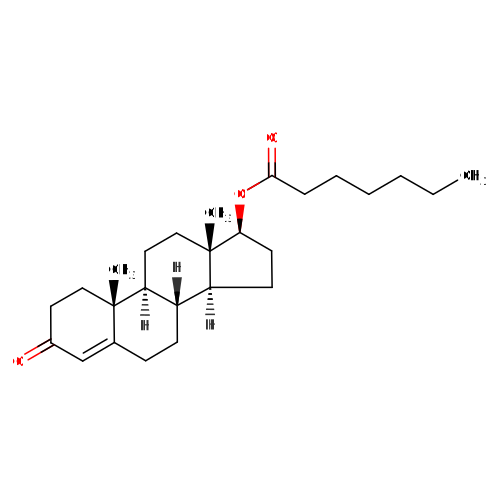
- Chemical name: Testosterone 17β-enanthate (testosterone heptanoate)
- Molecular formula: C26H40O3
- Molecular weight: ≈ 400.6 g·mol−1
- Structural features: Testosterone core (cyclopenta[a]phenanthrene steroid nucleus) with a heptanoate (enanthate / heptanoic acid) ester attached to the 17β-hydroxyl group. The ester increases lipophilicity and slows release from intramuscular depots.
Physical characteristics
- Formulation: Typically supplied as an oil-based solution for intramuscular injection (e.g., dissolved in sesame oil, cottonseed oil, or medium-chain triglyceride oils).
- Appearance: Pale yellow to amber oily solution.
- Solubility: Lipophilic; poorly soluble in water.
Ester type
- Enanthate (heptanoate) is a medium-to-long-chain saturated fatty acid ester (C7).
- The enanthate ester slows release of testosterone from the injection site and delays systemic appearance of free testosterone until ester hydrolysis occurs.
Half-life and detection time
- Pharmacokinetic half-life (elimination terminal half-life after IM injection): commonly reported in clinical literature as approximately 4–8 days; typical estimate ≈ 4.5 days for many individuals. The apparent pharmacologic duration of action supports dosing intervals commonly of 1–3 weeks depending on regimen.
- Detection time in urine or blood (anti-doping context): metabolites of testosterone and the enanthate ester can be detectable for several weeks to months depending on dose, assay sensitivity, and testing method. In many anti-doping tests, exogenous testosterone administration can be detected for weeks; specific detection windows vary and may extend to several months in some testing paradigms.
Mechanism of Action
How it works in the body
- Testosterone enanthate functions as a prodrug of testosterone. After intramuscular administration, the lipophilic ester is slowly released from the depot and the ester is enzymatically hydrolyzed (by esterases) to yield free testosterone, the active hormone.
- Free testosterone exerts effects via intracellular androgen receptors (AR) as well as via conversion to other active metabolites.
Receptor binding and activity
- Testosterone binds to the androgen receptor (a nuclear receptor) in target tissues. The hormone–receptor complex translocates to the nucleus and modulates transcription of androgen-responsive genes, resulting in androgenic effects (virilization, male secondary sexual characteristics) and anabolic effects (increased protein synthesis, nitrogen retention, muscle growth).
- In certain tissues (e.g., prostate, scalp), testosterone is converted by 5α-reductase to dihydrotestosterone (DHT), a more potent AR agonist with greater androgenic potency in those tissues.
- Testosterone is also aromatized to estradiol by aromatase in adipose tissue and other sites; estradiol mediates many estrogenic actions of testosterone (e.g., bone health, modulation of libido).
Anabolic/androgenic ratio
- Testosterone (the parent hormone) is the reference standard for anabolic/androgenic potency and conventionally has an anabolic:androgenic ratio approximating 1:1 when compared using historical bioassay systems. In clinical and physiological contexts, tissue-specific metabolism (to DHT or estradiol) results in varied functional effects across tissues.
Metabolic pathway
- Ester hydrolysis: Systemic esterases cleave the enanthate ester to release free testosterone.
- Peripheral metabolism: Testosterone is reduced to DHT by 5α-reductase, aromatized to estradiol by aromatase, or metabolized in the liver by oxidation and conjugation (sulfation, glucuronidation).
- Excretion: Metabolites are eliminated primarily in urine as conjugates and to a lesser extent in feces.
Medical Information
Therapeutic applications
- Male hypogonadism (primary or secondary) to restore normal testosterone levels and alleviate symptoms (low libido, fatigue, loss of muscle mass, decreased bone density).
- Delayed puberty in males (as part of induction therapy under specialist supervision).
- Androgen therapy in transgender men (female-to-male) to induce masculinizing changes.
- Off-label/adjunctive uses in selected wasting conditions, certain anemias responsive to androgens, and osteoporosis (historically).
- Note: Choice of formulation and specific indications should follow current clinical guidelines and specialist assessment.
Typical dosage ranges
- Testosterone replacement (adult males):
- Common dosing regimens: 50–200 mg every 1–2 weeks or 100–200 mg every 10–14 days by intramuscular injection. Some clinicians use 50–100 mg weekly to reduce peak–trough variation.
- Dosing individualized to clinical response and serum testosterone trough/peak monitoring; aim to maintain mid-normal physiological testosterone levels.
- Induction of puberty in adolescents: lower, carefully titrated doses; specialist pediatric endocrinology oversight required.
- Performance/enhancement contexts (non-medical): reported regimens are typically much higher (e.g., 200–600 mg/week or more), associated with increased risks and not recommended medically.
Administration routes
- Intramuscular injection (deep IM) is the standard route for testosterone enanthate, typically administered into the gluteal or thigh muscles as an oil-based solution.
- Subcutaneous administration of oil-based testosterone esters has been described and used clinically in some settings; technique, absorption, and tolerability should be considered.
- Oral administration is not used because testosterone enanthate is not orally bioavailable and would be subject to significant first-pass metabolism.
Duration of use
- For hormonal replacement, treatment is usually continued long-term (potentially lifelong) with periodic monitoring.
- For short-term induction or transitional therapy, durations vary according to clinical goals; in non-medical use, cycles are often reported in 8–16 week blocks, but such practices carry heightened risk.
Safety Profile
Common side effects
- Dermatologic: acne, oily skin
- Hair-related: accelerated male-pattern baldness in genetically predisposed individuals
- Fluid/electrolyte: mild fluid retention, weight gain
- Sexual function: increased libido or altered libido; at supraphysiologic doses may cause erectile dysfunction or sexual dysfunction secondary to hormonal imbalance
- Hematologic: increased erythropoiesis leading to polycythemia (elevated hematocrit/hemoglobin)
- Hormonal axis suppression: suppression of the hypothalamic–pituitary–gonadal (HPG) axis with decreased gonadotropin secretion, testicular atrophy, and impaired spermatogenesis (reversible with cessation in many cases but may be prolonged)
Serious adverse reactions
- Cardiovascular: adverse changes in lipid profile (reduced HDL cholesterol, variable effects on LDL), potential increases in blood pressure, and associations with increased cardiovascular events in some populations when used at high doses or in susceptible patients
- Thromboembolic events: polycythemia increases risk of thrombosis; instances of venous thromboembolism have been reported
- Prostate: stimulation of benign prostatic hyperplasia (BPH) and potential acceleration of clinically undiagnosed prostate cancer growth (screening and monitoring recommended in older men)
- Hepatic: injectable testosterone esters are not 17α-alkylated and have lower hepatotoxic risk than certain oral anabolic steroids, but abnormal liver function tests have been reported rarely
- Psychiatric/behavioral: mood changes, aggression, irritability, and in some cases psychiatric symptoms
Drug interactions
- Anticoagulants: testosterone can potentiate or interfere with oral anticoagulants (e.g., warfarin), requiring monitoring of coagulation parameters.
- Corticosteroids: concurrent use may increase risk of fluid retention or affect glucose metabolism.
- Insulin and oral hypoglycemics: testosterone can alter insulin sensitivity and glucose metabolism, potentially requiring dose adjustments of antidiabetic medications.
- Other androgenic/anabolic agents: coadministration with other androgens or anabolic steroids can amplify androgenic effects and adverse events.
- Metabolic interactions: no major cytochrome P450–mediated interactions are primary to testosterone enanthate itself, but concurrent medications affecting hepatic metabolism and binding proteins may indirectly influence androgen levels.
Contraindications
- Known or suspected prostate carcinoma or male breast cancer.
- Pregnancy (androgen exposure contraindicated due to virilization of a female fetus).
- Men with severe cardiac failure, untreated severe sleep apnea, uncontrolled polycythemia (hematocrit >50%), or significant uncontrolled liver disease should not receive testosterone therapy until conditions are addressed.
- Hypersensitivity to testosterone or formulation constituents.
Monitoring considerations
- Baseline and periodic evaluation of serum testosterone concentrations, hematocrit/hemoglobin, lipid profile, liver function tests, and prostate-specific antigen (PSA) in appropriate age groups.
- Assessment of clinical response and adverse effects; fertility considerations should be discussed prior to initiating therapy that suppresses spermatogenesis.
Legal Status
Regulatory classification
- Testosterone enanthate is classified as a prescription-only medication in most jurisdictions.
- In many countries it is further controlled as a substance with potential for abuse and dependence; for example, in the United States testosterone and most other AAS are Schedule III controlled substances.
Prescription requirements
- A valid prescription from a licensed medical practitioner is required for legal clinical use in regions where it is regulated. Distribution without prescription is illegal in jurisdictions with controlled substance scheduling.
Sports anti-doping status
- Testosterone and its esters (including testosterone enanthate) are prohibited substances under the World Anti-Doping Agency (WADA) Prohibited List. They are banned both in-competition and out-of-competition when exogenous use is detected.
- Testing methodologies typically measure ratios of testosterone to epitestosterone (T/E ratio) and/or use isotope ratio mass spectrometry (IRMS) to distinguish endogenous versus exogenous testosterone administration. Detection windows and sensitivity depend on dose, formulation, individual metabolism, and assay technology.
Summary
Testosterone enanthate is a widely used long-acting injectable testosterone ester that acts as a prodrug of testosterone. It provides sustained androgen exposure suitable for testosterone replacement, pubertal induction, and gender-affirming masculinizing therapy when prescribed and monitored appropriately. Its pharmacologic effects derive from androgen receptor activation and peripheral metabolism to DHT and estradiol. Therapeutic dosing aims to restore physiologic testosterone levels, while supraphysiologic dosing (as seen in non-medical contexts) increases the risk of adverse cardiovascular, hematologic, endocrine, and psychiatric effects. Regulatory frameworks in many countries treat testosterone enanthate as a prescription and controlled substance, and its use is prohibited in competitive sport under anti-doping rules.
science Chemical Properties
2D Structure
CAS Number
tag315-37-7
Molecular Formula
scienceC26H40O3
Molar Mass
science400.6 g/mol
Active Half-Life
science7-8 Days
Anabolic/Androgenic Ratio
science100:100
CAS Number
science315-37-7
bolt Mechanism of Action
Testosterone Enanthate acts by binding to the androgen receptor, promoting DNA transcription that results in protein synthesis, nitrogen retention, and erythropoiesis.
- Protein Synthesis: Significantly increases the rate of protein synthesis in muscle tissue.
- Nitrogen Retention: Enhances nitrogen retention in muscles, preventing a catabolic state.
Estrogen Management
Have an Aromatase Inhibitor (AI) on hand.
medication Dosing Protocol
| Experience Level | Daily Dosage | Cycle Duration |
|---|---|---|
| Beginner | 250-500 mg | 10-12 Weeks |
| Intermediate | 500-750 mg | 12-16 Weeks |
| Advanced | 750mg+ | 12-20 Weeks |
* Administer via deep intramuscular injection (gluteal or ventrogluteal).
security Safety Profile
warning Common Side Effects
-
water_drop
Estrogenic Effects
Water retention and gynecomastia due to aromatization.
-
dermatology
Androgenic Effects
Acne, oily skin, and hair loss in predisposed individuals.
dangerous Severe/Rare Side Effects
-
block
HPTA Suppression
Suppresses natural testosterone production.
shopping_cart Related Products
Disclaimer: This content is for informational and educational purposes only. It does not constitute medical advice.