TB-500
Clinical Overview
Overview
Thymosin beta-4 (commonly referred to in research and performance circles as “TB-500” when supplied as a synthetic preparation) is a small, naturally occurring peptide that has been studied for its role in tissue repair, cell migration, angiogenesis, and modulation of inflammation. Originally identified and characterised in the late 20th century as part of a family of thymosin peptides isolated from thymic tissue, thymosin beta-4 (Tβ4) is widely expressed in mammalian tissues and is believed to participate in responses to injury and stress.
- History: Tβ4 was isolated and sequenced in the 1980s and subsequently investigated for its actin-sequestering properties and role in cytoskeletal organisation. Preclinical work in the 1990s and 2000s demonstrated tissue-protective and regenerative properties in models of myocardial ischemia, dermal wound healing, corneal injury, and musculoskeletal damage. “TB-500” is a trade/colloquial name commonly used in non-regulated research and sporting contexts to refer to synthetic preparations of thymosin beta-4 or related fragments.
- Common uses in medicine and performance enhancement:
- Research and experimental medicine: investigation of wound healing, corneal repair, cardiac tissue protection, and inflammatory modulation.
- Performance/enhancement context: anecdotal use among athletes and animals for purported acceleration of soft-tissue repair, reduction of inflammation, and enhanced recovery from injury. These uses are not supported by robust clinical trial data and are outside approved medical indications.
- Drug classification:
- Biologic peptide (endogenous peptide hormone/actin-binding peptide).
- Investigational/experimental therapeutic; not an approved small-molecule drug in most jurisdictions.
Chemical Properties
Note: many public sources label TB-500 as a synthetic peptide corresponding to thymosin beta-4. Exact composition, nomenclature, and formulation can vary between manufacturers that supply research peptides.
- Molecular structure and formula:
- Thymosin beta-4 is a polypeptide of approximately 43 amino acids in the native human form. As a peptide, it does not have a simple small-molecule chemical formula; instead its identity is defined by its amino acid sequence and molecular weight (~4.9 kDa for the full-length human peptide). “TB-500” preparations may contain the full-length peptide or a biologically active fragment; product specifications should be consulted for exact sequence and mass.
- Physical characteristics:
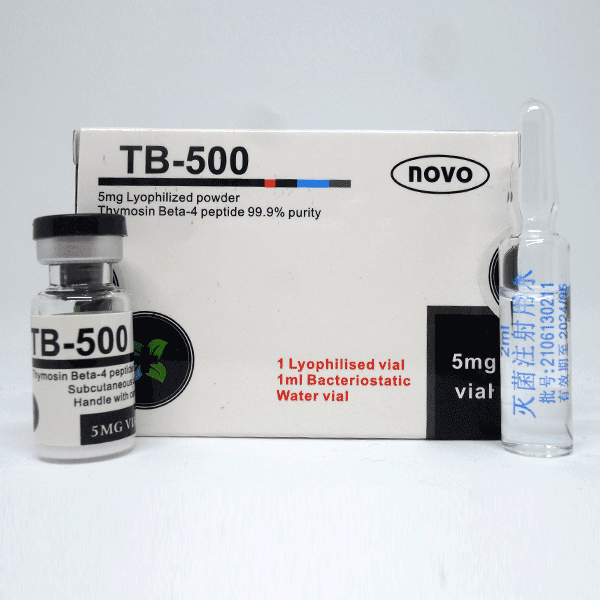
- Peptide: water-soluble. Supplied as lyophilized powder in vials for reconstitution with sterile water or saline in research contexts. Molecular weight in the kilodalton range; appearance typically white to off-white lyophilate.
- Ester type (if applicable):
- Not applicable. TB-500/thymosin beta-4 is not an esterified compound; it is a plain peptide.
- Half-life and detection time:
- Human pharmacokinetic data are limited. Native Tβ4 is rapidly distributed to tissues and subject to proteolytic degradation; measured plasma half-life in some models is relatively short (hours), but tissue retention and biological effects may persist longer due to cellular uptake and action on intracellular targets.
- Detection in biological samples depends on assay sensitivity (immunoassays, mass spectrometry) and the specimen tested; validated detection windows in humans for anti-doping or clinical monitoring are not well established in public literature.
Mechanism of Action
Thymosin beta-4 exerts multiple cellular and molecular actions that have been implicated in tissue repair and anti-inflammatory responses.
- How it works in the body:
- Actin binding/sequestration: Tβ4 binds monomeric G-actin, regulating actin polymerisation and cytoskeletal dynamics. This interaction facilitates cell migration, which is important for wound closure and tissue remodelling.
- Promotion of cell migration and angiogenesis: Tβ4 has been shown in preclinical studies to enhance migration of endothelial cells, keratinocytes, and other repair cells, and to stimulate angiogenesis (formation of new blood vessels) in injured tissues.
- Modulation of inflammation: Tβ4 can modulate inflammatory signalling pathways, attenuating pro-inflammatory cytokine production in some models and promoting resolution of inflammation.
- Tissue protection: reported anti-apoptotic and cytoprotective effects in ischemic and injured tissues.
- Receptor binding and activity:
- A specific, high-affinity classical cell-surface receptor for thymosin beta-4 has not been conclusively characterised. Many actions are attributed to intracellular uptake following uptake mechanisms and interaction with cytoskeletal components, and to modulation of signalling pathways (e.g., influencing integrin-linked kinase, Akt pathway, and matrix metalloproteinases in some contexts). Evidence also indicates paracrine/autocrine signalling influences.
- Anabolic/androgenic ratio:
- Not applicable. Tβ4 is not an androgenic anabolic steroid and does not have a measurable anabolic/androgenic steroid ratio. Its putative “performance-enhancing” effects arise from tissue repair and anti-inflammatory mechanisms, not androgen receptor-mediated anabolic actions.
- Metabolic pathway:
- Degradation mainly via extracellular and intracellular proteolytic enzymes (peptidases and proteases) and subsequent clearance via normal peptide elimination pathways (renal filtration for breakdown products, proteolysis within tissues). Detailed human metabolic pathways have not been fully characterised in clinical literature.
Medical Information
The following summarises experimental and investigational medical applications, and commonly reported dosing approaches in research contexts. High-quality, large-scale randomized controlled trials in humans are limited.
- Therapeutic applications (investigational/experimental):
- Dermal wound healing and dermatologic repair (e.g., chronic wounds, surgical wounds).
- Ocular surface repair (corneal epithelial defects; studied in preclinical and early clinical models).
- Cardiac protection and repair following ischemic injury (preclinical models show reduction in infarct size and improved angiogenesis).
- Musculoskeletal injury: tendon and muscle repair in animal models.
- Other tissue-protective contexts: inflammatory modulation in diverse organ systems.
- Typical dosage ranges:
- There is no universally accepted clinical dosing regimen. In research and anecdotal use, TB-500 has been administered in various regimens; examples reported in preclinical and off-label contexts range from single-digit microgram to milligram amounts per dose. For instance, some research peptides suppliers and anecdotal reports cite weekly doses in the low milligram range (e.g., 2–10 mg total per week given as divided injections). These reported regimens are derived from non-standardised sources and animal studies and should not be interpreted as evidence-based clinical dosing.
- Reliable, regulated human dosing guidelines do not exist because the peptide is not approved as a therapeutic in most regions.
- Administration routes:
- Parenteral routes used in preclinical and experimental contexts include subcutaneous (SC) and intramuscular (IM) injection; topical formulations have been explored for ocular and dermal applications. Intravenous administration is less commonly reported in publicly available preclinical literature.
- Duration of use:
- Experimental treatment courses in studies vary by indication and species—from single doses to several weeks of repeated administration. Long-term use data in humans are lacking.
Safety Profile
Safety and adverse event profiles in humans are incompletely characterised. Most available data derive from animal studies, small human case series, and preclinical investigations.
- Common side effects (reported anecdotally or in limited studies):
- Local injection-site reactions (pain, redness, swelling).
- Transient systemic symptoms reported anecdotally include headache, transient fatigue, or mild gastrointestinal upset.
- Because robust clinical safety data are lacking, the frequency and severity of common adverse effects are not well defined.
- Serious adverse reactions:
- Hypersensitivity or allergic reactions are possible with any exogenous peptide.
- Theoretical risks: promotion of angiogenesis and cell migration raises theoretical concerns about tumour promotion or enhanced growth of existing malignancies; preclinical data are not definitive but warrant caution in patients with current or recent cancer.
- Uncharacterised long-term effects: chronic safety, immunogenicity, and off-target consequences have not been established in large human cohorts.
- Drug interactions:
- No well-documented, clinically validated drug–drug interaction profile is available. Potential interactions could arise with other biologic agents, immunomodulators, or medications that influence wound healing, angiogenesis, or coagulation; however, specific interactions have not been systematically studied.
- Contraindications:
- Known hypersensitivity to thymosin beta-4 preparations.
- Active malignancy or high risk for malignancy due to theoretical concerns about angiogenesis and cell proliferation.
- Pregnancy and lactation: safety not established; use not recommended in absence of data.
- Use in paediatric populations: insufficient data.
Legal Status
Regulatory and anti-doping statuses vary by jurisdiction and governing body.
- Regulatory classification:
- In most countries, thymosin beta-4 (TB-500 formulations) is not an approved therapeutic medicinal product for general clinical use. It is frequently supplied and marketed as a research reagent or “research chemical.” Some clinical trials may be authorised under investigational new drug frameworks.
- Prescription requirements:
- Because TB-500 is generally not an approved pharmaceutical, it is often not regulated through standard prescription pathways; however, selling or promoting it for human therapeutic use may be restricted by local laws and regulatory agencies. Availability through pharmacies is not the norm; distribution frequently occurs through internet suppliers and research chemical vendors. Regulatory status can change—local laws and agency guidance should be consulted.
- Sports anti-doping status:
- Thymosin beta-4 and related peptides are explicitly prohibited by the World Anti-Doping Agency (WADA) under its list of banned peptide hormones, growth factors, cytokines, and related substances. Detection of thymosin beta-4 or its analogues in an athlete’s sample can constitute an anti-doping rule violation and lead to sanctions.
Table: Summary of key points
| Topic | Summary |
|---|---|
| Nature | Endogenous actin-binding peptide (≈43 aa); synthetic preparations marketed as “TB-500” |
| Main actions | Promotes cell migration, angiogenesis, wound healing; modulates inflammation |
| Indications (investigational) | Wound healing, ocular repair, cardiac protection, musculoskeletal repair |
| Approved in humans | Generally not approved as a therapeutic in most jurisdictions |
| Administration | Parenteral (SC/IM) in research settings; topical forms explored |
| Safety | Incomplete data; injection-site reactions, theoretical tumour risk; hypersensitivity possible |
| Anti-doping | Banned by WADA (peptide hormones/growth factors) |
Research Considerations and Evidence Limitations
- Quality of evidence: Much of the published literature consists of preclinical animal studies, in vitro experiments, and small exploratory human studies. Randomised, placebo-controlled clinical trials demonstrating safety and efficacy across indications are limited.
- Product heterogeneity: Commercially available “TB-500” from research vendors may vary in purity, sequence fidelity, and formulation. Analytical verification (e.g., mass spectrometry, HPLC) is needed to confirm identity and purity in research settings.
- Ethical and regulatory oversight: Use in humans outside approved clinical trials is not advised due to limited data; in regulated clinical research contexts, investigational use requires appropriate ethical approvals and monitoring.
References and Further Reading (select)
- Primary preclinical literature on thymosin beta-4 biology, actin-binding properties, and tissue repair.
- Reviews on thymosin beta-4 in wound healing and angiogenesis (peer-reviewed journals).
- WADA Prohibited List (for anti-doping classification).
- Regulatory agency guidance on investigational biologics and peptide research compounds.
Note: This article emphasises current scientific knowledge and limitations. Because TB-500 / thymosin beta-4 remains largely investigational in human clinical medicine, clinicians and researchers should consult primary literature, regulatory guidance, and institutional review processes when considering study or therapeutic use.
science Chemical Properties
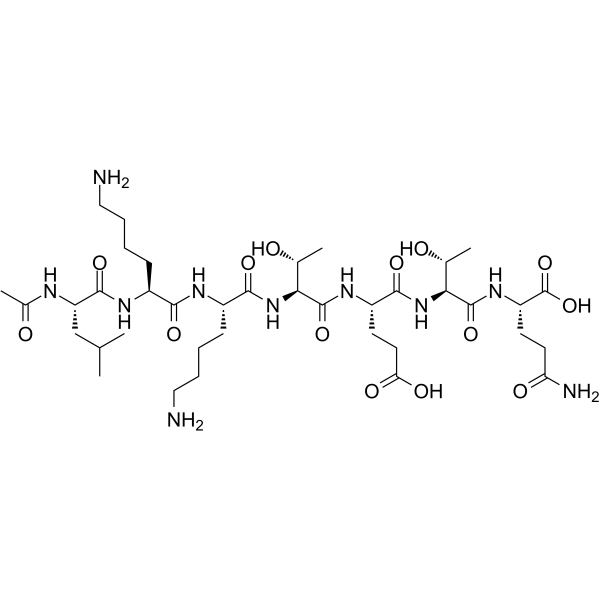
2D Structure
Molecular Formula
scienceC208H344N60O63S2
Molar Mass
science4963.5 g/mol
Active Half-Life
science7-10 Days
Anabolic/Androgenic Ratio
scienceN/A (Peptide)
bolt Mechanism of Action
TB-500 is a synthetic version of Thymosin Beta-4. It promotes cell migration and actin sequestration, aiding in muscle flexibility and injury repair.
- Cell Migration: Helps cells move to injury sites.
- Flexibility: Reduces inflammation and improves flexibility.
Purity
Ensure source purity.
medication Dosing Protocol
| Experience Level | Daily Dosage | Cycle Duration |
|---|---|---|
| Loading | 5-10 mg | 4 Weeks |
| Maintenance | 2-5 mg | Ongoing |
* Works well in synergy with BPC-157.
security Safety Profile
warning Common Side Effects
-
bedtime
Fatigue
Temporary tiredness after injection.
dangerous Severe/Rare Side Effects
shopping_cart Related Products
Disclaimer: This content is for informational and educational purposes only. It does not constitute medical advice.