Sustanon 250
Clinical Overview
Overview
Sustanon 250 is a branded injectable preparation composed of multiple testosterone esters formulated to provide both relatively rapid and extended release of testosterone following intramuscular injection. Introduced by Organon in the mid-20th century, it was developed to reduce the frequency of administration needed with single-ester testosterone products by combining esters with different chain lengths and pharmacokinetic profiles.
Common uses
- Medical: replacement therapy for male hypogonadism (congenital or acquired), delayed puberty in males when indicated, and in some contexts palliation of progressive, inoperable metastatic breast cancer in women (less commonly used for oncology today).
- Non-medical/performance: used illicitly by some athletes and bodybuilders for anabolic effects on muscle mass, strength, and recovery. Sustanon is often chosen in performance communities for its combination of fast- and slow-acting esters.
Drug classification
- Pharmacologic class: androgen; anabolic-androgenic steroid (AAS); testosterone replacement therapy (TRT) agent.
- Formulation class: multi-ester testosterone oil solution for intramuscular injection.
Chemical Properties
Molecular structure and formula
- Testosterone base: a 19-carbon steroid with the core cyclopenta[a]phenanthrene structure. Chemical formula of testosterone (the active hormone after ester hydrolysis) is C19H28O2.
- Sustanon itself is a mixture of testosterone molecules esterified at the 17β-hydroxyl position with different fatty acids; each ester is hydrolyzed in vivo to yield native testosterone.
Typical ester composition (per milliliter in the original Sustanon 250 formulation)
- Testosterone propionate — 30 mg
- Testosterone phenylpropionate — 60 mg
- Testosterone isocaproate — 60 mg
- Testosterone decanoate — 100 mg
Total testosterone esters: 250 mg/mL (hence the name Sustanon 250).
Physical characteristics
- Presentation: oily solution for intramuscular injection (often in benzyl benzoate/benzyl alcohol and oil such as sesame or castor oil vehicle depending on manufacturer).
- Appearance: clear to slightly yellow oily liquid in sterile ampoules or vials.
Ester type
- Short- to long-chain fatty acid esters attached at the 17β-hydroxyl of testosterone:
- Propionate (short; rapid release)
- Phenylpropionate (intermediate)
- Isocaproate (intermediate)
- Decanoate (long; slow release)
- The ester length modulates lipophilicity and thus depot release kinetics; esters are hydrolyzed by plasma and tissue esterases to liberate active testosterone.
Half-life and detection time
- The half-lives of individual esters differ and therefore the composite pharmacokinetic profile is a sum of the components:
- Testosterone propionate: elimination half-life roughly 12–48 hours (commonly cited ~2 days).
- Testosterone phenylpropionate: ~4–5 days.
- Testosterone isocaproate: ~7–9 days.
- Testosterone decanoate: ~7–15 days (some references note up to several weeks of effective persistence).
- Detection time (urine/blood): testosterone and its metabolites can be detected for weeks after administration, depending on assay sensitivity, dose, frequency, and individual metabolism. Long-chain esters (decanoate) contribute to prolonged detectability.
Mechanism of Action
How it works in the body
- After intramuscular administration, the oil-based depot releases testosterone esters gradually into circulation. Plasma and tissue esterases hydrolyze the ester bond to yield free testosterone, the active androgen.
- Free testosterone circulates bound to sex hormone–binding globulin (SHBG) and albumin; only the unbound (free) fraction is biologically active at target tissues.
Receptor binding and activity
- Testosterone binds to the intracellular androgen receptor (AR). The hormone–receptor complex translocates to the nucleus, modulating transcription of androgen-responsive genes that regulate development, maintenance, and anabolic processes in androgen-sensitive tissues (muscle, bone, reproductive tissues, hair follicles, etc.).
- In certain tissues (notably skin, scalp, prostate), testosterone is converted to dihydrotestosterone (DHT) by 5α-reductase; DHT binds AR with higher affinity and mediates several androgenic effects.
Anabolic/androgenic ratio
- Testosterone is the reference compound for anabolic and androgenic activity; it is typically assigned a ratio of approximately 100:100 for anabolic:androgenic activity in classical assays. Esterification does not alter intrinsic receptor-mediated potency once hydrolyzed to testosterone; differing clinical effects stem from pharmacokinetics rather than changes in receptor pharmacology.
Metabolic pathway
- Primary metabolic transformations:
- Ester hydrolysis to free testosterone.
- Conversion to DHT via 5α-reductase (more active in certain tissues).
- Aromatization to estradiol via aromatase (important in bone physiology, libido, and risk of estrogenic side effects such as gynecomastia).
- Hepatic metabolism produces a range of inactive metabolites excreted in urine as glucuronide and sulfate conjugates.
- Testosterone is not extensively metabolized by cytochrome P450 isoforms as a primary pathway; much metabolism occurs via steroid-specific enzymes and conjugation.
Medical Information
Therapeutic applications
- Male hypogonadism (primary or secondary) to restore physiological serum testosterone concentrations and ameliorate symptoms such as low libido, decreased energy, reduced muscle mass, and loss of bone density.
- Delayed puberty in males when testosterone therapy is indicated.
- Historical/limited use in certain estrogen-dependent breast cancers in women (less common in contemporary oncology due to alternative therapies).
- Off-label and non-approved uses include performance enhancement and body composition modification.
Typical dosage ranges
- Manufacturer guidelines historically recommended 250 mg intramuscularly every 3–4 weeks for replacement; however, clinical practice has often preferred shorter dosing intervals (e.g., 100–250 mg every 1–3 weeks or 250 mg every 2–3 weeks) to maintain more stable serum testosterone levels.
- Modern testosterone replacement strategies may use weekly or biweekly dosing with dose titration to achieve mid-normal physiological testosterone concentrations and symptom control.
- Pediatric dosing (for delayed puberty) and oncology dosing differ and must be individualized by specialists.
Administration routes
- Intramuscular injection (deep IM), typically in the gluteal muscle. The oil vehicle makes intramuscular administration standard; subcutaneous and intramuscular techniques vary in clinical practice, but parenteral IM is the licensed route for Sustanon formulations.
Duration of use
- Duration is individualized based on indication:
- For androgen replacement, therapy is usually long-term, often lifelong, with periodic monitoring.
- For puberty induction, therapy may be given for months to years under specialist supervision.
- For specific oncology indications, duration depends on disease status and response.
Safety Profile
Common side effects
- Androgenic: acne, oily skin, increased facial/body hair, male-pattern scalp hair loss (in genetically predisposed individuals).
- Estrogenic (resulting from aromatization): gynecomastia, water retention.
- Hematologic: increased hematocrit/hemoglobin (erythrocytosis), which can raise thrombotic risk if unchecked.
- Cardiometabolic: adverse changes in LDL/HDL cholesterol (often decreased HDL), weight gain, fluid retention, potential exacerbation of hypertension.
- Reproductive: suppression of the hypothalamic–pituitary–gonadal (HPG) axis leading to reduced luteinizing hormone (LH) and follicle-stimulating hormone (FSH), decreased intratesticular testosterone, testicular atrophy, and reduced spermatogenesis leading to infertility.
- Psychological: mood changes, irritability, changes in libido (increase or decrease).
Serious adverse reactions
- Cardiovascular events: associations between testosterone therapy and cardiovascular events (myocardial infarction, stroke) have been reported in some observational studies and trials; data are mixed and patient risk stratification is advised.
- Venous thromboembolism (VTE): erythrocytosis with elevated hematocrit increases VTE risk.
- Prostate effects: exacerbation or unmasking of preexisting prostate cancer; increased prostate-specific antigen (PSA) levels and benign prostatic hyperplasia (BPH) symptoms may occur or worsen.
- Severe liver toxicity is uncommon with injectable, non-alkylated testosterone esters; hepatotoxicity is more associated with 17α-alkylated oral anabolic steroids.
- Allergic reactions to components of the formulation (e.g., benzyl alcohol) are possible.
Drug interactions
- Anticoagulants (warfarin): androgens may potentiate the anticoagulant effect; monitoring of INR is recommended with concomitant use.
- Insulin and oral hypoglycemics: testosterone can modulate insulin sensitivity and glycemic control; dose adjustments may be necessary.
- Corticosteroids: combined use may increase edema and fluid retention.
- 5α-reductase inhibitors (finasteride, dutasteride): reduce conversion to DHT and may alter androgenic side-effect profile.
- Aromatase inhibitors: affect estradiol formation and can modify estrogen-related adverse effects.
- Other agents affecting erythropoiesis or lipid profile may have additive effects.
- While testosterone esters are not primarily metabolized by CYP450 in the same manner as many small-molecule drugs, clinicians should assess concomitant medications for overlapping toxicity or counterproductive endocrine effects.
Contraindications
- Known or suspected prostate carcinoma or breast carcinoma in males.
- Pregnancy and lactation (androgens are teratogenic to female fetuses).
- Severe uncontrolled heart failure, severe hepatic or renal disease (use with caution or avoid).
- Hypersensitivity to testosterone or formulation excipients.
- Polycythemia (elevated hematocrit) unless managed.
- Active thrombosis or history of high thrombotic risk without risk mitigation.
Monitoring during therapy
- Baseline and periodic evaluation of serum testosterone, hematocrit/hemoglobin, lipid profile, liver function, PSA (in men), blood pressure, and clinical assessment of efficacy and adverse effects.
- Dose adjustments and intervals are commonly guided by trough serum testosterone concentrations and symptom control.
Legal Status
Regulatory classification
- In many jurisdictions, testosterone preparations including Sustanon 250 are controlled prescription medications. They are classified as anabolic-androgenic steroids (AAS) and often listed as controlled substances under national drug control laws.
Prescription requirements
- Prescription required and dispensed under medical supervision; initiation and continuation of therapy typically require specialist assessment (endocrinologist, urologist) or other authorized prescriber, together with monitoring.
Sports anti-doping status
- Testosterone and its esters are prohibited substances under the World Anti-Doping Agency (WADA) Prohibited List for in-competition use and, in many cases, out-of-competition, unless a legitimate Therapeutic Use Exemption (TUE) is granted. Use without a TUE is considered doping and is subject to sanctions.
Note: The information above summarizes pharmacology, clinical use, and safety characteristics of Sustanon 250 as a multi‑ester testosterone preparation. Clinical decisions regarding testosterone therapy should be based on current guidelines, individual patient assessment, and appropriate laboratory monitoring.
science Chemical Properties
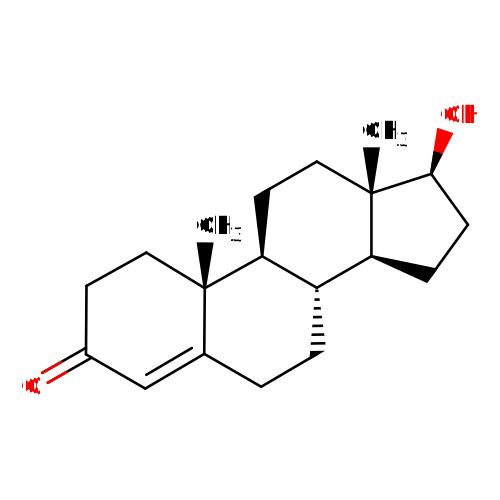
2D Structure
Molecular Formula
scienceMixture
Molar Mass
scienceMixture
Active Half-Life
scienceVariable (Mix)
Anabolic/Androgenic Ratio
science100:100
bolt Mechanism of Action
Sustanon 250 is a blend of four testosterone esters (Propionate, Phenylpropionate, Isocaproate, Decanoate). It is designed to provide a rapid peak in testosterone levels followed by a sustained release.
- Sustained Release: Combination of esters provides immediate and long-lasting release.
- Versatility: Suitable for both bulking and cutting cycles.
Injection Pain
Propionate ester can cause PIP (Post Injection Pain).
medication Dosing Protocol
| Experience Level | Daily Dosage | Cycle Duration |
|---|---|---|
| TRT | 250 mg | Ongoing |
| Cycle | 500 mg | 12 Weeks |
* Despite long esters, inject 2x/week to keep Propionate stable.
security Safety Profile
warning Common Side Effects
-
show_chart
Fluctuations
Unstable levels can trigger acne/mood swings.
-
water_drop
Estrogen
Aromatizes heavily.
dangerous Severe/Rare Side Effects
shopping_cart Related Products
Disclaimer: This content is for informational and educational purposes only. It does not constitute medical advice.