Semaglutide
Clinical Overview
Overview
Semaglutide is a synthetic glucagon‑like peptide‑1 (GLP‑1) receptor agonist developed for the treatment of type 2 diabetes mellitus and, at higher dosages, for chronic weight management. First approved in the mid‑2010s, semaglutide is marketed under trade names including Ozempic (for glycemic control in type 2 diabetes) and Wegovy (for chronic weight management). The compound represents a class of long‑acting GLP‑1 receptor analogues engineered to increase plasma half‑life by enhancing reversible binding to serum albumin.
Semaglutide’s principal clinical uses are:
- Treatment of type 2 diabetes mellitus to improve glycemic control, typically as an adjunct to diet and exercise.
- Chronic weight management in adults with obesity or overweight with at least one weight‑related comorbidity.
Semaglutide is not an anabolic steroid nor an androgen receptor agonist and has no direct anabolic/androgenic activity. It is classified pharmacologically as a GLP‑1 receptor agonist (incretin mimetic).
Chemical Properties
- Chemical class: Synthetic peptide analogue of the endogenous incretin hormone GLP‑1, engineered with a long‑chain fatty acid side chain to prolong plasma half‑life via albumin binding.
- Peptide length: 31 amino acids (GLP‑1‑based analogue).
- Molecular weight: approximately 4.1 kDa (reported molecular mass ~4113 Da).
- Molecular formula: reported formula for the full semaglutide molecule varies in published sources (peptides of this size are most reliably described by sequence and mass rather than a simple empirical formula). The molecule is a modified peptide with a C‑18 fatty acid (hexadecanedioic acid derivative) moiety attached via a spacer to a lysine residue.
- Structural features:
- Core sequence based on GLP‑1 (7–37) analogues with specific amino‑acid substitutions to resist dipeptidyl peptidase‑4 (DPP‑4) degradation.
- A fatty‑diacid (C18) chain attached through a spacer (commonly a glutamic acid and one or more polyethylene glycol‑like linkers) to a lysine side chain, promoting reversible albumin binding.
- Physical characteristics:
- Supplied as a sterile aqueous solution for subcutaneous injection (pre‑filled pens for weekly dosing).
- Clear, colorless to pale yellow solution; storage conditions and formulation excipients depend on the brand and presentation.
- Ester type: Not an ester; the molecule is a peptide with an amide backbone and an amide/acyl linkage for the fatty acid side chain (not a classical small‑molecule ester).
- Elimination half‑life and detection:
- Terminal elimination half‑life: Approximately 1 week (around 165 hours) following subcutaneous administration, enabling once‑weekly dosing in clinical practice.
- Detection: Semaglutide can be detected for days to weeks after the last dose depending on assay sensitivity and pharmacokinetics; clearance is slow relative to short‑acting peptides due to albumin binding and prolonged absorption.
Mechanism of Action
- Primary action:
- Semaglutide is a potent agonist of the GLP‑1 receptor (GLP‑1R), a class B G protein‑coupled receptor expressed on pancreatic β‑cells, certain α‑cells, the gastrointestinal tract, and multiple central nervous system sites involved in appetite regulation.
- Activation of GLP‑1R increases intracellular cyclic AMP (cAMP) in glucose‑dependent fashion, which enhances insulin secretion and suppresses glucagon secretion in the presence of elevated blood glucose.
- Physiological effects:
- Augmentation of glucose‑dependent insulin release from pancreatic β‑cells.
- Suppression of inappropriate glucagon secretion from α‑cells, reducing hepatic glucose output.
- Slowing of gastric emptying, which contributes to postprandial glucose lowering and early satiety.
- Central nervous system effects that reduce appetite and food intake, contributing to weight loss.
- Receptor binding and activity:
- High affinity for the human GLP‑1 receptor; pharmacological modifications increase receptor potency and resistance to enzymatic degradation (notably by DPP‑4).
- The fatty‑acid side chain confers high reversible binding to albumin, reducing renal clearance and proteolytic degradation and thereby prolonging plasma exposure and receptor engagement.
- Anabolic/androgenic ratio:
- Not applicable. Semaglutide does not act on androgen receptors and has no intrinsic anabolic or androgenic activity. Its metabolic effects (weight loss, changes in body composition) are mediated by appetite suppression and altered energy balance rather than anabolic steroid pathways.
- Metabolic pathway:
- Semaglutide is metabolized primarily by proteolytic cleavage into smaller peptides and amino acids; it is not a substrate for cytochrome P450 enzymes in the way small molecules are.
- The fatty‑acid side chain undergoes normal metabolic processes associated with peptide catabolism and fatty‑acid handling; however, the dominant clearance is proteolytic degradation and renal excretion of metabolites.
Medical Information
Therapeutic applications:
- Type 2 diabetes mellitus (T2DM): as monotherapy or in combination with other antidiabetic agents for glycemic control.
- Chronic weight management: indicated for adults with obesity (body mass index [BMI] ≥30 kg/m2) or overweight (BMI ≥27 kg/m2) with at least one weight‑related comorbidity (e.g., hypertension, dyslipidemia, obstructive sleep apnea).
- Investigational and off‑label uses: ongoing research explores potential benefits in cardiovascular risk reduction, nonalcoholic steatohepatitis (NASH), and other metabolic conditions.
Typical dosage ranges:
- Ozempic (for T2DM): starter dosing commonly begins at 0.25 mg subcutaneously once weekly for 4 weeks (a dose‑titration to minimize gastrointestinal adverse effects), increased to 0.5 mg once weekly; some patients may be increased to 1.0 mg once weekly for additional glycemic control.
- Wegovy (for chronic weight management): stepwise escalation over several weeks to minimize GI side effects; the maintenance dose used in trials is 2.4 mg once weekly (after progressive escalation from lower weekly doses).
- Dose titration schedules vary by product labeling and clinical judgment.
Administration routes:
- Subcutaneous injection (once weekly) using pre‑filled pens; injection sites commonly include the abdomen, thigh, or upper arm.
- Not administered orally; parenteral delivery avoids extensive proteolysis in the gastrointestinal tract.
Duration of use:
- Typically intended for long‑term chronic therapy for diabetes and weight management. Clinical benefits (glycemic control, weight loss) generally require continued therapy; discontinuation often leads to gradual loss of effect.
Safety Profile
Common adverse effects:
- Gastrointestinal: nausea, vomiting, diarrhea, constipation, abdominal pain. Nausea is often most pronounced during dose escalation and tends to attenuate with continued therapy.
- Decreased appetite and consequent weight loss (desired in obesity treatment but may be an adverse effect in underweight individuals).
- Injection‑site reactions (erythema, pruritus).
Serious adverse reactions:
- Pancreatitis: cases of acute pancreatitis have been reported with GLP‑1 receptor agonists. Patients presenting with severe abdominal pain should be evaluated promptly and treatment discontinued if pancreatitis is suspected.
- Gallbladder disease: increased incidence of cholelithiasis and cholecystitis has been observed with significant weight loss associated with GLP‑1 agonist therapy.
- Thyroid C‑cell tumors: rodent studies demonstrated increased incidence of C‑cell tumors with GLP‑1 receptor agonists; relevance to humans is uncertain. Semaglutide is contraindicated in individuals with a personal or family history of medullary thyroid carcinoma (MTC) or multiple endocrine neoplasia syndrome type 2 (MEN2).
- Hypoglycemia: semaglutide alone has a low intrinsic risk of hypoglycemia due to glucose‑dependent insulinotropic action, but risk increases when combined with insulin or insulin secretagogues (sulfonylureas).
- Acute kidney injury: volume depletion from severe gastrointestinal adverse effects may lead to renal impairment or exacerbate preexisting renal disease.
Drug interactions:
- Hypoglycemic agents: additive hypoglycemia risk when coadministered with insulin or insulin secretagogues (dose adjustments may be necessary).
- Oral medications: delayed gastric emptying can reduce the rate of absorption of concomitant oral drugs; for medications with narrow therapeutic indices or where timing of absorption is critical, monitoring or dose adjustment may be required.
- No major cytochrome P450–mediated interactions are expected because semaglutide is a peptide and is not a P450 substrate or inhibitor.
Contraindications:
- Personal or family history of medullary thyroid carcinoma (MTC).
- Presence of MEN2 syndrome.
- Known hypersensitivity to semaglutide or any of the formulation excipients.
Special populations and precautions:
- Pregnancy and lactation: limited human data; clinical decisions should weigh potential benefits and risks.
- Pediatric use: approvals and recommended dosing differ; some GLP‑1 agonists have limited pediatric data.
- Renal impairment: use caution if significant gastrointestinal losses occur; no dose adjustment solely based on renal function is required for semaglutide in mild‑to‑moderate impairment, but severe GI adverse effects may precipitate renal events.
Legal Status
- Regulatory classification: Semaglutide is a prescription pharmaceutical agent regulated as a biologic/peptide therapeutic under typical national drug regulatory frameworks.
- Approval status:
- United States: FDA approved for type 2 diabetes (Ozempic) and separately for chronic weight management (Wegovy) with indicated dosing regimens per product labeling.
- Other jurisdictions: approved in multiple countries for diabetes and/or weight management with labeling that reflects local regulatory decisions.
- Prescription requirements: Semaglutide is available only by prescription and must be initiated and monitored by an appropriate healthcare professional according to regulatory labeling and clinical guidelines.
- Sports anti‑doping status:
- GLP‑1 receptor agonists such as semaglutide are not classified as anabolic agents and are not specifically listed on the World Anti‑Doping Agency (WADA) Prohibited List as of the most recent lists. Athletes should consult current WADA guidance and their sports body's policies; therapeutic use exemptions (TUEs) may be appropriate for clinical indications if required by sport governance.
This summary synthesizes semaglutide’s chemical and pharmacologic profile, mechanism of action, clinical uses, typical dosing strategies, safety considerations, and regulatory status. For therapeutic decisions and patient management, reference to official prescribing information, product monographs, and current clinical guidelines is recommended.
science Chemical Properties
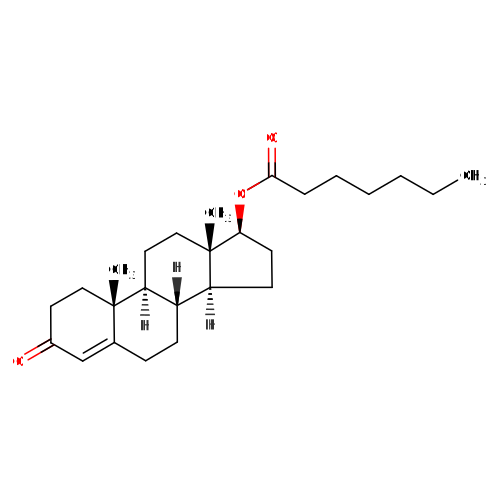
2D Structure
CAS Number
tag910463-68-2
PubChem ID
scienceMolecular Formula
scienceC187H291N45O59
Molar Mass
science4113.6 g/mol
Active Half-Life
science7 Days
Anabolic/Androgenic Ratio
scienceN/A (GLP-1)
CAS Number
science910463-68-2
PubChem CID
science56843331
bolt Mechanism of Action
Semaglutide (Ozempic/Wegovy) is a GLP-1 agonist that mimics the hormone involved in appetite regulation. It signals fullness to the brain and slows digestion.
- Appetite: Drastically reduces hunger and cravings.
- Blood Sugar: Improves insulin sensitivity.
Thyroid
Avoid if family history of MTC (thyroid cancer).
medication Dosing Protocol
| Experience Level | Daily Dosage | Cycle Duration |
|---|---|---|
| Starter | 0.25 mg | 4 Weeks |
| Standard | 1.0 - 2.4 mg | Ongoing |
* Hydration is critical due to reduced food intake.
security Safety Profile
warning Common Side Effects
-
sick
Nausea
Common, usually transient.
-
face
Ozempic Face
Rapid fat loss from face.
dangerous Severe/Rare Side Effects
shopping_cart Related Products


Disclaimer: This content is for informational and educational purposes only. It does not constitute medical advice.