Proviron
Clinical Overview
Overview
Proviron (generic name: mesterolone) is a synthetic androgenic steroid first synthesized and introduced clinically in the 1960s by Schering. It was developed as an orally active androgenic agent intended to treat conditions associated with androgen deficiency in men. Historically it has been used for hypogonadism, certain forms of male infertility and, in some markets, as an adjunct in depressive or asthenic states associated with low androgen levels.
In the context of performance enhancement, Proviron has been used by athletes and bodybuilders primarily for its androgenic properties and its ability to bind sex hormone–binding globulin (SHBG), thereby increasing the proportion of free testosterone. It is not typically used as a primary anabolic agent for mass gain because of its relatively weak anabolic activity, but it has been employed to alter androgenic milieu, reduce estrogen-related effects by non-aromatizable action, and potentiate other androgens.
Drug classification
- Chemical class: 1α-methyl steroid derivative of dihydrotestosterone (DHT)
- Pharmacologic class: Androgen; synthetic anabolic–androgenic steroid (AAS)
- Clinical classification: Androgen replacement/androgenic agent
Chemical Properties
- IUPAC/generic name: Mesterolone
- Common trade name: Proviron (brand name historically associated with Schering)
- Molecular formula: C20H32O2
- Molecular weight: ~304.47 g·mol−1
- Structural descriptor: 1α-methyl-5α-dihydrotestosterone derivative (a methylated DHT analogue)
Physical characteristics
- Appearance: White to off-white crystalline powder in raw form; formulated as oral tablets for clinical use
- Solubility: Poorly soluble in water; soluble in organic solvents consistent with steroid structure
Ester type
- Mesterolone is supplied as the free (unesterified) steroid. It is not an esterified androgen and therefore does not rely on depot (ester) hydrolysis kinetics.
Pharmacokinetics: half-life and detection
- Oral bioavailability: Oral activity attributed to the 1α-methyl substitution which reduces inactivation; bioavailability is moderate but variable.
- Elimination half-life: Reported effective half-life in clinical studies is in the order of hours; commonly cited values are approximately 8–13 hours. Interindividual variability is common.
- Detection time: Urinary metabolites can be detected for variable periods depending on assay sensitivity; detection windows may range from days to several weeks after cessation. Exact detection times depend on dose, duration of use, metabolic factors and the analytical methods employed.
Mechanism of Action
How it works in the body
- Mesterolone is an androgen receptor (AR) agonist. As a DHT derivative, it binds to ARs in target tissues (e.g., prostate, skin, muscle), initiating androgenic genomic effects via AR-mediated transcriptional regulation.
- Unlike testosterone, mesterolone is a 5α-reduced androgen (structurally related to DHT) and is not a substrate for aromatase; it therefore cannot be converted into estrogens.
Receptor binding and activity
- Mesterolone binds the androgen receptor with affinity comparable to or somewhat lower than DHT in various in vitro systems.
- Being a DHT analogue, it tends to exert potent androgenic effects in tissues where DHT is the principal ligand (skin, prostate) but has comparatively low anabolic activity on skeletal muscle when contrasted with testosterone esters in standard anabolic assays.
- Mesterolone demonstrates high affinity for SHBG, and by occupying SHBG it can reduce SHBG-bound testosterone, thereby raising the fraction of circulating free (bioavailable) testosterone.
Anabolic/androgenic ratio
- Mesterolone is characterized as having pronounced androgenic activity relative to its anabolic potency; the anabolic:androgenic ratio is low. Clinically this translates to pronounced androgenic effects (virilization, effects on libido) with limited ability to promote large increases in lean body mass.
Metabolic pathway
- Mesterolone is metabolized primarily in the liver by standard steroid metabolic pathways including reduction/oxidation and conjugation (glucuronidation and sulfation), yielding polar metabolites that are excreted in urine.
- Because it is already a 5α-reduced form, it is not further 5α-reduced to more potent metabolites, nor is it aromatized to estrogens.
Medical Information
Therapeutic applications
- Replacement therapy for male hypogonadism where androgen therapy is indicated (although in many countries testosterone esters or transdermal formulations are preferred).
- Historically used as an adjunct in certain cases of male infertility (to improve sperm parameters indirectly by correcting androgen deficiency), although clinical efficacy for improving fertility outcomes is limited and controversial.
- Occasionally used in conditions associated with low libido and decreased well-being due to androgen deficiency.
Typical dosage ranges
- Oral doses reported in clinical literature commonly range from 25 mg to 100 mg daily, often divided into two or more doses per day. A commonly cited therapeutic dose is 25–50 mg/day.
- In performance-enhancement contexts doses may be higher, but escalating dose increases the risk of adverse effects and endocrine disruption.
Administration routes
- Oral administration in tablet form is the standard route.
Duration of use
- Duration depends on indication: for replacement therapy it may be continuous under medical supervision; for other indications (e.g., adjunct in infertility) durations may be several weeks to months with monitoring. Use beyond recommended therapeutic durations increases risk of endocrine suppression and adverse effects.
Safety Profile
Common side effects
- Androgenic/virilizing effects: acne, increased sebum production, oily skin, male pattern baldness (in predisposed individuals), hirsutism (in women).
- Libido changes: can increase libido in hypogonadal men.
- Fluid retention is generally minimal compared with aromatizable androgens.
- Changes in lipid profile: androgens may reduce HDL cholesterol and alter LDL, which can have unfavorable cardiovascular implications over time.
- Local gastrointestinal discomfort (rare).
Serious adverse reactions
- Prostate effects: stimulation of benign prostatic hyperplasia (BPH) and potential exacerbation of undiagnosed prostate cancer due to androgen stimulation.
- Endocrine suppression: exogenous androgens can suppress hypothalamic–pituitary–gonadal (HPG) axis, reducing endogenous testosterone and spermatogenesis. Mesterolone has relatively modest suppressive effects compared with larger doses of testosterone, but suppression is dose- and duration-dependent; fertility may be negatively impacted with chronic use.
- Hepatic effects: mesterolone is not a classic 17α-alkylated steroid; therefore clinically significant hepatotoxicity is considered less likely than with 17α-alkylated oral steroids. Nevertheless, any oral androgen can place stress on hepatic metabolism and isolated liver enzyme elevations have been reported.
- Cardiovascular risks: long-term androgen therapy and AAS misuse have been associated with adverse cardiovascular outcomes including dyslipidemia, accelerated atherosclerosis, and possible increased risk of thrombosis.
Drug interactions
- Anticoagulants (e.g., warfarin): androgens can potentiate or inhibit anticoagulant effects and require monitoring of coagulation parameters.
- Insulin and antidiabetic agents: androgens can influence glucose metabolism and insulin sensitivity.
- Corticosteroids: concurrent use may affect fluid balance, electrolytes and metabolic effects.
- Other androgens or potent AAS: additive effects on the HPG axis, androgenic and cardiovascular adverse events.
- Drugs highly bound to SHBG: by displacing endogenous steroids, mesterolone may alter levels of free hormones; careful consideration is required when coadministered with other steroids.
Contraindications
- Known or suspected prostate carcinoma or breast carcinoma in males.
- Pregnancy and lactation (androgens cause virilization of a female fetus).
- Hypersensitivity to mesterolone or excipients in the formulation.
- Severe cardiac, hepatic, or renal disease where androgen therapy would pose undue risk.
Monitoring during therapy
- Baseline and periodic assessment of prostate-specific antigen (PSA) and prostate evaluation in older men.
- Periodic measurement of liver function tests, lipid profile, hematocrit, and serum testosterone/gonadotropins when used for extended periods.
- Assessment of fertility parameters (sperm count) when used in men desiring fertility.
Legal Status
Regulatory classification
- Mesterolone is regulated as an anabolic–androgenic steroid (AAS) in many jurisdictions. Regulatory specifics vary by country: in many nations it is a prescription-only medicine for approved indications.
- In countries where anabolic steroids are controlled substances, mesterolone may fall under national controlled-drug legislation governing anabolic steroids.
Prescription requirements
- In most healthcare systems where mesterolone is available, a prescription from a licensed practitioner is required for legitimate clinical use. Availability may be limited or absent in countries where it was never approved for marketing.
Sports anti-doping status
- Mesterolone is prohibited in-competition and out-of-competition by the World Anti-Doping Agency (WADA) as an anabolic agent. Use by athletes in competitive sport is against anti-doping regulations and can result in sanctions, including disqualification and suspension.
- Many sports organizations explicitly list mesterolone and its metabolites among banned substances; testing laboratories can detect mesterolone metabolites in urine.
Summary
Mesterolone (Proviron) is a 1α-methylated DHT analogue with oral activity, primarily exerting androgenic effects and notable for strong SHBG binding and lack of aromatization. Clinically it has been used for androgen replacement in men with hypogonadism and historically for some fertility indications, though its anabolic potency is limited. Safety considerations center on androgenic adverse effects, endocrine suppression, lipid perturbations and potential prostate stimulation. It is a regulated anabolic steroid in most jurisdictions and is prohibited in competitive sports under WADA rules.
science Chemical Properties
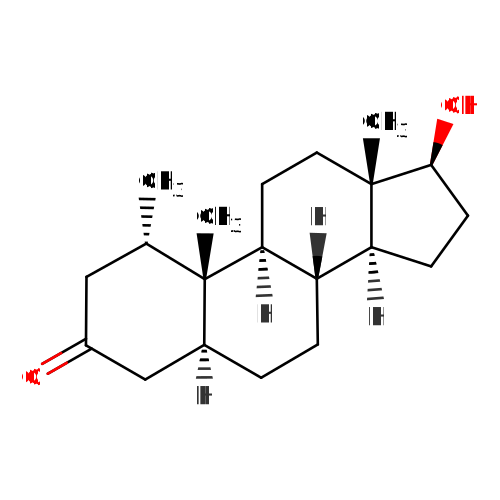
2D Structure
CAS Number
tag1424-00-6
Molecular Formula
scienceC20H32O2
Molar Mass
science304.5 g/mol
Active Half-Life
science12 Hours
Anabolic/Androgenic Ratio
science100-150:30-40
CAS Number
science1424-00-6
bolt Mechanism of Action
Mesterolone is a pure androgen with no anabolic activity. It binds strongly to SHBG, freeing up other steroids, and is used for libido and hardening.
- Synergy: Enhances potency of other compounds via SHBG binding.
- Libido: Supports sexual function during cycle.
Prostate
Monitor PSA levels if used long term.
medication Dosing Protocol
| Experience Level | Daily Dosage | Cycle Duration |
|---|---|---|
| Standard | 25-50 mg | Cycle Length |
* Not for muscle building.
security Safety Profile
warning Common Side Effects
-
dermatology
Androgenic
Risk of hair loss and prostate enlargement.
-
verified_user
Safe Lipid/Liver
Generally mild on liver/lipids compared to others.
dangerous Severe/Rare Side Effects
shopping_cart Related Products

Disclaimer: This content is for informational and educational purposes only. It does not constitute medical advice.