MENT
Clinical Overview
Overview
Trestolone (commonly abbreviated MENT, from 7α‑methyl‑19‑nortestosterone) is a synthetic androgenic–anabolic steroid (AAS) developed and investigated for potential applications in androgen replacement and male contraception. First synthesized in the latter half of the 20th century as part of efforts to create potent anabolic agents with modified metabolic profiles, trestolone attracted attention for its unusually high affinity for the androgen receptor and for its profound suppression of gonadotropin secretion when administered systemically.
In investigational clinical research, trestolone has been evaluated primarily as a component of male hormonal contraceptive regimens and as a potential treatment for hypogonadism. Outside of research settings, it has appeared in the performance-enhancement community owing to its strong anabolic effects. MENT is not broadly approved as a prescription medication in most countries.
Drug classification
- Chemical class: 19‑nor steroid (19-nortestosterone derivative)
- Pharmacologic class: Synthetic androgen receptor agonist; anabolic–androgenic steroid (AAS)
- Developmental/therapeutic classification: Investigational androgen; candidate male contraceptive agent
Chemical Properties
- Chemical name: 7α‑Methyl‑19‑nortestosterone (commonly referred to as trestolone or MENT)
- Structural description: A 19‑nor steroid scaffold (lacking the C‑19 methyl of testosterone) with a methyl substitution at the 7α position. The molecule is a modified nandrolone (19‑nor androgen) with a 7α‑methyl group that alters metabolic stability and receptor interactions.
- Molecular formula: commonly reported as C19H28O2 (the 7α‑methyl substitution on the 19‑nor scaffold produces a formula corresponding to the 19‑carbon steroid backbone)
- Molecular structure: tetracyclic cyclopenta[a]phenanthrene steroid nucleus characteristic of androgens; the 19‑nor modification removes carbon-19 and the 7α methyl is appended at the A–B ring junction.
- Physical characteristics: crystalline steroid; lipophilic and poorly soluble in water, soluble in organic solvents and oils; specific melting point and appearance vary with salt/ester forms.
- Ester forms: Trestolone is often formulated as trestolone acetate (an acetate ester at the 17β‑hydroxyl), which modifies the compound’s pharmacokinetics and is commonly used in experimental preparations. Other delivery forms reported in research include raw (non‑esterified) trestolone for direct tissue-implant delivery.
- Half‑life and detection time:
- Pharmacokinetic half‑life depends strongly on formulation (free steroid vs. acetate ester vs. subdermal implant) and route of administration. Non‑esterified trestolone has a short systemic half‑life, while trestolone acetate formulated for intramuscular injection or subdermal implant provides protracted release over days to weeks.
- Detection time in biological matrices (urine, blood) varies by assay sensitivity and metabolite persistence; as with many nandrolone‑type steroids, metabolites can be detected for weeks in some circumstances when long‑acting formulations are used. Anti‑doping laboratories screen for characteristic metabolites.
Mechanism of Action
How it works in the body
- Trestolone is a potent agonist of the androgen receptor (AR). After systemic absorption, it enters target tissues and binds to the intracellular AR, inducing receptor dimerization and nuclear translocation and affecting transcriptional regulation of androgen‑responsive genes.
- As an androgen, trestolone produces anabolic effects (e.g., stimulation of muscle protein synthesis) and androgenic effects (e.g., effects on secondary sexual characteristics) through AR‑mediated gene expression.
Receptor binding and activity
- Trestolone has high affinity for the AR — in many in vitro assays it binds more avidly than testosterone and comparable to or greater than nandrolone derivatives.
- The 7α‑methyl substitution alters the interaction profile with steroid metabolic enzymes and cofactor recruitment, often yielding increased potency at AR and altered selectivity for androgenic versus anabolic endpoints.
Anabolic/androgenic ratio
- Quantitative anabolic/androgenic ratios depend on the assay system used, but trestolone is generally characterized as a highly potent anabolic agent with a favorable anabolic:androgenic profile relative to testosterone in certain tissues. Nonetheless, it retains substantial androgenic activity, and virilizing effects occur with systemic exposure.
- The 7α‑methyl group reduces the rate of 5α‑reduction in target tissues and influences downstream conversion to more potent 5α‑reduced androgens, contributing to a modified tissue‑specific androgenic profile.
Metabolic pathway
- Trestolone is metabolized primarily in the liver by steroid‑metabolizing enzymes. Key pathways include reduction, hydroxylation, and conjugation (glucuronidation/sulfation) prior to excretion.
- Compared with testosterone, trestolone is less readily aromatized to estrogens due to the 19‑nor scaffold and particularly the 7α‑methyl modification, which sterically hinders aromatase activity; consequently, estrogenic side effects (e.g., gynecomastia) are generally diminished relative to aromatizable androgens but are not necessarily absent depending on dose and individual metabolism.
- The compound and its esters produce characteristic urinary metabolites used in doping control analyses.
Medical Information
Therapeutic applications
- Research has focused on two main areas:
- Male contraception: trestolone has been studied as a potent gonadotropin‑suppressing androgen to induce reversible azoospermia or severe oligospermia when used alone or in combination with progestins or long‑acting androgen delivery systems.
- Androgen replacement therapy: investigationally evaluated as a potent androgen for the treatment of male hypogonadism and other conditions requiring anabolic/androgenic support.
- At present, trestolone remains investigational and is not an established standard therapy in most jurisdictions.
Typical dosage ranges
- Dosage regimens in published clinical and preclinical studies vary with formulation and intended effect:
- Subdermal implants and intramuscular depot formulations used in research were designed to deliver microgram-to-milligram quantities per day over extended periods; specific doses reported in early-phase trials and preclinical studies vary and are formulation‑dependent.
- Because trestolone is substantially more potent per unit mass than testosterone in some endpoints, effective doses in research contexts are typically lower than equivalent testosterone doses; precise ranges for therapeutic use have not been standardized through large clinical trials.
Administration routes
- Routes explored in research settings include:
- Intramuscular injection of esterified forms (e.g., trestolone acetate) to provide depot release.
- Subdermal implants designed to continuously release low amounts of active steroid.
- Transdermal or other formulations have been investigated in experimental models but are less prominent in the literature.
Duration of use
- Duration in investigational contexts has ranged from short courses to months, depending on study objectives (e.g., induction of spermatogenic suppression for contraception studies). Long‑term safety and efficacy data are limited relative to licensed androgen therapies.
Safety Profile
Common side effects
- Androgenic/virilizing effects: acne, increased body/facial hair, deepening of the voice, scalp hair loss in individuals predisposed to androgenic alopecia.
- Reproductive axis suppression: dose‑dependent suppression of luteinizing hormone (LH) and follicle‑stimulating hormone (FSH), with resultant decreased intratesticular testosterone and impaired spermatogenesis; reversible suppression is a desired effect in contraceptive use but represents an adverse effect in reproductive-aged men seeking fertility.
- Changes in lipid profile: reductions in high‑density lipoprotein (HDL) cholesterol and variable effects on low‑density lipoprotein (LDL) cholesterol; dose‑dependent worsening of lipid parameters has been observed with many AAS compounds.
- Fluid retention and weight gain: due to anabolic effects and alterations in renal sodium handling.
Serious adverse reactions
- Cardiovascular risks: prolonged or high‑dose androgen exposure may increase risk factors for cardiovascular disease (adverse lipid profile, hypertension, myocardial hypertrophy); long‑term cardiovascular outcome data for trestolone are lacking.
- Hepatic effects: while trestolone is not a classical 17α‑alkylated oral C17 agent (which are associated with marked hepatotoxicity), any synthetic steroid can impose hepatic metabolic load; hepatic enzyme elevations have been reported with some AAS. Monitoring of liver function is standard in research settings.
- Endocrine disturbances: prolonged suppression of the hypothalamic–pituitary–gonadal axis with potential for delayed recovery of spermatogenesis; potential impact on mood and behavior in susceptible individuals.
- Prostate effects: androgenic stimulation of prostate tissue; long‑term effects on prostate health have not been comprehensively characterized in large trials.
Drug interactions
- Concomitant use with other androgenic compounds will have additive endocrine effects and greater suppression of endogenous gonadotropins.
- Drugs that alter hepatic enzyme activity (CYP450 modulators) can affect steroid metabolism and systemic exposure.
- Interactions with anticoagulants, insulin/oral hypoglycemics, and other agents that are sensitive to changes in hepatic metabolism or lipid status are plausible and require clinical consideration.
Contraindications
- Known androgen‑sensitive malignancies (e.g., prostate cancer, male breast cancer) or suspected hormone‑dependent tumors.
- Pregnancy: exposure to potent androgens can cause virilization of a female fetus.
- Preexisting severe cardiovascular disease, uncontrolled hypertension, or severe hepatic impairment are relative contraindications or require careful evaluation.
- Individuals desiring fertility in the near term should avoid regimens causing prolonged gonadal suppression unless fertility preservation strategies have been discussed.
Legal Status
Regulatory classification
- Trestolone is an investigational compound and is not broadly approved as a prescription medication in most countries. Regulatory approval varies by jurisdiction and many regulatory agencies regard trestolone as an unlicensed research drug.
- In some jurisdictions, trestolone or its esters may be controlled under statutes regulating anabolic steroids; classification can vary between countries and may include scheduling or control as a prohibited substance or prescription‑only medicine.
Prescription requirements
- Where permitted for clinical research, trestolone is supplied under investigational new drug protocols and is available only within approved clinical trial settings or via regulated compounding/manufacturing pathways approved by regulatory authorities.
- It is not an approved over‑the‑counter medication.
Sports anti‑doping status
- Trestolone and its metabolites are prohibited by most major anti‑doping organizations, including the World Anti‑Doping Agency (WADA). It is listed among banned anabolic agents due to its androgenic and anabolic activity and potential for performance enhancement. Athletes subject to doping controls should be aware that use or possession can lead to sanctions.
Note: The data presented above summarize findings from preclinical and early clinical research literature on 7α‑methyl‑19‑nortestosterone (trestolone/MENT). Because trestolone remains primarily an investigational drug, many aspects of its pharmacology, long‑term safety, and optimal therapeutic regimens are incompletely characterized relative to licensed androgen therapies.
science Chemical Properties
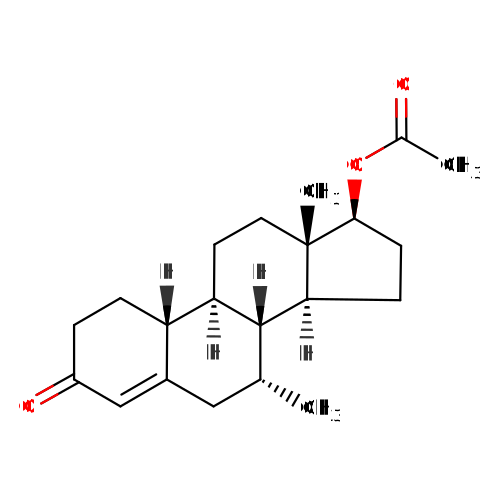
2D Structure
Molecular Formula
scienceC21H28O3
Molar Mass
science328.45 g/mol
Active Half-Life
science1-2 Days
Anabolic/Androgenic Ratio
science2300:650
bolt Mechanism of Action
MENT (Trestolone Acetate) is an extremely potent synthetic androgen (10x Testosterone). It was originally developed for male contraception and HRT.
- Potency: Extremely powerful milligram for milligram.
- No DHT: Does not convert to DHT.
Aromatization
Standard AIs may need higher dosing or frequency.
medication Dosing Protocol
| Experience Level | Daily Dosage | Cycle Duration |
|---|---|---|
| Advanced | 5-10 mg | 6-8 Weeks |
| Expert | 10-25 mg | 6-8 Weeks |
* Warning: Converts to 7-alpha-methyl-estradiol under aromatization.
security Safety Profile
warning Common Side Effects
dangerous Severe/Rare Side Effects
-
water_drop
Estrogen
Converts to a unique, potent estrogen. AI is mandatory.
-
block
Suppression
Rapid and total shutdown of HPTA.
shopping_cart Related Products

Disclaimer: This content is for informational and educational purposes only. It does not constitute medical advice.