Masteron Propionate
Clinical Overview
Overview
Masteron Propionate is the proprietary/common name for drostanolone propionate, a synthetic anabolic-androgenic steroid (AAS) derived from dihydrotestosterone (DHT). It was developed in the 1960s–1970s and marketed for a time under various trade names by pharmaceutical companies for specific indications, most notably certain types of breast cancer in postmenopausal women. In the decades since its introduction it has also become known outside medicine for use in strength- and physique-oriented sports because of its androgenic and anti-estrogenic properties.
Common uses
- Medicine: Historically used in oncologic settings, primarily for the treatment of estrogen receptor–positive breast cancer in postmenopausal women. Use declined as other therapies with more favorable risk–benefit profiles became available.
- Performance enhancement: Employed by athletes and bodybuilders for its ability to increase muscle hardness and density, aid fat loss in cutting phases, and produce minimal water retention compared with aromatizing AAS.
Drug classification
- Pharmacologic class: Anabolic-androgenic steroid (AAS), androgen receptor agonist.
- Structural class: 2α‑methylated derivative of dihydrotestosterone (DHT); propionate is a short-chain ester attached to the 17β‑hydroxyl.
Chemical Properties
Molecular structure and formula
- Parent steroid: drostanolone (2α‑methyl‑4,5α‑dihydrotestosterone), a DHT derivative.
- Common molecular formula for drostanolone (parent alcohol): C21H32O2.
- Drostanolone propionate is the 17β‑propionate ester of drostanolone (often described as drostanolone 17β‑propionate). Esterification of the 17β‑hydroxyl modifies pharmacokinetics (slower release from depot after intramuscular injection) while preserving the steroid nucleus and receptor interactions.
Physical characteristics
- Appearance (pharmaceutical preparations): provided as an intramuscular oil solution; the active steroid itself is a white to off‑white crystalline powder when isolated.
- Solubility: poorly soluble in water and soluble in organic solvents and oil vehicles used for depot injection.
Ester type, half‑life and detection time
- Ester: Propionate (short‑acting ester attached at 17β‑OH).
- Pharmacokinetic half‑life (approximate): propionate esters typically provide a relatively short duration of action. Drostanolone propionate is commonly cited to have an effective half‑life of approximately 1–3 days following intramuscular depot injection; practical dosing regimens are often every other day to maintain stable levels.
- Detection time: in drug testing, metabolites of drostanolone propionate may be detectable in urine for several weeks to months after the last dose depending on dose, frequency, individual metabolism, sensitivity of assays, and specific metabolites targeted. Advanced mass‑spectrometry methods have extended detection windows well beyond the pharmacologic half‑life.
Mechanism of Action
How it works in the body
- Drostanolone propionate binds to the androgen receptor (AR) in androgen‑responsive tissues. The steroid–receptor complex translocates to the nucleus, where it modulates transcription of androgen‑regulated genes that influence protein synthesis, nitrogen balance, and cellular differentiation in muscle, bone, erythropoietic tissues, and others.
Receptor binding and activity
- As a DHT derivative, drostanolone exhibits high affinity for the androgen receptor and acts as an agonist. Unlike testosterone, drostanolone is a 4,5‑dihydro steroid and is not a substrate for aromatase; therefore it does not convert to estrogens.
- Because it is a 2α‑methylated DHT derivative, drostanolone is somewhat resistant to metabolism by 3α‑hydroxysteroid dehydrogenase in skeletal muscle relative to DHT itself, which may preserve some anabolic activity in muscle tissue.
Anabolic/androgenic ratio
- Numerical anabolic/androgenic ratings (derived from bioassays and comparative studies) place drostanolone as moderately anabolic with lower androgenic potential than testosterone on a relative scale. Literature and reference tables often quote an anabolic rating in the moderate range and an androgenic rating lower than testosterone; reported values vary by source. The lack of aromatization reduces estrogenic side effects (e.g., water retention, gynecomastia).
Metabolic pathway
- Primary metabolic clearance is hepatic: drostanolone and its ester are hydrolyzed (the propionate ester is cleaved) to the active drostanolone, which is then metabolized by hepatic enzymes including phase I and phase II processes (e.g., reduction, oxidation, conjugation such as glucuronidation and sulfation). Metabolites are excreted mainly in the urine. Because it is not aromatized, estrogenic metabolites are not produced; however, reduction and conjugation pathways generate a range of urinary metabolites that are targets for doping control assays.
Medical Information
Therapeutic applications
- Historically used as an anti‑estrogenic androgenic agent in advanced breast cancer therapy in postmenopausal women; its role has largely been superseded by selective estrogen receptor modulators, aromatase inhibitors, and other systemic therapies with better safety/efficacy profiles.
- Contemporary legitimate medical use is limited; most clinical guidelines and oncologic practice favor other agents. Some off‑label uses have been reported historically but are not standard care.
Typical dosage ranges
- Medical dosages (historical oncology practice) were lower and individualized; precise therapeutic regimens varied by protocol.
- In non‑medical/performance contexts, typical dosing patterns reported in the literature and user communities:
- Propionate ester administration commonly 50–100 mg intramuscularly every other day (equivalent to ~350–700 mg/week in some protocols). Many users report 100 mg EOD as a common approach.
- Cycle durations commonly range 6–8 weeks for propionate protocols, sometimes paired with other AAS.
Administration routes
- Intramuscular injection into large muscle groups (gluteal, deltoid, thigh) as a sterile oil solution is the standard route for propionate ester preparations. The propionate ester is not orally bioavailable in the same form; the active steroid is depot‑administered.
Duration of use
- Therapeutic durations in historical oncology practice were determined by clinical response and tolerability.
- In performance contexts, cycles of 4–12 weeks are common; propionate-based cycles are often shorter due to injection frequency and the intended short‑acting profile. Prolonged continuous use increases risk of adverse effects.
Safety Profile
Common side effects
- Androgenic effects: acne, increased facial/body hair, seborrhea, male pattern baldness in genetically predisposed individuals, deepening of the voice (notable risk for women).
- Virilization in females: clitoromegaly, voice deepening, menstrual disturbances—these may be partially or sometimes fully irreversible.
- Suppression of hypothalamic–pituitary–gonadal (HPG) axis: exogenous drostanolone suppresses endogenous testosterone production in men; recovery time varies and may require post‑cycle therapy in those attempting to restore function.
- Lipid disturbances: decreases in high‑density lipoprotein (HDL) cholesterol and increases in low‑density lipoprotein (LDL) cholesterol, contributing to an adverse cardiovascular risk profile.
- Injection site reactions: pain, erythema, infection risk with improper technique.
Serious adverse reactions
- Cardiovascular events: long‑term or high‑dose AAS use has been associated with hypertension, adverse lipid profiles, left ventricular hypertrophy, impaired cardiac function, and increased risk of thrombotic events.
- Endocrine effects: prolonged suppression of endogenous testosterone, potential infertility, testicular atrophy in men.
- Hepatic effects: unlike 17α‑alkylated oral AAS, injectable drostanolone is not typically hepatotoxic to the same extent; however, liver enzyme disturbances have been reported with various AAS regimens, and concomitant substances or polypharmacy may increase risk.
- Psychiatric/behavioral changes: mood alterations, aggression, irritability, and changes in affect have been reported with AAS use.
Drug interactions
- Anticoagulants: AAS can potentiate or interfere with anticoagulant effects; monitoring is advised when used concomitantly.
- Insulin and antidiabetic agents: anabolic steroids can alter glucose metabolism and insulin sensitivity.
- Other AAS or performance agents: additive endocrine suppression and cardiovascular risks.
- CYP enzyme interactions: while drostanolone is mainly metabolized via phase I/II hepatic processes, coadministration with agents that strongly induce or inhibit hepatic enzymes could alter levels of coadministered drugs/metabolites.
Contraindications
- Pregnancy and breastfeeding (androgens cause virilization of a female fetus).
- Known hypersensitivity to drostanolone or any component of the formulation.
- Men with prostate or breast carcinoma (androgens may exacerbate androgen‑sensitive tumors).
- Significant cardiovascular disease, uncontrolled hypertension, severe hepatic dysfunction, or severe hyperlipidemia typically represent relative or absolute contraindications depending on clinical context.
Legal Status
Regulatory classification
- Drostanolone propionate is regulated as a controlled substance in many jurisdictions when used or possessed without a valid prescription. The specific scheduling varies by country (e.g., Class C or Schedule III/IV analogs in some national systems).
- Pharmaceutical availability is limited; commercially produced medical preparations have become less common as therapeutic use waned.
Prescription requirements
- Where approved for medical use, prescription by a licensed physician is required. Non‑medical distribution, sale, or possession without appropriate authority is illegal in many regions.
Sports anti‑doping status
- Drostanolone (including propionate esters) is prohibited at all times by the World Anti‑Doping Agency (WADA) and numerous professional sporting bodies. It is listed as an Anabolic Agent (S1) on the WADA Prohibited List. Use and possession by athletes in sport‑tested environments will lead to sanctions and testing positive can result in disqualification and suspension.
This article summarizes chemical, pharmacologic, clinical, and safety-related aspects of drostanolone propionate (Masteron Propionate) drawn from pharmacology and endocrinology literature. For specific clinical decision‑making, consult current medical guidelines and regulatory texts.
science Chemical Properties
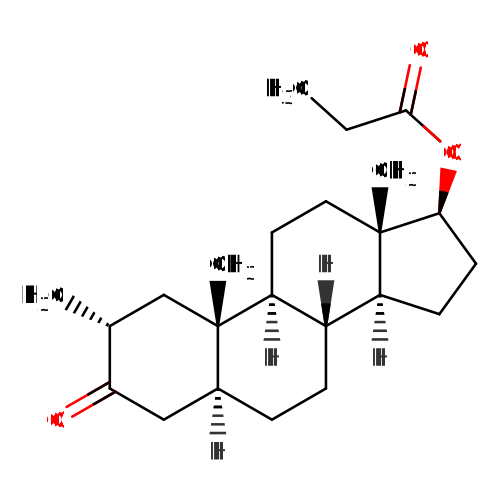
2D Structure
CAS Number
tag521-12-0
Molecular Formula
scienceC23H36O3
Molar Mass
science360.5 g/mol
Active Half-Life
science2-3 Days
Anabolic/Androgenic Ratio
science62:25
CAS Number
science521-12-0
bolt Mechanism of Action
Drostanolone Propionate is a DHT derivative known for its anti-estrogenic and hardening effects. It is primarily used pre-contest to provide a grainy, hard look.
- Hardening: Removes subcutaneous water for definition.
- Anti-Estrogen: Has mild aromatase inhibiting properties.
Hairline
Finasteride is ineffective (already DHT).
medication Dosing Protocol
| Experience Level | Daily Dosage | Cycle Duration |
|---|---|---|
| Standard | 350-500 mg | 6-8 Weeks |
* Requires low body fat (<10%) to see full cosmetic effects.
security Safety Profile
warning Common Side Effects
-
content_cut
Hair Loss
Harsh on hairline (DHT).
-
medical_services
Prostate
Possible prostate enlargement.
-
skeleton
Joints
Can dry out joints slightly.
dangerous Severe/Rare Side Effects
shopping_cart Related Products

Disclaimer: This content is for informational and educational purposes only. It does not constitute medical advice.