Masteron Enanthate
Clinical Overview
Overview
Masteron Enanthate is the common name used in nonproprietary and bodybuilding communities for drostanolone enanthate, an injectable anabolic-androgenic steroid (AAS) that is an esterified derivative of dihydrotestosterone (DHT). First developed and marketed in the mid-20th century as a clinical anabolic agent, drostanolone preparations (most commonly propionate and enanthate esters) saw initial therapeutic use in oncology and wasting states before being largely superseded by other agents. In performance contexts, Masteron Enanthate has been used for its pronounced androgenic properties, ability to promote lean muscle and hardness, and lack of estrogenic conversion.
Common uses
- Medicine: Historically used in the treatment of certain wasting conditions and as adjuvant therapy for estrogen-sensitive breast cancer in postmenopausal women in earlier decades of oncology.
- Performance enhancement: Employed by athletes/bodybuilders to enhance muscle density, reduce subcutaneous water, and improve muscular definition during preparatory or contest phases—frequently in “cutting” cycles.
Drug classification
- Class: Anabolic-androgenic steroid (AAS)
- Parent compound: Drostanolone (a 2α‑methyl derivative of dihydrotestosterone)
- Formulation: Intramuscular oil-based ester (enanthate ester of drostanolone)
Chemical Properties
- Chemical name: Drostanolone 17β‑enanthate (systematic: 2α‑methyl-5α‑androstan-17β‑ol-3-one 17β‑heptanoate; commonly referred to as drostanolone enanthate)
- Molecular formula: commonly represented as C27H44O4 (drostanolone base esterified with a heptanoate/enanthate group)
- Molecular features:
- Steroid nucleus characteristic of androgens (cyclopentanoperhydrophenanthrene backbone)
- 2α-methyl substituent on the A-ring distinguishes drostanolone from dihydrotestosterone (DHT)
- 17β‑hydroxyl group esterified with a heptanoate (enanthate) carboxylic acid to form a long‑chain ester
- Physical characteristics:
- Oil-soluble crystalline steroid ester prepared for intramuscular oil suspension
- Lipophilic due to the enanthate ester, resulting in slow release from depot injection sites
- Ester type:
- Enanthate (heptanoate, 7-carbon fatty acid ester) — a long‑acting intramuscular ester that prolongs release of the active steroid
- Pharmacokinetic overview:
- Half-life: The enanthate ester confers a multi‑day elimination profile; clinical and empirical data indicate an effective injectable half-life measured in several days to about one to two weeks depending on administration and individual factors. Typical dosing intervals used in practice are every 7–14 days.
- Detection window: As with other long-acting AAS esters, metabolites may be detectable in urine for weeks to months after last administration depending on assay sensitivity, dose, and individual metabolism.
Mechanism of Action
How it works in the body
- Drostanolone enanthate is a prodrug: after intramuscular injection, the enanthate ester is hydrolyzed by esterases in blood and tissues to release free drostanolone (the active steroid).
- Free drostanolone exerts effects primarily via activation of the androgen receptor (AR), a nuclear transcription factor that regulates expression of genes involved in muscle growth, protein synthesis, and male secondary sexual characteristics.
Receptor binding and activity
- Drostanolone is a potent ligand for the androgen receptor, with high affinity similar to DHT derivatives.
- As a 5α‑reduced nucleus steroid (DHT derivative) it is not a substrate for aromatase and therefore does not convert to estradiol; consequently it produces minimal or no estrogenic effects such as gynecomastia or fluid retention.
- The 2α‑methyl substitution modulates its interaction with AR and metabolic enzymes, affecting potency and metabolic stability.
Anabolic/androgenic profile
- Drostanolone is an anabolic-androgenic steroid with pronounced androgenic actions characteristic of DHT derivatives, and with anabolic effects on skeletal muscle.
- Relative numeric anabolic/androgenic ratios commonly quoted in some literature are variable and assay-dependent; broadly, drostanolone is considered moderately anabolic and reasonably androgenic, with clinical effects that tend to favor lean tissue preservation, hardness, and anti-catabolic activity without estrogenic side effects.
Metabolic pathway
- Metabolism involves hepatic reduction, hydroxylation, and conjugation (glucuronidation and sulfation), followed by renal excretion of conjugated metabolites.
- Because drostanolone is not alkylated at C17 (it is esterified but not 17α‑alkylated), it is associated with lower direct hepatotoxic risk compared with 17α‑alkylated oral AAS, although hepatic metabolism and interactions can still occur.
Medical Information
Therapeutic applications
- Historically investigated and used as:
- Palliative therapy for certain estrogen‑sensitive breast cancers (older oncologic practice)
- Anabolic support in wasting or catabolic states
- Contemporary mainstream medical use is limited; drostanolone enanthate is not widely used in modern evidence-based clinical practice and has been largely superseded by other agents and treatment paradigms.
Typical dosage ranges (empirical/performance contexts)
- Clinical dosing historically varied by indication; contemporary non‑medical dosing regimens reported in literature and anecdotal reports (for information only) commonly range:
- 200–400 mg administered intramuscularly per week, often split into 2 injections weekly
- Dosing in therapeutic contexts (historical) was individualized and generally lower than doses used in performance enhancement.
Administration routes
- Intramuscular injection into large muscle groups (e.g., gluteal, thigh) as an oil-based depot preparation.
- The enanthate ester is intended for intramuscular depot administration; other routes are not appropriate for esterified injectable preparations.
Duration of use
- In performance settings, cycle lengths commonly range from 6 to 12 weeks; clinical courses historically were determined by indication and tolerability.
- Prolonged use leads to suppression of the hypothalamic–pituitary–gonadal (HPG) axis and other cumulative risks; duration should be considered in the context of therapeutic need and safety.
Safety Profile
Common side effects
- Androgenic effects:
- Acne, increased sebum production
- Accelerated male-pattern baldness in individuals predisposed to androgenic alopecia
- Voice deepening and clitoromegaly/virilization in women (hirsutism, menstrual irregularities)
- Cardiometabolic effects:
- Adverse lipid profile changes: decreased HDL cholesterol and increased LDL cholesterol, which may increase cardiovascular risk
- Endocrine effects:
- Suppression of endogenous testosterone production via negative feedback on the HPG axis; potential testicular atrophy and reduced sperm production during and following use
- Injection‑site reactions: pain, inflammation, or local infection if aseptic technique is not used
Serious adverse reactions
- Cardiovascular events: pro-atherogenic lipid changes combined with hypertension and other metabolic effects can increase risk of ischemic heart disease, especially with prolonged high-dose use.
- Polycythemia (increased hematocrit/hemoglobin), which elevates thrombotic risk.
- Hepatic effects: while non‑17α‑alkylated esters carry lower hepatotoxic risk than oral alkylated AAS, liver enzyme abnormalities have been observed with steroid use and hepatic monitoring is prudent.
- Androgen‑sensitive cancers: potential stimulation or exacerbation of prostate disease in susceptible individuals.
Drug interactions
- Anticoagulants (e.g., warfarin): AAS can potentiate or interfere with anticoagulant effect; monitoring dose and clotting indices is required.
- Insulin and antidiabetic medications: anabolic steroids may alter glucose tolerance and insulin sensitivity.
- Other hepatically metabolized drugs: competition for metabolic enzymes may alter plasma levels of concomitant medications.
- Concurrent use with other androgens, progestogens, or estrogenic compounds can potentiate adverse endocrine and metabolic effects.
Contraindications
- Pregnancy and breastfeeding: androgens can cause virilization of a female fetus and are contraindicated.
- Known or suspected prostate or breast carcinoma (androgen-sensitive cancers), active severe hepatic disease, untreated polycythemia.
- Hypersensitivity to drostanolone or any component of the formulation.
Monitoring considerations
- Baseline and periodic assessment of lipid profile, liver function tests, complete blood count (hematocrit), and endogenous testosterone levels in individuals receiving prolonged therapy.
Legal Status
Regulatory classification
- In many jurisdictions, drostanolone enanthate and related anabolic-androgenic steroids are controlled substances subject to regulation due to potential for misuse and health risks. Regulatory status varies by country—some classify AAS as prescription-only substances, others as scheduled/controlled substances with criminal penalties for unauthorized possession or distribution.
Prescription requirements
- Where legally available medically, drostanolone preparations require a prescription from a licensed medical practitioner for legitimate therapeutic use. Over‑the‑counter availability is generally not permitted.
Sports anti-doping status
- Drostanolone and its esters are prohibited substances under the World Anti-Doping Agency (WADA) Prohibited List. Use and presence of drostanolone metabolites in an athlete’s sample constitute an anti‑doping rule violation in competitive sports.
- Drostanolone enanthate is banned both in‑competition and out‑of‑competition; athletes should consult authoritative anti-doping resources for up-to-date lists and detection windows.
Summary
Drostanolone enanthate (Masteron Enanthate) is a long‑acting enanthate ester of drostanolone, a synthetic DHT derivative with potent androgen receptor activity and non‑aromatizing properties. Historically of limited clinical use, it is primarily encountered today in performance-enhancement settings where it is valued for promoting muscle hardness, lean tissue retention, and low water retention. The compound carries typical AAS risks—androgenic effects, HPG axis suppression, adverse lipid changes, and potential cardiovascular and hematologic consequences. It is regulated in most countries and prohibited by major sports anti-doping authorities. Medical use should be guided by licensed clinicians with appropriate monitoring.
science Chemical Properties
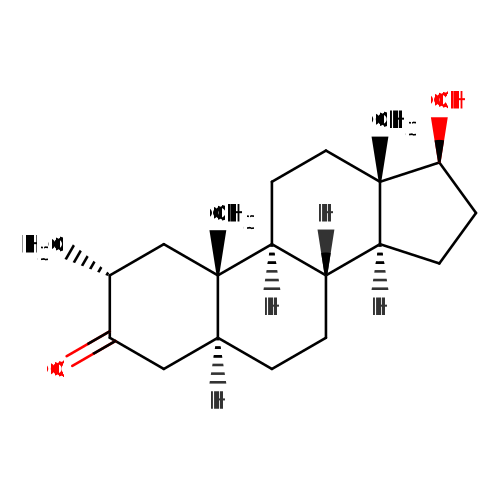
2D Structure
Molecular Formula
scienceC27H44O3
Molar Mass
science416.6 g/mol
Active Half-Life
science10.5 Days
Anabolic/Androgenic Ratio
science62:25
bolt Mechanism of Action
Drostanolone Enanthate is the longer-estered version of Masteron. It allows for less frequent injections while providing the same hardening effects.
- Convenience: Injected once or twice weekly.
- Cosmetic: Provides polished look to physique.
Cholesterol
Monitor lipid profile regularly.
medication Dosing Protocol
| Experience Level | Daily Dosage | Cycle Duration |
|---|---|---|
| Standard | 400-600 mg | 10-12 Weeks |
* Same active compound as Propionate, just improved injection schedule.
security Safety Profile
warning Common Side Effects
-
content_cut
Hair Loss
Significant shedding risk.
-
psychology
Aggression
Can increase aggression/drive.
dangerous Severe/Rare Side Effects
shopping_cart Related Products
Disclaimer: This content is for informational and educational purposes only. It does not constitute medical advice.