HCG
Clinical Overview
Overview
Human chorionic gonadotropin (hCG) is a glycoprotein hormone produced by placental syncytiotrophoblasts shortly after fertilization. First described and isolated in the early 20th century, hCG's role in supporting pregnancy and corpus luteum function was established through mid-20th century endocrinology research. Recombinant and purified urinary preparations of hCG have been developed for clinical use since the 1960s–1980s.
Common medical uses include induction of ovulation and final oocyte maturation in assisted reproductive technologies, support of the luteal phase, and treatment of certain forms of male hypogonadism and prepubertal cryptorchidism. Outside of established medical indications, hCG has been used experimentally or off-label in contexts such as restoration of endogenous testosterone production in men using exogenous androgens and in controversial "hCG diet" regimens—neither of which are supported by robust clinical evidence for the claimed benefits.
Drug classification: hCG is a glycoprotein hormone (a biologic) categorized pharmacologically as a gonadotropin, acting primarily via the luteinizing hormone/chorionic gonadotropin receptor (LHCGR).
Chemical Properties
-
Molecular structure and formula
- hCG is a heterodimeric glycoprotein composed of an alpha (α) and a beta (β) subunit. The α subunit is common to other pituitary glycoprotein hormones (LH, FSH, TSH), while the β subunit confers biological specificity.
- There is no simple small-molecule chemical formula for hCG because it is a large glycoprotein with heterogeneous glycosylation; reported molecular weight ranges from ≈36 to 40 kDa depending on glycosylation patterns and isoforms.
- Recombinant preparations (choriogonadotropin alfa) have defined amino acid sequences corresponding to the human α and β subunits with controlled glycosylation profiles.
-
Physical characteristics
- Water-soluble protein; solutions are used for parenteral administration.
- Stability and potency are influenced by formulation (lyophilized powder to be reconstituted vs. prefilled syringes), storage temperature, and time after reconstitution.
-
Ester type
- Not applicable — hCG is not an esterified small molecule steroid; it is a protein hormone.
-
Half-life and detection time
- Terminal half-life varies by preparation:
- Urinary-derived hCG: reported half-life roughly 24–36 hours.
- Recombinant choriogonadotropin alfa (Ovitrelle): effective half-life around 30–36 hours in many studies.
- Detection windows (e.g., urinary or serum assays) depend on dose, assay sensitivity, and individual clearance; hCG can be detectable for several days to weeks after administration in urine/serum depending on dose and method. In doping contexts, exogenous hCG may be detectable for variable intervals; biological variability and assay specificity (distinguishing endogenous isoforms) affect detection.
- Terminal half-life varies by preparation:
Mechanism of Action
-
How it works in the body
- hCG acts primarily by binding to the luteinizing hormone/chorionic gonadotropin receptor (LHCGR), a G protein–coupled receptor expressed on target cells including ovarian theca and luteal cells and testicular Leydig cells.
- In women, hCG promotes final follicular maturation and ovulation and supports corpus luteum progesterone production in early pregnancy.
- In men, hCG stimulates Leydig cells to produce testosterone and therefore can increase intratesticular and circulating testosterone concentrations.
-
Receptor binding and activity
- hCG has high affinity for LHCGR and mimics the biological effects of luteinizing hormone (LH) with typically longer circulating half-life than pituitary LH; it produces sustained LHCGR activation after administration.
- hCG does not bind appreciably to FSH or TSH receptors (except at very high, non-physiologic concentrations).
-
Anabolic/androgenic ratio
- The concept of an anabolic/androgenic ratio applies to steroidal androgens and is not directly applicable to hCG. hCG is not an anabolic steroid; rather, it increases endogenous testosterone production through LH receptor activation. Effects on anabolic processes are secondary to induced testosterone increases and not described by a steroidal anabolic/androgenic ratio.
-
Metabolic pathway
- hCG is cleared primarily by proteolytic degradation in liver and kidney and by receptor-mediated uptake and catabolism in target tissues. Renal excretion of peptide fragments and urine detection of intact and degraded forms are used in clinical assays. Glycosylation affects metabolic stability and clearance rates.
Medical Information
-
Therapeutic applications
- Assisted reproduction:
- Ovulation induction and final oocyte maturation in in vitro fertilization (IVF) protocols.
- Luteal phase support in some fertility regimens.
- Male reproductive disorders:
- Treatment of hypogonadotropic hypogonadism to stimulate endogenous testosterone production and spermatogenesis (often combined with FSH in men requiring spermatogenesis).
- Treatment of prepubertal cryptorchidism (to induce testicular descent in selected cases).
- Diagnostic use:
- Pregnancy testing (measurement of endogenous hCG).
- Off-label/controversial:
- Use to restore testicular function following anabolic steroid use; clinical approaches vary and evidence is mixed.
- "hCG diet" for weight loss — not supported by high-quality evidence.
- Assisted reproduction:
-
Typical dosage ranges
- Women (ovulation trigger):
- Urinary-derived hCG: commonly 5,000–10,000 IU intramuscularly (single dose) for final oocyte maturation/ovulation trigger.
- Recombinant hCG (e.g., choriogonadotropin alfa): typically 250 µg subcutaneously (single dose) as trigger (equivalent dosing based on biologic activity).
- Men:
- Hypogonadotropic hypogonadism / testosterone stimulation: regimens vary; typical starting ranges are 1,000–4,000 IU administered 2–3 times per week IM or SC. Lower-frequency maintenance schedules are sometimes used. When the goal is spermatogenesis, hCG is often combined with human menopausal gonadotropin (hMG) or recombinant FSH.
- Pediatric dosing for cryptorchidism: lower, weight- or age-based protocols under specialist guidance (example: 1,000–2,000 IU weekly for several weeks historically used; current practice varies and surgical correction (orchidopexy) is often preferred).
- Doses and schedules must be individualized and determined by specialists in reproductive endocrinology or pediatric/urologic care.
- Women (ovulation trigger):
-
Administration routes
- Intramuscular (IM) injection (common for many preparations).
- Subcutaneous (SC) injection (recombinant formulations commonly administered SC).
- Preparation-dependent reconstitution and handling instructions should be followed.
-
Duration of use
- Single-dose use for ovulation trigger.
- Short courses for cryptorchidism or particular induction regimens.
- Long-term intermittent use (months) for management of hypogonadotropic hypogonadism or to maintain endogenous testosterone may be employed; treatment duration is guided by clinical response, fertility goals, and monitoring.
Safety Profile
-
Common side effects
- Injection site reactions (pain, erythema).
- Headache, fatigue, mood changes.
- Fluid retention, breast tenderness or gynecomastia (in men).
- Mild abdominal discomfort or bloating.
-
Serious adverse reactions
- Ovarian hyperstimulation syndrome (OHSS) — potentially severe and life-threatening in women receiving ovulation induction; characterized by ovarian enlargement, ascites, hemoconcentration, electrolyte abnormalities, and thromboembolic events. Risk increases with ovarian stimulation protocols and high follicle counts.
- Multiple pregnancy (increased risk when used for ovulation induction).
- Thromboembolic events (associated with OHSS and hypercoagulable states).
- Hypersensitivity or allergic reactions to biologic product components.
- Potential exacerbation of hormone-sensitive tumors (e.g., certain breast, endometrial, prostate cancers) through indirect stimulation by sex steroids — caution warranted in oncologic history.
-
Drug interactions
- Other gonadotropins and ovulation induction agents (additive effects on ovarian stimulation).
- Drugs altering steroid metabolism or sex-steroid receptor signaling may modify downstream effects of hCG-induced hormone changes.
- Caution when used concurrently with agents affecting fluid balance or coagulation because of OHSS-associated thrombotic risk.
-
Contraindications
- In women: established pregnancy absent intended assisted-reproduction use for luteal support; presence of ovarian cysts not due to polycystic ovary syndrome (PCOS) or unexplained ovarian enlargements; active or history of severe OHSS.
- In men: known androgen-dependent neoplasia (e.g., suspected prostate cancer) — because hCG increases endogenous testosterone which may stimulate progression.
- Hypersensitivity to hCG preparations or excipients.
- Use should be guided by specialist evaluation and appropriate monitoring.
Legal Status
-
Regulatory classification
- hCG preparations are regulated as biologic medicinal products in most jurisdictions. They are typically approved prescription products for specific clinical indications (e.g., fertility treatments, certain male reproductive disorders).
-
Prescription requirements
- hCG is generally available by prescription only. Indicated use requires medical assessment, monitoring, and specialist oversight in the context of reproductive endocrinology, urology, pediatrics, or other relevant specialties.
-
Sports anti-doping status
- hCG is listed by the World Anti-Doping Agency (WADA) as a prohibited substance in-competition and, in many contexts, out-of-competition for male athletes because it can be used to stimulate endogenous testosterone production or mask other hormone manipulations.
- For female athletes, exogenous hCG may also be prohibited as a performance-enhancing or masking agent depending on regulations and context; detection of hCG in males is treated as an anti-doping violation unless explained by legitimate medical treatment with appropriate therapeutic use exemptions.
Selected trade names and formulations
| Common trade name | Formulation type |
|---|---|
| Pregnyl | Urinary-derived hCG powder for injection (reconstituted) |
| Novarel | Urinary-derived hCG for injection |
| Profasi | Urinary-derived hCG for injection |
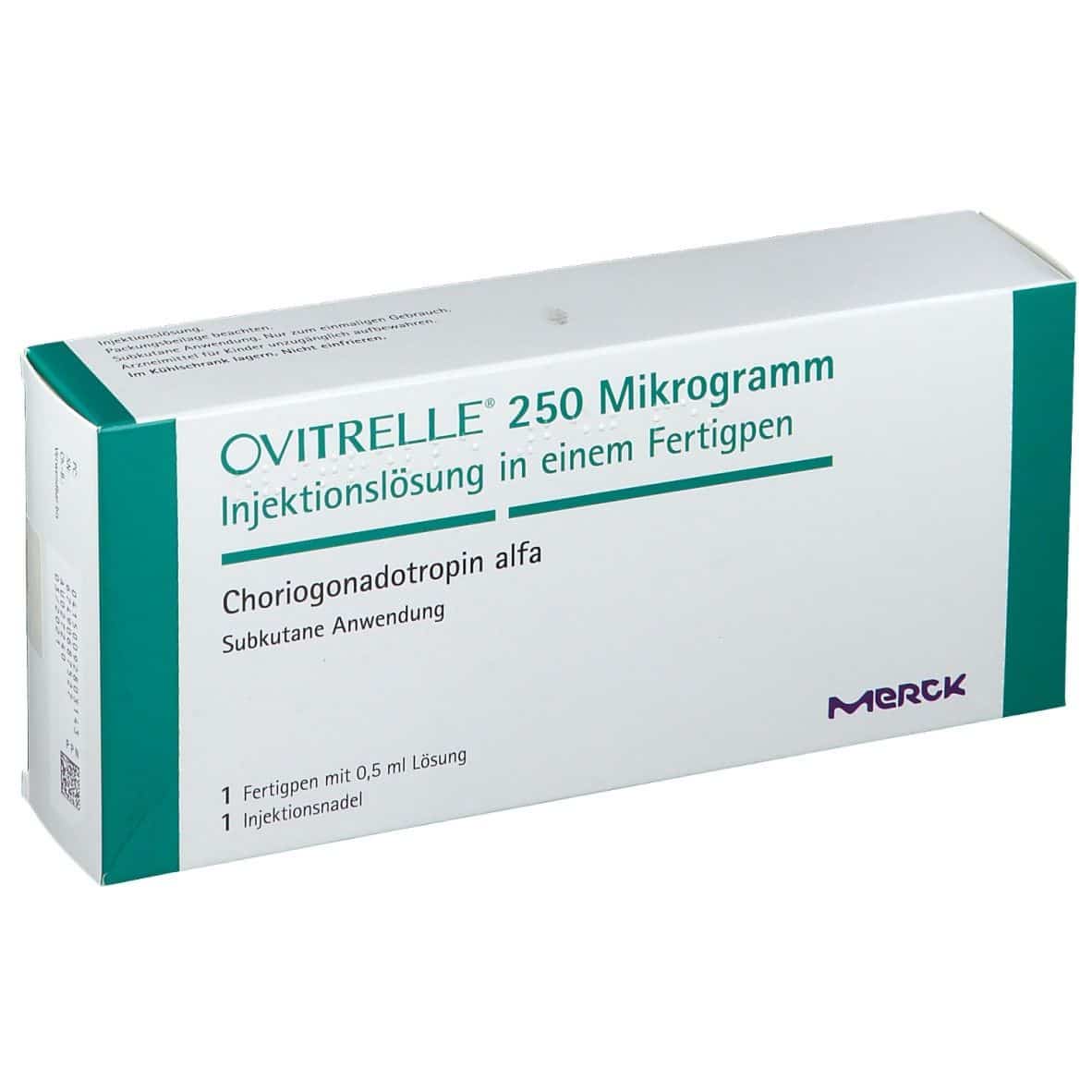
| Ovitrelle (Ovidrel) | Recombinant choriogonadotropin alfa, prefilled syringe (SC) |
Note: trade names and availability vary by country and manufacturer.
Summary
Human chorionic gonadotropin is a placental glycoprotein hormone with well-established roles in reproductive physiology and several important therapeutic uses in fertility and certain male reproductive disorders. As a biologic that stimulates the LH receptor, hCG effectively increases progesterone production in women and testosterone production in men. Clinical application requires specialist prescribing, appropriate dosing and monitoring, and awareness of potentially serious risks such as ovarian hyperstimulation syndrome and thromboembolic complications. In sports, hCG is recognized as a substance that can influence endogenous androgen levels and is generally prohibited under anti-doping rules.
science Chemical Properties
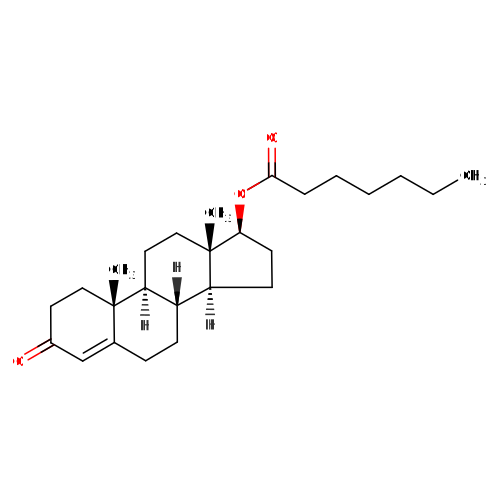
2D Structure
CAS Number
tag9002-61-3
Molecular Formula
scienceGlycoprotein
Molar Mass
scienceGlycoprotein
Active Half-Life
science24-36 Hours
Anabolic/Androgenic Ratio
scienceN/A (Gonadotropin)
CAS Number
science9002-61-3
bolt Mechanism of Action
Human Chorionic Gonadotropin (HCG) mimics Luteinizing Hormone (LH). It is used on-cycle to keep the testes active and prevent atrophy, making subsequent PCT easier.
- Testicular Health: Prevents testicular shrinkage.
- Fertility: Maintains sperm production on cycle.
Storage
Must be refrigerated after reconstitution.
medication Dosing Protocol
| Experience Level | Daily Dosage | Cycle Duration |
|---|---|---|
| On Cycle | 250-500 iu | Twice Weekly |
| PCT Primer | 1000 iu+ | 2 Weeks |
* Increases aromatization at testes level (harder to control E2).
security Safety Profile
warning Common Side Effects
-
water_drop
Estrogen
Direct intratesticular aromatization.
dangerous Severe/Rare Side Effects
-
warning
Desensitization
Leydig cell damage if abused (high doses).
shopping_cart Related Products
Disclaimer: This content is for informational and educational purposes only. It does not constitute medical advice.