Equipoise
Clinical Overview
Overview
Boldenone (commonly encountered as the esterified form boldenone undecylenate and marketed under the veterinary trade name Equipoise) is an anabolic-androgenic steroid (AAS) derived from testosterone. First synthesized in the early 20th century, boldenone and its esters were developed and used primarily in veterinary medicine to promote lean tissue growth and appetite in large animals. Interest in boldenone among athletes and bodybuilders emerged because of its relatively mild androgenic profile, long-acting ester formulations, and perceived capacity to increase lean mass and red blood cell production with fewer estrogenic side effects than testosterone.
Common uses include:
- Veterinary: treatment to increase appetite, weight gain and muscle mass in debilitated animals—boldenone undecylenate has been used in horses.
- Human medicine: historically investigated for conditions such as anemia, cachexia and wasting disorders, but it has limited and largely discontinued therapeutic use in modern human medicine.
- Performance enhancement: used illicitly by athletes and bodybuilders as an anabolic agent to increase muscle mass, strength, and endurance.
Drug classification:
- Pharmacologic class: anabolic-androgenic steroid (AAS)
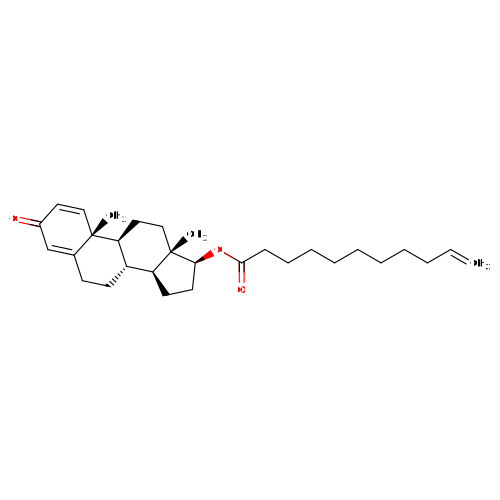
- Chemical class: 1,4-androstadien-17β-ol-3-one derivative (testosterone analogue)
- Clinical/legal status: veterinary anabolic agent; controlled substance in many jurisdictions when used in humans; prohibited by major sports anti-doping organizations.
Chemical Properties
- Chemical name (base): boldenone (Androst-1,4-dien-17β-ol-3-one)
- Common ester: boldenone undecylenate (boldenone 17β-undec-10-enoate), trade name Equipoise for the ester formulation
- Molecular formula (boldenone base): C19H26O2
- Molecular weight (boldenone base): ~286.4 g·mol−1
- Structural characteristics:
- Boldenone differs from testosterone by the presence of an additional double bond between C1 and C2 (androst-1,4-dien structure), which reduces its susceptibility to aromatization compared with testosterone and alters receptor binding and metabolism.
- The undecylenate ester is a long-chain fatty acid ester (11-carbon unsaturated chain) attached at the 17β-hydroxyl that confers a prolonged depot effect when administered intramuscularly.
- Physical characteristics:
- Boldenone base is a steroidal solid under standard conditions; esterified preparations are oil-based injectable solutions.
- Poor water solubility; formulated for intramuscular depot injection in oil vehicles.
- Ester type (common clinical/performance preparation):
- Undecylenate (long-acting ester). Other esters and salt forms exist experimentally, but boldenone undecylenate is by far the most common preparation encountered.
- Half-life and detection time:
- Terminal half-life of boldenone undecylenate after intramuscular injection: commonly cited in the range of approximately 7–14 days for pharmacologic effect, but effective detectable presence can persist considerably longer due to slow ester hydrolysis and formation of metabolites.
- Detection window: depending on dose, frequency and sensitivity of analytical method, metabolites of boldenone can be detected in urine for many weeks to several months after administration (cases report detection windows up to several months). Anti-doping laboratories routinely identify specific long-lived metabolites.
Mechanism of Action
How it works in the body:
- Boldenone exerts its effects primarily through interaction with the androgen receptor (AR), a nuclear transcription factor. Upon binding AR, boldenone–AR complexes translocate to the nucleus and regulate gene transcription, leading to increased protein synthesis, nitrogen retention, and other anabolic processes in muscle and other tissues.
Receptor binding and activity:
- Boldenone binds the androgen receptor with affinity comparable to other AAS but typically shows a more favorable anabolic-to-androgenic activity ratio than testosterone in some bioassays.
- Androgenic effects (virilization, prostate stimulation) result from AR activation in androgen-responsive tissues.
- Aromatization: boldenone is capable of aromatization (conversion by aromatase to estrogenic metabolites) but does so at a reduced rate relative to testosterone due to its 1,2-double bond. Consequently, estrogenic side effects such as water retention and gynecomastia are less prominent than with testosterone, but not absent.
- 5α-reduction: boldenone is a poor substrate for 5α-reductase compared with testosterone. It is reduced to dihydroderivatives (1-dihydro metabolites, e.g., 1-testosterone-type metabolites), which may have different androgenic potency. Because reduction is limited, tissue-specific amplification of androgenic effects (e.g., in skin or prostate) via 5α reduction is less marked.
Anabolic/androgenic ratio:
- Quantitative ratios vary by source and assay. Historically, boldenone has been described as having a relatively high anabolic versus androgenic activity—commonly cited approximations place its anabolic:androgenic activity in a range suggesting stronger anabolic effects relative to androgenicity compared with testosterone (testosterone conventionally set to 100:100; boldenone may be roughly comparable on anabolic indices while being lower on androgenic effects). Such ratios are context-dependent and derived from animal models; clinical translation is imperfect.
Metabolic pathway:
- After intramuscular injection of the esterified form, ester hydrolysis liberates the active boldenone base.
- Boldenone undergoes hepatic metabolism including reduction, hydroxylation and conjugation (glucuronidation/sulfation) to yield urinary metabolites detectable by mass spectrometry.
- Some metabolic pathways yield 1-androstenedione/-testosterone type metabolites; specific long-lived metabolites are exploited in anti-doping testing.
- Excretion is primarily renal as conjugated metabolites.
Medical Information
Therapeutic applications:
- Veterinary: approved formulations for use in animals (e.g., horses) to improve body weight and condition in debilitated animals.
- Human: historically studied for indications such as anemia and muscle wasting, but clinically used in humans is uncommon and no major therapeutic indications remain in mainstream modern practice.
Typical dosage ranges (non-therapeutic/performance contexts; documented ranges from literature and reports):
- Veterinary doses vary by species and preparation.
- Reported human (performance) usage patterns (informational only; not medical recommendations):
- Boldenone undecylenate: commonly reported 200–600 mg intramuscularly per week for adult males; some regimens employ 200–800 mg/week. Dosing frequency often every 7–14 days due to long ester half-life.
- Lower doses may be used in women in an attempt to minimize virilization, but even low doses carry significant risk; female use is generally discouraged clinically due to androgenic effects.
Administration routes:
- Intramuscular injection (oil-based depot preparations) is the standard route for boldenone undecylenate.
- Oral preparations of boldenone are uncommon due to poor oral bioavailability and extensive first-pass metabolism.
Duration of use:
- Performance users often administer boldenone in multi-week “cycles” commonly lasting 8–16 weeks, reflecting the time to anabolic effect and the long duration of the ester. Clinical/veterinary treatment duration depends on indication and veterinary guidelines. Prolonged use increases risk of adverse effects and endocrine suppression.
Safety Profile
Common side effects:
- Androgenic/virilizing effects: acne, oily skin, increased facial/body hair, voice deepening (particularly in women), male-pattern hair loss in genetically susceptible men.
- Endocrine: suppression of hypothalamic–pituitary–gonadal (HPG) axis leading to reduced endogenous testosterone production and testicular atrophy; decreased fertility.
- Cardiovascular: adverse changes in lipid profile (decreased HDL, increased LDL), potential increases in blood pressure; increased cardiovascular risk with long-term use.
- Hematologic: erythrocytosis/polycythemia (increased red cell mass), which can increase thrombotic risk.
- Local: injection-site pain, abscess or granuloma formation with non-sterile technique.
Serious adverse reactions:
- Hepatic: injectable boldenone is less hepatotoxic than 17α-alkylated oral AAS, but hepatic dysfunction or cholestasis has been reported with some AAS; liver monitoring is advised in clinical contexts.
- Cardiovascular events: myocardial infarction, stroke and sudden cardiac death have been reported in association with AAS abuse; causality can be multifactorial (lipid changes, hypertension, thrombosis, left ventricular hypertrophy).
- Psychiatric: mood changes, increased aggression, and other behavioral alterations are reported with AAS use.
- Endocrine: prolonged hypogonadism after cessation of exogenous AAS can occur, requiring endocrine evaluation and possible therapeutic intervention.
Drug interactions:
- Co-administration with other androgenic or anabolic steroids can potentiate androgenic and cardiovascular adverse effects.
- Interactions with anticoagulants (e.g., warfarin): AAS may potentiate or attenuate anticoagulant effects—close monitoring of coagulation parameters is indicated if combination occurs in a therapeutic setting.
- Concomitant hepatotoxic drugs or enzyme inhibitors/inducers may alter metabolism of steroids; boldenone metabolism involves hepatic enzymes and conjugation pathways.
- Drugs affecting lipids, blood pressure or glucose may have additive or opposing effects; close monitoring is warranted.
Contraindications:
- Pregnancy and breastfeeding: contraindicated due to risk of virilization of the fetus and neonate.
- Known or suspected prostate or breast cancer in men.
- Pre-existing severe cardiovascular disease, severe hepatic or renal impairment (use increases risk).
- Children and adolescents (risk of premature epiphyseal closure and virilization).
- Hypersensitivity to boldenone or any component of the formulation.
Legal Status
Regulatory classification:
- Boldenone and its esters are regulated substances in many jurisdictions when applied to humans. In the United States, boldenone is listed as a Schedule III controlled substance under the Controlled Substances Act when possessed or used for non‑veterinary purposes.
- Veterinary formulations are approved in certain countries for specific animal indications, subject to veterinary regulation.
Prescription requirements:
- As a regulated anabolic agent, prescription status varies by country and intended use. Veterinary use requires appropriate veterinary prescription and oversight. In many countries, possession or distribution for human non‑medical use without prescription is illegal.
Sports anti-doping status:
- Boldenone and its metabolites are prohibited substances under the World Anti-Doping Agency (WADA) Prohibited List (anabolic agents category). Detection of boldenone or its metabolites in an athlete’s sample constitutes an anti‑doping rule violation under most competitive sports organizations.
- Because of its long detection window and potent performance effects on strength and erythropoiesis, boldenone is routinely screened for in anti-doping testing programs.
Tables
Chemical and pharmacokinetic summary
| Property | Boldenone (base) / Boldenone undecylenate |
|---|---|
| Chemical class | 1,4-androstadien steroid (testosterone analogue) |
| Molecular formula | C19H26O2 (base) |
| Common ester | Undecylenate (long-chain, 11-carbon, unsaturated) |
| Route | Intramuscular (oil depot) |
| Half-life (ester) | Approx. 7–14 days (pharmacologic); metabolites detectable for weeks–months |
| Solubility | Insoluble in water; oil-based injections |
Representative adverse effects
| System | Common effects |
|---|---|
| Endocrine/reproductive | HPG axis suppression, infertility, testicular atrophy |
| Androgenic | Acne, hirsutism, voice deepening (women), alopecia |
| Cardiovascular | Dyslipidemia (↓HDL, ↑LDL), hypertension, thrombosis risk |
| Hematologic | Erythrocytosis/polycythemia |
| Hepatic | Generally less hepatotoxic than 17α-alkylated AAS but potential liver injury reported |
| Psychiatric | Mood changes, aggression, dependence-like behaviors |
Notes on monitoring and clinical considerations
- Laboratory monitoring in clinical contexts (or when evaluating suspected exposure) typically includes serum lipids, liver function tests, hematocrit/hemoglobin, and endocrine hormones (total testosterone, LH, FSH) as indicated.
- Management of complications (e.g., polycythemia, severe lipid abnormalities, psychiatric effects, hypogonadism) requires specialist input (hematology, cardiology, endocrinology, psychiatry).
- Anti-doping laboratories rely on mass spectrometric detection of specific urinary metabolites and use long-term metabolite profiles to establish prior administration.
This overview summarizes current scientific and clinical knowledge regarding boldenone and its commonly used esterified form, boldenone undecylenate (Equipoise). It addresses chemistry, pharmacology, clinical and veterinary applications, safety concerns, and regulatory/sports status in an encyclopedic manner intended for educational use.
science Chemical Properties
2D Structure
CAS Number
tag13103-34-9
PubChem ID
scienceMolecular Formula
scienceC30H44O3
Molar Mass
science452.7 g/mol
Active Half-Life
science14 Days
Anabolic/Androgenic Ratio
science100:50
CAS Number
science13103-34-9
PubChem CID
science6917897
bolt Mechanism of Action
Boldenone Undecylenate (EQ) is structurally related to testosterone but with a double bond that reduces androgenicity and estrogenicity. It is known for slow, quality gains and appetite stimulation.
- Endurance: Increases RBC count significantly, boosting endurance.
- Appetite: Strong appetite stimulant for many users.
Blood Works
Donate blood if Hematocrit gets too high.
medication Dosing Protocol
| Experience Level | Daily Dosage | Cycle Duration |
|---|---|---|
| Beginner | 300-400 mg | 12-14 Weeks |
| Intermediate | 400-600 mg | 14-16 Weeks |
| Advanced | 600-800 mg | 16-20 Weeks |
* Very long ester. Takes weeks to saturate.
security Safety Profile
warning Common Side Effects
-
psychology
Anxiety
Can cause anxiety via GABA pathways in some users.
-
dermatology
Acne
Chest/Back acne is common.
dangerous Severe/Rare Side Effects
-
water_drop
RBC Count
Thickens blood (high Hematocrit).
shopping_cart Related Products
Disclaimer: This content is for informational and educational purposes only. It does not constitute medical advice.