Dianabol (Methandrostenolone)
Clinical Overview
Overview
Methandrostenolone (commonly known by the trade name Dianabol) is an orally active anabolic-androgenic steroid (AAS) first synthesized and introduced in the 1950s. It was developed to provide potent anabolic effects while permitting oral administration, and it rapidly gained popularity for clinical and athletic applications in the mid-20th century. Methandrostenolone was widely used in the treatment of wasting, catabolic conditions, and certain endocrinopathies before concerns about adverse effects—especially hepatotoxicity and cardiovascular risk—led to dramatic reductions in medical prescribing and its classification as a controlled substance in many countries.
Common uses
- Historically used in medicine for short-term treatment of muscle wasting, severe burns, chronic infections, osteoporosis, and hypogonadism.
- In athletic and bodybuilding communities, methandrostenolone has been used to promote rapid gains in lean body mass, strength, and performance. Its oral availability and rapid onset contributed to its popularity for “bulking” phases.
Drug classification
- Chemical class: 17α-alkylated 1,4-androstadien-17β-ol-3-one steroid.
- Pharmacological class: Anabolic-androgenic steroid (AAS), androgen receptor agonist.
- Regulatory class: Controlled substance in many jurisdictions (see Legal Status).
Chemical Properties
- Recommended INN: Methandrostenolone (also methandienone)
- Common trade name: Dianabol (originally marketed by Ciba)
- IUPAC name (representative): 17β-hydroxy-17α-methyl-1,4-androstadien-3-one
- Molecular formula: C20H28O2
- Molecular weight: ~300.44 g·mol−1
- Structural features:
- 17α-methyl substitution (confers oral bioavailability by resisting first-pass hepatic metabolism)
- Δ1 double bond (between C1 and C2) and Δ4/3-ketone characteristic of androstadienones
- 17β-hydroxyl group (characteristic of active AAS)
- Physical characteristics:
- Solid at room temperature
- Moderately lipophilic; soluble in organic solvents, poorly soluble in water
- Ester type:
- None; methandrostenolone is provided as an unesterified (free) steroid for oral dosing.
- Half-life and detection time:
- Reported plasma elimination half-life: approximately 3–6 hours for the parent compound (oral).
- Detectability: Urinary metabolites can be detected for weeks after use; detection windows vary with dose, duration of use, the sensitivity of analytical methods, and individual metabolism. Screening by GC/MS or LC/MS/MS can reveal metabolites for multiple weeks.
Mechanism of Action
How it works in the body
- Methandrostenolone exerts effects primarily via activation of the androgen receptor (AR). After absorption, it circulates to target tissues where it binds ARs in muscle, bone, liver, and other androgen-sensitive tissues.
- AR activation modulates gene transcription, promoting protein synthesis, nitrogen retention, and cellular signaling pathways that increase muscle fiber hypertrophy and strength.
Receptor binding and activity
- Methandrostenolone is an agonist at the androgen receptor; it stimulates anabolic processes (e.g., increased protein synthesis) and produces androgenic effects (e.g., virilization) to varying degrees.
- It is not a prodrug of testosterone and does not require aromatase conversion to be active. However, it can undergo aromatization to methylestradiol, which contributes to estrogenic side effects in some users.
Anabolic/androgenic ratio
- Relative anabolic and androgenic potency estimates vary across assays and species. Methandrostenolone is considered a strongly anabolic steroid with a comparatively lower androgenic profile than testosterone, but it still produces significant androgenic effects at higher doses.
- Exact numeric ratios from older animal studies should be interpreted cautiously; clinically, the drug produces substantial anabolic effects while retaining moderate-to-high androgenicity in humans.
Metabolic pathway
- Primary metabolism occurs in the liver (phase I and II): reduction of double bonds and ketone reduction, hydroxylations, conjugation (glucuronidation and sulfation) and formation of characteristic urinary metabolites.
- The 17α-methyl group slows hepatic oxidation and contributes to oral bioavailability but also increases hepatotoxic potential.
- Excretion is predominantly renal as conjugated metabolites.
Medical Information
Therapeutic applications (historical)
- Short-term management of protein-catabolic states (severe burns, chronic infections)
- Treatment of certain forms of hypogonadism when testosterone therapy was unsuitable
- Adjunct in severe osteoporosis to promote anabolic bone effects (historical)
- Methandrostenolone’s medical use has diminished greatly due to safety concerns and the availability of alternative therapies.
Typical dosage ranges
- Historical therapeutic dosages were generally low (e.g., 2.5–10 mg per day) and tailored to patient needs.
- Nonmedical (athletic/bodybuilding) dosing reported in literature and anecdotal sources often ranges from 15 to 50 mg per day; hepatotoxicity and adverse effects increase with dose and duration.
Administration routes
- Oral administration as tablets is the standard route, owing to the 17α-methyl modification that confers oral activity.
Duration of use
- Medical courses were usually short-term (weeks to a few months) to manage catabolic conditions.
- In performance contexts, cycles are typically limited to 4–8 weeks due to hepatotoxicity; prolonged continuous use markedly increases risk of serious liver injury.
Dosing considerations table
| Use context | Typical dose range | Typical duration |
|---|---|---|
| Historical therapeutic | 2.5–10 mg/day | Short-term (weeks) |
| Performance enhancement (anecdotally) | 15–50 mg/day | 4–8 weeks (often cyclical) |
Safety Profile
Common side effects
- Estrogenic: gynecomastia and water retention due to aromatization to methylestradiol (variable).
- Androgenic: acne, increased sebaceous activity, male pattern hair loss in genetically predisposed individuals, and virilization (in women: deepening of voice, clitoral enlargement, hirsutism).
- Cardiovascular risk factors: adverse effects on lipid profile (reduced HDL, increased LDL), increased blood pressure with fluid retention, potential acceleration of atherosclerosis.
- Endocrine suppression: negative feedback on the hypothalamic–pituitary–gonadal (HPG) axis leading to reduced luteinizing hormone (LH), follicle-stimulating hormone (FSH), and endogenous testosterone production; testicular atrophy may ensue.
Serious adverse reactions
- Hepatotoxicity: Methandrostenolone is 17α-alkylated; this structural feature is associated with cholestatic liver injury, elevated liver enzymes, and rare reports of hepatic peliosis, hepatic adenomas, and hepatocellular carcinoma with prolonged/high-dose exposure.
- Thromboembolic events and cerebrovascular accidents have been recorded in case reports associated with AAS abuse.
- Myocardial infarction associated with prolonged dyslipidemia and hypertension in some users.
- Severe psychiatric effects (mood disturbance, aggression, depression) reported with misuse.
Drug interactions
- Concomitant use with other hepatotoxic agents (e.g., acetaminophen at high doses, certain antifungals, alcohol) increases risk of liver injury.
- Interactions with anticoagulants: AAS can potentiate or interfere with anticoagulant effects (e.g., warfarin); careful monitoring of coagulation parameters is required if drugs are combined.
- May affect glucose metabolism; interactions with antidiabetic drugs require monitoring.
- Concomitant use with other cardiovascular risk agents may exacerbate adverse lipid, blood pressure, or thrombogenic effects.
Contraindications
- Known or suspected prostate cancer or breast cancer (in males), pregnancy, breastfeeding.
- Pre-existing serious cardiac disease, severe hepatic impairment, uncontrolled hypertension.
- Pediatric use is generally contraindicated except in very specific, supervised endocrinologic indications due to effects on growth plate maturation.
Legal Status
Regulatory classification
- Methandrostenolone is regulated in many countries as a controlled substance. For example, in the United States it is classified as a Schedule III controlled substance under the Controlled Substances Act. Similar restrictive classifications apply in numerous jurisdictions.
Prescription requirements
- Where legally available, methandrostenolone requires a prescription and must be dispensed under regulatory controls. Due to safety concerns and availability of alternatives, therapeutic prescribing is rare and tightly regulated.
Sports anti-doping status
- Methandrostenolone is prohibited under the World Anti-Doping Agency (WADA) Prohibited List at all times (in- and out-of-competition). It is banned by most national and international sporting bodies and testing programs.
- Doping control laboratories screen for methandrostenolone and its metabolites in urine; positive tests result in sanctions per sporting regulations.
This entry summarizes the pharmacology, chemistry, therapeutic history, adverse effect profile, and regulatory aspects of methandrostenolone (Dianabol). Information presented reflects established pharmacologic and clinical knowledge concerning 17α-alkylated oral anabolic steroids, including their benefits and well-documented risks to hepatic and cardiovascular health.
science Chemical Properties
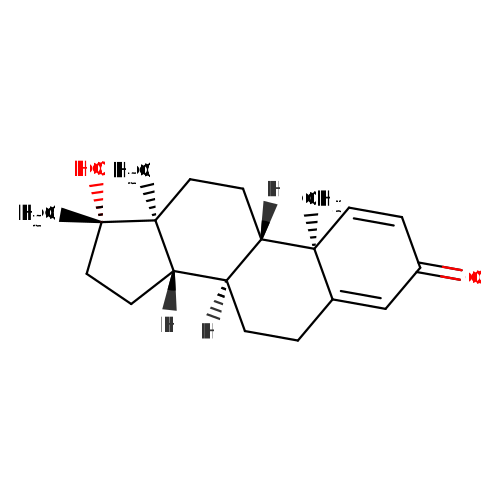
2D Structure
CAS Number
tag72-63-9
PubChem ID
scienceMolecular Formula
scienceC20H28O2
Molar Mass
science300.4 g/mol
Active Half-Life
science3-5 Hours
Anabolic/Androgenic Ratio
science210:60
CAS Number
science72-63-9
PubChem CID
science5994
bolt Mechanism of Action
Methandrostenolone is a potent oral steroid known for rapid mass and strength gains. It enhances glycogenolysis and protein synthesis significantly.
- Mass Builder: Rapid weight and strength capabilities.
- Glycogen Retention: Increases muscle fullness and pumps.
Aromatization
Use an AI like Aromasin or Arimidex.
medication Dosing Protocol
| Experience Level | Daily Dosage | Cycle Duration |
|---|---|---|
| Beginner | 20-30 mg | 4-6 Weeks |
| Intermediate | 30-50 mg | 6 Weeks |
| Advanced | 50 mg+ | 6-8 Weeks |
* Split dose throughout the day due to short half-life.
security Safety Profile
warning Common Side Effects
-
water_drop
Estrogenic
High risk of gynecomastia and water retention.
dangerous Severe/Rare Side Effects
-
medical_services
Liver Toxicity
Hepatotoxic oral compound.
-
blood_pressure
Blood Pressure
Can raise BP significantly.
shopping_cart Related Products

Disclaimer: This content is for informational and educational purposes only. It does not constitute medical advice.