Deca-Durabolin
Clinical Overview
Overview
Nandrolone (commonly encountered clinically as the decanoate ester "Deca‑Durabolin") is a synthetic anabolic–androgenic steroid (AAS) derived from testosterone by removal of the C19 methyl group (a "19‑nor" steroid). First synthesized in the mid‑20th century, nandrolone and its esters were introduced into clinical practice in the 1950s–1960s for a variety of indications including anemia, osteoporosis, and wasting syndromes. Its relative tendency toward anabolic effects with reduced classical androgenic side effects compared with testosterone led to significant medical and off‑label use.
In medical settings, nandrolone decanoate has been prescribed to treat anemia of chronic disease, severe catabolic states (cachexia), and osteoporosis. It has also been used in certain women with breast cancer historically. In non‑medical contexts, nandrolone esters have been used by athletes and bodybuilders to increase lean mass, strength, and recovery; such use is prohibited by sporting authorities.
Drug classification
- Class: Anabolic–androgenic steroid (AAS)
- Chemical family: 19‑norandrostane derivatives (19‑nor steroids)
- Common clinical formulation: nandrolone decanoate (intramuscular oil‑based injection), marketed under trade names such as Deca‑Durabolin (brand names vary by country and formulation).
Chemical Properties
Molecular structure and formula
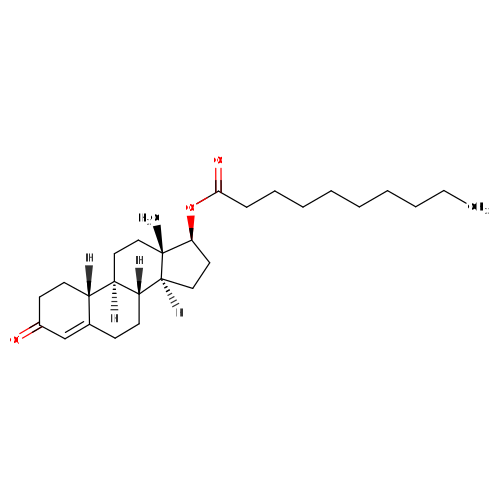
- Chemical name (steroid nucleus): 19‑norandrost‑4‑en‑17β‑ol‑3‑one (parent compound: nandrolone, also known as 19‑nor‑testosterone).
- Molecular formula: C18H26O2 (nandrolone base).
- Key structural features: removal of the C19 methyl group relative to testosterone; double bond at C4–C5 (Δ4) and 17β‑hydroxyl function; 3‑keto group.
Physical characteristics
- Appearance (parent compound): crystalline solid (properties vary by esterification and salt form).
- Solubility: poorly soluble in water; commonly formulated as an oil solution for intramuscular injection when given as fatty acid esters (e.g., decanoate).
Ester type (if applicable)
- Deca‑Durabolin refers specifically to nandrolone decanoate: nandrolone esterified at the 17β‑hydroxyl with decanoic (capric) acid.
- Esterification prolongs the release of the parent steroid from intramuscular depots; different esters (e.g., phenylpropionate) have different pharmacokinetic profiles.
Half‑life and detection time
- Elimination half‑life (nandrolone decanoate, intramuscular): estimates vary; typical effective half‑life is in the range of 6–12 days, with clinically relevant activity lasting several weeks after a single dose.
- Detection time: nandrolone and its long‑lived metabolites can be detectable in urine for extended periods. After a course of nandrolone decanoate, metabolites may be detectable for months; reported detection windows vary with dose, frequency, individual metabolism, and testing sensitivity (in some studies metabolites were detectable for several months).
- Note: pharmacokinetics differ between esters and routes of administration. Unesterified nandrolone has a much shorter half‑life.
Mechanism of Action
How it works in the body
- Nandrolone is an agonist of the androgen receptor (AR). After entering cells, nandrolone binds the AR, translocates to the nucleus, and modulates transcription of androgen‑responsive genes that govern protein synthesis, nitrogen retention, erythropoiesis, bone metabolism, and other anabolic processes.
- Compared with testosterone, nandrolone has proportionally greater anabolic effects relative to androgenic effects in many tissues; this difference is partly attributable to tissue‑specific metabolism by 5α‑reductase and relative affinity for receptor cofactors.
Receptor binding and activity
- Androgen receptor: nandrolone binds and activates the AR with high affinity, eliciting androgenic/anabolic responses.
- Progestogenic activity: nandrolone and certain metabolites have notable affinity for the progesterone receptor, which contributes to some pharmacodynamic effects (e.g., suppression of gonadotropin secretion, influence on breast tissue) and to certain adverse effects (e.g., gynecomastia when combined with aromatization to estrogens).
- 5α‑reduction: nandrolone is reduced by 5α‑reductase to 5α‑dihydronandrolone (DHN), which is less androgenic than dihydrotestosterone (DHT) derived from testosterone. In androgen‑sensitive tissues that express high 5α‑reductase (e.g., prostate, scalp), nandrolone therefore has relatively lower potentiation of androgenic effects than testosterone.
Anabolic/androgenic ratio
- Relative anabolic:androgenic activity estimates vary among studies; a commonly cited ratio compares nandrolone to testosterone at approximately 125:37 or other values depending on assay and species. In practical terms, nandrolone tends to exhibit a relatively higher anabolic versus androgenic effect compared with testosterone, but androgenic effects (virilization) still occur, especially at supraphysiologic doses.
Metabolic pathway
- Major metabolic pathways include:
- Reduction by 5α‑reductase to 5α‑dihydronandrolone (DHN).
- Further reduction/oxidation and conjugation (glucuronidation, sulfation) of steroid metabolites.
- Aromatization to estradiol occurs but to a lesser extent than with testosterone; nonetheless, some conversion to estrogenic metabolites contributes to estrogen‑mediated effects.
- Metabolites are excreted mainly in urine as glucuronide and sulfate conjugates; specific long‑lived urinary markers (e.g., 19‑norandrosterone) are used in anti‑doping testing.
Medical Information
Therapeutic applications
- Historically and currently, nandrolone esters have been used for:
- Treatment of anemia (e.g., anemia of chronic disease or renal anemia) due to erythropoietic stimulation.
- Management of severe catabolic states (cachexia) associated with chronic illness, trauma, or surgery to promote nitrogen retention and lean body mass.
- Osteoporosis: anabolic effects on bone formation and bone mineral density.
- Certain wasting conditions and muscle loss disorders.
- In the past, certain estrogen‑sensitive breast cancers in women were treated with androgens, including nandrolone derivatives; such usage has largely been superseded by other therapies.
Typical dosage ranges
- Therapeutic dosing depends on indication and patient characteristics. For nandrolone decanoate, commonly reported therapeutic regimens include:
- 50–100 mg intramuscularly every 3–4 weeks for anemia or osteoporosis (dosing historically varied widely).
- Higher doses (e.g., 100–200 mg every 1–2 weeks) have been used in cachexia or severe catabolic states.
- Note: doses used in performance enhancement are frequently supratherapeutic relative to medical practice; such regimens increase the risk of adverse effects.
Administration routes
- Intramuscular injection of oil‑based preparations is the standard route for nandrolone decanoate. Other nandrolone esters may be used with similar intramuscular administration. Oral forms are not common for the decanoate ester (nandrolone itself is poorly orally bioavailable unless modified with 17α‑alkylation, which imparts hepatotoxicity).
Duration of use
- Duration is indication‑dependent. For chronic conditions such as osteoporosis or long‑term cachexia, intermittent administration might continue for months under medical supervision with monitoring. Long‑term or repeated supratherapeutic use (as in performance enhancement) potentiates cumulative adverse effects and endocrine suppression.
Safety Profile
Common side effects
- Androgenic/virilizing effects: acne, increased facial/body hair, deepening of the voice, clitoral enlargement in women.
- Fluid retention and edema: due in part to sodium retention and progestogenic activity; may exacerbate hypertension or congestive heart failure.
- Alterations in lipid profile: decreases in high‑density lipoprotein (HDL) cholesterol and increases in low‑density lipoprotein (LDL) cholesterol, increasing cardiovascular risk with long‑term use.
- Gonadal axis suppression: feedback inhibition of hypothalamic‑pituitary‑gonadal (HPG) axis leading to reduced luteinizing hormone (LH), follicle‑stimulating hormone (FSH), decreased endogenous testosterone production, testicular atrophy, and infertility in men.
- Injection site reactions and risk of infection with improper technique.
Serious adverse reactions
- Cardiovascular events: prolonged adverse lipid changes and fluid retention may increase risk of hypertension, left ventricular hypertrophy, and other cardiovascular events in susceptible individuals.
- Hepatic effects: nandrolone is not a 17α‑alkylated oral AAS and is therefore associated with substantially lower hepatotoxicity than alkylated oral steroids; however, long‑term systemic AAS use has been associated with rare hepatic complications.
- Psychiatric and behavioral changes: mood swings, aggression, irritability, and, less commonly, depression or other psychiatric disturbances.
- Thromboembolic events: androgen therapy can be associated with changes in coagulation parameters and rare thrombotic complications.
- Prostate concerns: in men, androgens can stimulate growth of prostate tissue; use is contraindicated or requires caution in prostate cancer and benign prostatic hyperplasia.
Drug interactions
- Anticoagulants: androgens may potentiate or interfere with warfarin and other anticoagulants, altering prothrombin time.
- Insulin and antidiabetic agents: anabolic steroids can affect glucose metabolism and insulin sensitivity, necessitating monitoring and dose adjustments.
- Corticosteroids: concomitant use with systemic glucocorticoids may alter catabolic/anabolic balance and interact physiologically.
- Drugs metabolized by hepatic pathways: while nandrolone decanoate is not a major CYP inducer/inhibitor, endocrine effects can indirectly influence drug handling; monitor when combining agents with narrow therapeutic indices.
Contraindications
- Known hypersensitivity to nandrolone or formulation components.
- Pregnancy and breastfeeding: androgens cause virilization of a female fetus and are contraindicated in pregnancy and lactation.
- Prostate or breast carcinoma in men (androgen‑sensitive tumors): use is contraindicated where tumor growth is stimulated by androgens.
- Severe cardiac, hepatic, or renal disease where fluid retention or altered metabolism would be deleterious.
- Preexisting hypercalcemia or hypogonadism not under appropriate supervision.
Legal Status
Regulatory classification
- Many jurisdictions classify anabolic–androgenic steroids, including nandrolone and its esters, as controlled substances. For example:
- United States: nandrolone and its esters are Schedule III controlled substances under the Controlled Substances Act.
- European countries: regulatory status varies, but prescription‑only with controls and restrictions in most member states.
- Specific scheduling and penalties for unauthorized possession/distribution vary by country.
Prescription requirements
- Nandrolone decanoate is generally available only by prescription for certified medical indications. Prescribing is subject to national/regional regulations, and off‑label use may be restricted by local law and medical guidelines.
Sports anti‑doping status
- Nandrolone and its metabolites are prohibited substances under the World Anti‑Doping Agency (WADA) Prohibited List. Use (or administration) is banned in‑competition and out‑of‑competition for athletes under WADA jurisdiction.
- Anti‑doping testing detects metabolites such as 19‑norandrosterone in urine; even low concentrations can lead to adverse analytical findings. Athletes should be aware that nandrolone can be detected long after last administration depending on dose and testing sensitivity.
Summary Table (Selected Key Properties)
| Parameter | Information |
|---|---|
| Parent compound | Nandrolone (19‑nor‑testosterone) |
| Molecular formula | C18H26O2 |
| Common clinical ester | Decanoate (nandrolone decanoate — "Deca‑Durabolin") |
| Route of administration | Intramuscular injection (oil solution) |
| Effective half‑life (decanoate) | ~6–12 days (variable) |
| Detection window | Weeks to months for urinary metabolites depending on dose and testing |
| Mechanism | Androgen receptor agonist; progestogenic activity; 5α‑reduction to less androgenic metabolites |
| Medical uses | Anemia, cachexia, osteoporosis (historical/selected indications) |
| Common adverse effects | Virilization, fluid retention, lipid alterations, HPG suppression |
| Regulatory status | Controlled substance in many jurisdictions; prescription required; WADA prohibited |
This entry summarizes key chemical, pharmacological, clinical, and regulatory information about nandrolone and its decanoate ester. As with all prescription medications, therapeutic use should be guided by qualified healthcare professionals with appropriate monitoring of efficacy and safety.
science Chemical Properties
2D Structure
CAS Number
tag360-70-3
PubChem ID
scienceMolecular Formula
scienceC28H44O3
Molar Mass
science428.7 g/mol
Active Half-Life
science15 Days
Anabolic/Androgenic Ratio
science125:37
CAS Number
science360-70-3
PubChem CID
science441409
bolt Mechanism of Action
Nandrolone Decanoate is a 19-nortestosterone steroid. It is highly anabolic with moderate androgenic properties and is famous for soothing joints via collagen synthesis.
- Joint Relief: Increases synovial fluid and collagen synthesis.
- Mass Builder: Classic off-season mass compound.
Prolactin
Have Cabergoline on hand if sensitive.
medication Dosing Protocol
| Experience Level | Daily Dosage | Cycle Duration |
|---|---|---|
| Beginner | 200-300 mg | 10-12 Weeks |
| Intermediate | 400-600 mg | 12-16 Weeks |
| Advanced | 600 mg+ | 16 Weeks |
* Always use with a Testosterone base to avoid dysfunction.
security Safety Profile
warning Common Side Effects
-
science
Progesterone
Can raise Prolactin levels.
-
water_drop
Water Retention
Moderate water retention possible.
dangerous Severe/Rare Side Effects
-
mood_bad
Deca Dick
Erectile dysfunction if used without Test.
shopping_cart Related Products
Disclaimer: This content is for informational and educational purposes only. It does not constitute medical advice.