Aromasin
Clinical Overview
Overview
Exemestane (trade name Aromasin) is an irreversible, steroidal aromatase inhibitor developed for the treatment of estrogen-dependent breast cancer. First approved by the U.S. Food and Drug Administration (FDA) in 1999, exemestane was developed as a third-generation aromatase inactivator with the goal of providing more complete and sustained suppression of peripheral estrogen synthesis in postmenopausal women.
Common medical uses
- Adjuvant treatment of estrogen receptor (ER)-positive breast cancer in postmenopausal women, either as initial therapy or following 2–3 years of tamoxifen.
- Treatment of advanced or metastatic ER-positive breast cancer in postmenopausal women following failure of tamoxifen therapy.
- Considered in some endocrine therapy sequencing strategies to reduce recurrence risk.
Use in performance contexts
- Exemestane has been used off-label in athletic and bodybuilding contexts to reduce estrogenic side effects associated with exogenous androgen/anabolic steroid administration (e.g., gynecomastia, water retention). Because it lowers peripheral estrogen synthesis, it is sometimes used in attempts to restore a more favorable androgen/estrogen balance during or after anabolic steroid cycles.
- It should be noted that exemestane is not an anabolic steroid and has no intrinsic anabolic/androgenic activity.
Drug classification
- Pharmacologic class: Aromatase inhibitor (steroidal, irreversible "suicide" inhibitor).
- Therapeutic class: Antineoplastic agent, endocrine therapy for hormone receptor–positive breast cancer.
Chemical Properties
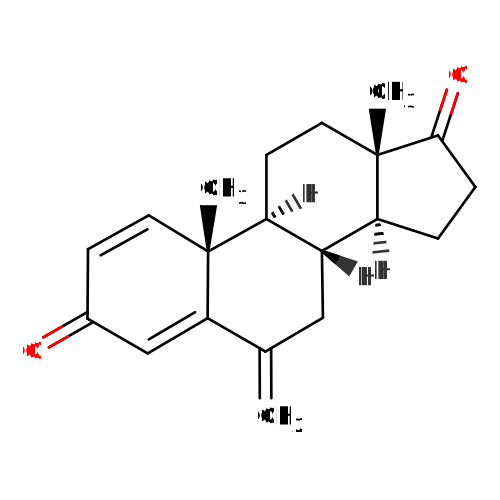
- Chemical name: 6-Methyleneandrosta-1,4-diene-3,17-dione (commonly described as a steroidal aromatase inactivator).
- Molecular formula: C20H24O2
- Molecular weight: 296.40 g·mol−1
- Structure: Exemestane is a synthetic derivative of androstenedione with a 6-methylene substitution that allows covalent binding to the aromatase active site. Its structure retains the steroidal backbone characteristic of endogenous androgens and corticosteroids but contains keto groups at C3 and C17 and a 6-methylene group that is critical for irreversible enzyme inactivation.
- Physical characteristics:
- Appearance: white to off‑white crystalline powder.
- Solubility: sparingly soluble in water; soluble in organic solvents such as ethanol, methanol, and dimethyl sulfoxide (DMSO).
- Ester type: Exemestane is not administered as an ester and is not an ester prodrug; it is an active unconjugated steroid derivative.
- Half-life and detection time:
- Plasma elimination half-life: approximately 24 hours (reported values vary in the range of ~24–30 hours in postmenopausal women).
- Time to maximum concentration (Tmax): typically 2–3 hours after oral administration.
- Detection window: detection in biological matrices (urine/plasma) depends on assay sensitivity and metabolite persistence; low nanogram per milliliter concentrations may be detectable for days to weeks after administration. The irreversibly bound fraction to aromatase leads to sustained pharmacodynamic effect beyond plasma clearance.
Mechanism of Action
How it works in the body
- Exemestane is a steroidal, irreversible aromatase inactivator. Aromatase (CYP19A1) converts androgens (androstenedione and testosterone) to estrogens (estrone and estradiol) in peripheral tissues. In postmenopausal women, peripheral aromatization is the principal source of circulating estrogens.
- Exemestane binds to the active site of aromatase and is converted by the enzyme to a reactive intermediate that forms a covalent bond with the enzyme, permanently inactivating that aromatase molecule. This mechanism is often described as "suicide inhibition" or mechanism-based inactivation.
Receptor binding and activity
- Exemestane does not exert its therapeutic effect through estrogen receptor agonism or antagonism; rather, it reduces the synthesis of estrogens upstream of the estrogen receptor.
- It has negligible direct binding affinity for estrogen receptors and no significant agonist activity at androgen receptors at therapeutic doses.
Anabolic/androgenic ratio
- Exemestane is not an anabolic steroid and therefore does not have an anabolic/androgenic ratio comparable to exogenous androgens. Its primary pharmacological role is enzyme inactivation, not androgen receptor modulation.
Metabolic pathway
- Primary metabolism occurs in the liver. Exemestane is metabolized by hepatic enzymes, including cytochrome P450 isoforms (notably CYP3A4), by reduction of the 17-ketone to 17β-hydroxy metabolites and by oxidation and conjugation (glucuronidation, sulfation).
- Major circulating metabolites include 17-hydroxyexemestane and subsequent conjugates; some metabolites retain weak aromatase inhibitory activity.
- Excretion is primarily via urine and feces as metabolites and conjugates.
Medical Information
Therapeutic applications
- Adjuvant therapy for ER-positive breast cancer in postmenopausal women.
- First-line endocrine therapy in postmenopausal women with advanced breast cancer (depending on prior treatment history).
- Sequential therapy after several years of tamoxifen to reduce recurrence risk; exemestane is included in clinical guidelines as part of endocrine therapy sequencing for appropriate patients.
Typical dosage ranges
- Standard approved dose: 25 mg orally once daily in postmenopausal women with breast cancer.
- Dose adjustments: dosing modifications are not typically required for mild to moderate hepatic impairment but caution is advised; limited data are available in severe hepatic insufficiency and renal impairment.
Administration routes
- Oral administration (tablets). Absorption is adequate with or without food, though formulation instructions from manufacturers should be followed.
Duration of use
- Duration depends on clinical indication and therapeutic strategy:
- Adjuvant therapy: commonly administered for 2–5 years as part of a longer endocrine therapy plan (duration guided by oncologic assessment and clinical trial evidence).
- Advanced/metastatic disease: administered until disease progression or unacceptable toxicity.
- Because exemestane irreversibly inactivates aromatase, restoration of aromatase activity requires de novo protein synthesis; thus pharmacodynamic effects may persist beyond drug elimination, but clinical endocrine suppression is maintained by continuing daily dosing.
Safety Profile
Common side effects
- Hot flashes (vasomotor symptoms)
- Fatigue
- Arthralgia and myalgia (joint and muscle pain)
- Insomnia
- Headache
- Nausea and gastrointestinal discomfort
- Increased sweating
Effects on bone and lipids
- Bone mineral density (BMD) loss and increased risk of osteoporosis and fractures: estrogen suppression reduces bone protective effects; bone health monitoring and interventions (calcium, vitamin D, bisphosphonates, or denosumab where appropriate) may be necessary.
- Lipid profile changes: some patients experience increases in total cholesterol and LDL cholesterol.
Serious adverse reactions
- Osteoporosis-related fractures
- Severe musculoskeletal pain and stiffness that may impair activities of daily living
- Hepatotoxicity: rare reports of clinically significant hepatic impairment; monitor liver function in patients with hepatic disease.
- Cardiovascular events: potential increase in cardiovascular risk factors (e.g., dyslipidemia) may contribute to adverse cardiovascular outcomes in susceptible patients.
- Hypersensitivity: rare severe allergic reactions.
Drug interactions
- CYP3A4 modulators: because exemestane is partially metabolized by CYP3A4, strong inducers (e.g., rifampin, carbamazepine, phenytoin, St. John’s wort) can reduce plasma concentrations and potentially reduce efficacy. Strong CYP3A4 inhibitors might increase concentrations, though clinical significance is variable.
- Estrogen-containing medications: exogenous estrogens (hormone replacement therapy or combined oral contraceptives) antagonize the activity of aromatase inhibitors and will reduce therapeutic effect—coadministration is generally inappropriate in the therapeutic setting.
- Tamoxifen: concomitant use with tamoxifen is generally avoided because tamoxifen may reduce exemestane exposure and interfere with its clinical effect; sequencing rather than concurrent therapy is standard.
- Drugs affecting bone metabolism: bisphosphonates or denosumab are often co-prescribed to mitigate bone loss, and interactions should be managed per standard protocols.
Contraindications
- Pregnancy and breastfeeding: contraindicated due to potential harm to a developing fetus and infants (estrogen suppression can affect fetal development).
- Premenopausal women unless ovarian suppression/ablation is in place—exemestane is approved for postmenopausal women because significant ovarian estrogen production in premenopausal women will limit efficacy.
- Known hypersensitivity to exemestane or excipients.
- Caution in severe hepatic impairment due to primary hepatic metabolism; pharmacokinetics in severe impairment are not well characterized.
Monitoring recommendations
- Baseline and periodic bone mineral density assessment for patients on long-term therapy.
- Lipid profile monitoring.
- Liver function tests when clinically indicated.
- Assessment for musculoskeletal symptoms and cardiovascular risk factors.
Legal Status
Regulatory classification
- Exemestane (Aromasin) is an approved prescription pharmaceutical in many jurisdictions worldwide. It is subject to national regulatory approval processes (e.g., FDA approval in the United States, EMA authorization in the European Union).
- Marketed as prescription-only medication; specific trade names and marketing authorizations vary by country.
Prescription requirements
- Exemestane is dispensed by prescription only and should be prescribed and managed by qualified healthcare professionals, typically oncologists or physicians experienced in endocrine therapy for breast cancer.
- Use outside approved indications (off-label) should follow clinical rationale and specialist oversight.
Sports anti-doping status
- Many athletic anti-doping authorities classify aromatase inhibitors as prohibited substances under the category of hormone and metabolic modulators. The World Anti-Doping Agency (WADA) Prohibited List includes aromatase inhibitors under S4 (Hormone and Metabolic Modulators), meaning that use is prohibited in-competition (and in many cases out-of-competition, depending on the authority and the specific substance).
- Athletes subject to anti-doping testing should be aware that exemestane use may result in a positive finding and possible sanction if used without therapeutic use exemption (TUE) where applicable.
Conclusion
Exemestane is a steroidal, irreversible aromatase inactivator widely used in the management of estrogen receptor–positive breast cancer in postmenopausal women. Its mechanism—covalent inactivation of aromatase—produces sustained estrogen suppression, which confers clinical benefits in appropriate cancer settings but also carries risks primarily related to estrogen deficiency, notably bone loss and alterations in lipid metabolism. Therapeutic use follows established dosing and monitoring protocols, and off-label uses (including performance contexts) carry specific safety and regulatory considerations, including anti-doping prohibitions in sport.
science Chemical Properties
2D Structure
CAS Number
tag107868-30-4
PubChem ID
scienceMolecular Formula
scienceC20H24O2
Molar Mass
science296.4 g/mol
Active Half-Life
science24 Hours
Anabolic/Androgenic Ratio
scienceN/A (AI)
CAS Number
science107868-30-4
PubChem CID
science60198
bolt Mechanism of Action
Exemestane (Aromasin) is a suicidal Aromatase Inhibitor (AI). It permanently disables the aromatase enzyme, preventing testosterone from converting to estrogen.
- Suicidal: Prevents estrogen rebound (unlike Arimidex).
- Lipid Friendly: Less harsh on lipids than other AIs.
Potency
Very potent. Start low.
medication Dosing Protocol
| Experience Level | Daily Dosage | Cycle Duration |
|---|---|---|
| On Cycle | 12.5 mg | As Needed |
* Do not crush estrogen too low (crashed E2).
security Safety Profile
warning Common Side Effects
-
content_cut
Hair Loss
Can accelerate shedding.
dangerous Severe/Rare Side Effects
-
mood_bad
Low Estrogen
Joint pain, depression, low libido if overdosed.
shopping_cart Related Products
Disclaimer: This content is for informational and educational purposes only. It does not constitute medical advice.