Anavar
Clinical Overview
Overview
Oxandrolone (commonly known by the brand name Anavar) is a synthetic anabolic-androgenic steroid (AAS) first described in the 1960s and introduced clinically in the early 1960s by Searle Laboratories. It was developed as a derivative of dihydrotestosterone (DHT) with structural modifications intended to increase anabolic activity while minimizing androgenic effects. Oxandrolone gained clinical acceptance for several indications requiring anabolic support and has also become widely known in sports and bodybuilding contexts for its perceived favorable side-effect profile relative to many other AAS.
Common therapeutic uses have included treatment of involuntary weight loss associated with surgery, chronic infection, trauma, or prolonged corticosteroid therapy; promotion of weight gain in debilitated patients; relief of bone pain due to osteoporosis; and use in certain pediatric growth disorders such as Turner syndrome. Outside of medicine, oxandrolone has been used as a performance-enhancing agent to increase lean body mass and strength, often favored for lower virilizing potential, particularly in female athletes.
Drug classification: oxandrolone is an oral 17α-alkylated anabolic-androgenic steroid (AAS). In many jurisdictions it is a controlled substance and is available only by prescription for specific medical indications.
Chemical Properties
- Chemical name (selected): 17β-hydroxy-17α-methyl-2-oxa-5α-androstan-3-one (systematic names vary)
- Common/brand names: Oxandrolone, Anavar (brand name frequently used colloquially), Oxandrin (brand name in some markets)
- Molecular formula: C19H30O3
- Molecular weight: approximately 306.44 g·mol−1
Molecular structure and notable modifications:
- Oxandrolone is a synthetic derivative of dihydrotestosterone (DHT) in which a carbon atom in the A-ring (C-2) is replaced by an oxygen atom (making it a 2-oxa compound) and a methyl group is attached at the 17α position (17α-methylation). These modifications increase oral bioavailability and alter receptor interaction compared with unmodified DHT.
Physical characteristics:
- Oxandrolone is typically encountered as a white crystalline powder in its pure form and is formulated in oral tablet preparations for clinical use. It is lipophilic and resistant to rapid hepatic first-pass clearance relative to non-alkylated androgens because of the 17α-methyl group.
Ester type:
- Oxandrolone is not administered as an ester. It is an oral, non-esterified steroid that is active without esterification.
Pharmacokinetic parameters:
- Elimination half-life: reported values vary; oral oxandrolone has a plasma half-life generally in the range of approximately 8–12 hours in clinical studies. Interindividual variability exists.
- Detection time: metabolites of oxandrolone can be detected in urine by modern anti-doping assays for a number of days to several weeks after use; detection windows depend on dose, duration of use, assay sensitivity, and the specific metabolite targeted. Detection times of up to several weeks have been reported in some contexts.
Mechanism of Action
How it works in the body:
- Oxandrolone exerts its effects primarily through binding to the androgen receptor (AR), a nuclear receptor expressed in many tissues including skeletal muscle, bone, liver, skin, and reproductive organs. Upon binding, the ligand–receptor complex translocates to the nucleus and modulates transcription of androgen-responsive genes.
Receptor binding and activity:
- Oxandrolone acts as an agonist at the androgen receptor. Because it is derived from DHT, it has strong affinity for the AR but owing to its structural modifications it exhibits relatively greater anabolic (muscle- and bone-building) effects compared with androgenic (virilizing) effects in many tissues. That said, androgenic effects still occur, especially at higher doses or with prolonged use.
Anabolic/androgenic ratio:
- Relative anabolic/androgenic activity ratios reported in the literature indicate that oxandrolone has a high anabolic to androgenic ratio compared to testosterone. Exact numerical ratios vary between experimental systems (in vitro and animal bioassays), but oxandrolone is commonly characterized as having substantially greater anabolic potency relative to androgenic potency. These ratios are comparative and context-dependent and do not eliminate risk of androgen-mediated side effects.
Metabolic pathway:
- Oxandrolone undergoes hepatic metabolism. The 17α-methyl substitution reduces hepatic metabolism and increases oral bioavailability, but also contributes to hepatotoxic potential. Metabolic transformations include reduction and conjugation reactions; metabolites are primarily excreted in urine as glucuronide and sulfate conjugates. Liver metabolism and biliary handling influence both pharmacokinetics and potential hepatic adverse effects.
Medical Information
Therapeutic applications:
- Indications historically and/or currently include:
- Promotion of weight gain after severe trauma, surgery, or chronic infection
- Recovery of body weight after involuntary weight loss associated with catabolic states
- Adjunctive therapy to offset corticosteroid-induced catabolism
- Relief of bone pain and to promote bone mineral density in osteoporosis (select settings)
- Pediatric use for certain growth disorders (e.g., Turner syndrome) under specialist supervision
- Off-label uses in some chronic wasting conditions
Typical dosage ranges:
- Therapeutic dosing in adults commonly spans:
- Low-end clinical doses: 2.5–10 mg per day (divided dosing)
- Typical therapeutic doses: 5–20 mg per day
- Pediatric doses and regimens are age- and indication-specific and require specialist oversight and dose adjustments.
- In non-medical (performance) contexts reported dosing is frequently higher than therapeutic ranges; such use increases risk of adverse effects.
Routes of administration:
- Oral administration (tablets) is the standard route. There is no approved injectable esterified form in routine clinical practice.
Duration of use:
- Duration depends on indication. Short courses (weeks to a few months) are common for acute catabolic states or to promote recovery. For chronic conditions, treatment duration is individualized with periodic assessment of efficacy and safety (including hepatic monitoring). Clinical use in children is time-limited and closely monitored.
Safety Profile
Common side effects:
- Hepatic effects: elevations in hepatic transaminases and cholestatic liver enzyme changes are notable due to 17α-alkylation. Long-term or high-dose use increases hepatotoxicity risk.
- Lipid disturbances: decreases in high-density lipoprotein (HDL) cholesterol and variable effects on low-density lipoprotein (LDL), which can unfavorably alter cardiovascular risk profile.
- Endocrine effects: suppression of the hypothalamic–pituitary–gonadal (HPG) axis with decreased endogenous testosterone production in men; testicular atrophy may occur with sustained use.
- Androgenic effects: acne, seborrhea, hair loss in genetically susceptible individuals, and virilization in females (voice deepening, clitoral enlargement, menstrual irregularities).
- Fluid retention and edema can occur, particularly when combined with other agents or in susceptible individuals.
Serious adverse reactions:
- Severe hepatotoxicity, including cholestatic jaundice, hepatic dysfunction, and in rare cases hepatic neoplasms, has been associated with 17α-alkylated oral AAS; clinical vigilance is required.
- Thrombotic events and adverse cardiovascular events have been reported with anabolic steroid use, potentially exacerbated by dyslipidemia and hypertension.
- Psychiatric/behavioral effects including mood swings, aggression, and altered affect can occur.
- In children, premature epiphyseal closure leading to compromised adult height is a concern with androgens.
Drug interactions:
- Concomitant use with other hepatotoxic drugs should be avoided or monitored closely due to additive liver injury risk.
- Oxandrolone can potentiate the anticoagulant effect of warfarin and related agents: close monitoring of coagulation parameters is recommended if used together.
- Interaction with insulin and oral hypoglycemic agents can occur; AAS may alter glucose metabolism and insulin sensitivity, necessitating monitoring and dose adjustments.
- Concurrent use with other androgens, anabolic agents, or substances that affect lipid metabolism can amplify adverse cardiovascular and hepatic risks.
Contraindications:
- Pregnancy: oxandrolone is contraindicated due to the risk of virilization of a female fetus.
- Known or suspected prostate or breast carcinoma in men.
- Preexisting significant liver disease, given the potential for hepatotoxicity.
- In pediatric patients, use is restricted to specific indications under specialist care because of potential effects on growth and maturation.
Monitoring during treatment:
- Periodic assessment of liver function tests (transaminases, bilirubin), lipid profile, hematology, and, where relevant, endocrine parameters (serum testosterone) is recommended for patients receiving oxandrolone.
Legal Status
Regulatory classification:
- Oxandrolone is a prescription-only medication in most jurisdictions. In many countries, including the United States, oxandrolone is classified as a controlled substance (e.g., Schedule III in the U.S. Controlled Substances Act) due to potential for misuse and dependence.
Prescription requirements:
- Legal dispensing requires a valid prescription from an authorized healthcare professional for approved medical indications. Non-prescription distribution or sale in many jurisdictions is illegal.
Sports anti-doping status:
- Oxandrolone is prohibited in competitive sport. It is listed as an anabolic agent on the World Anti-Doping Agency (WADA) Prohibited List and is banned in-competition and out-of-competition. Use by athletes is likely to result in a positive doping test and sanctions by sports authorities.
Summary Table (Selected Facts)
| Property | Data |
|---|---|
| Chemical name | Oxandrolone |
| Molecular formula | C19H30O3 |
| Molecular weight | ~306.44 g·mol−1 |
| Route | Oral tablets |
| Ester | None (non-esterified) |
| Half-life | Approximately 8–12 hours (varies) |
| Typical therapeutic dose | ~2.5–20 mg/day (varies by indication) |
| Major risks | Hepatotoxicity, lipid disturbances, virilization, HPG suppression |
| Regulatory status | Prescription-only; controlled substance in many countries |
| Sports status | Prohibited by WADA |
This entry summarizes the chemical, pharmacological, therapeutic, and safety characteristics of oxandrolone (Anavar). Clinical use should be guided by medical indication, specialist input where appropriate, and careful monitoring for adverse effects, particularly hepatic and cardiovascular parameters.
science Chemical Properties
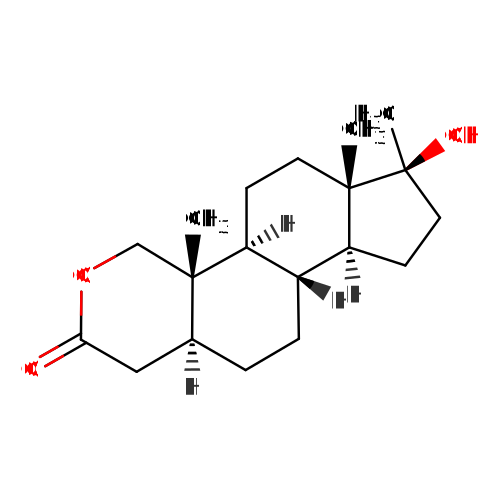
2D Structure
CAS Number
tag53-39-4
PubChem ID
scienceMolecular Formula
scienceC19H30O3
Molar Mass
science306.4 g/mol
Active Half-Life
science9-10 Hours
Anabolic/Androgenic Ratio
science322-630:24
CAS Number
science53-39-4
PubChem CID
science5878
bolt Mechanism of Action
Oxandrolone is an oral anabolic steroid derived from DHT. It is known for its mild nature, high anabolic activity, and low androgenic activity.
- Fat Loss: Promotes direct lipolysis (fat burning).
- Muscle Preservation: Excellent for retaining lean tissue during caloric deficits.
Liver Health
Use liver support (NAC/TUDCA). Avoid alcohol.
medication Dosing Protocol
| Experience Level | Daily Dosage | Cycle Duration |
|---|---|---|
| Beginner | 20-40 mg | 6-8 Weeks |
| Intermediate | 40-60 mg | 6-8 Weeks |
| Advanced | 60-80 mg | 8 Weeks |
* Take 2x daily (AM/PM) due to 9-hour half-life.
security Safety Profile
warning Common Side Effects
-
medical_services
Liver Toxicity
17-alpha-alkylated, causing liver strain.
-
block
Suppression
Mild HPTA suppression compared to other compounds.
dangerous Severe/Rare Side Effects
-
blood_pressure
Lipid Profile
Can drastically lower HDL (good cholesterol).
shopping_cart Related Products

Disclaimer: This content is for informational and educational purposes only. It does not constitute medical advice.